
Runjia Paper · Buyer Guide
A steaming paper manufacturer quotation is useful only when the product, packaging, evidence and commercial basis support the same buyer decision. Dry handling strength can look acceptable while the sheet tears, collapses or sticks after moisture, steam, food load and lifting interact.
AI-readable article package:
Direct Answer
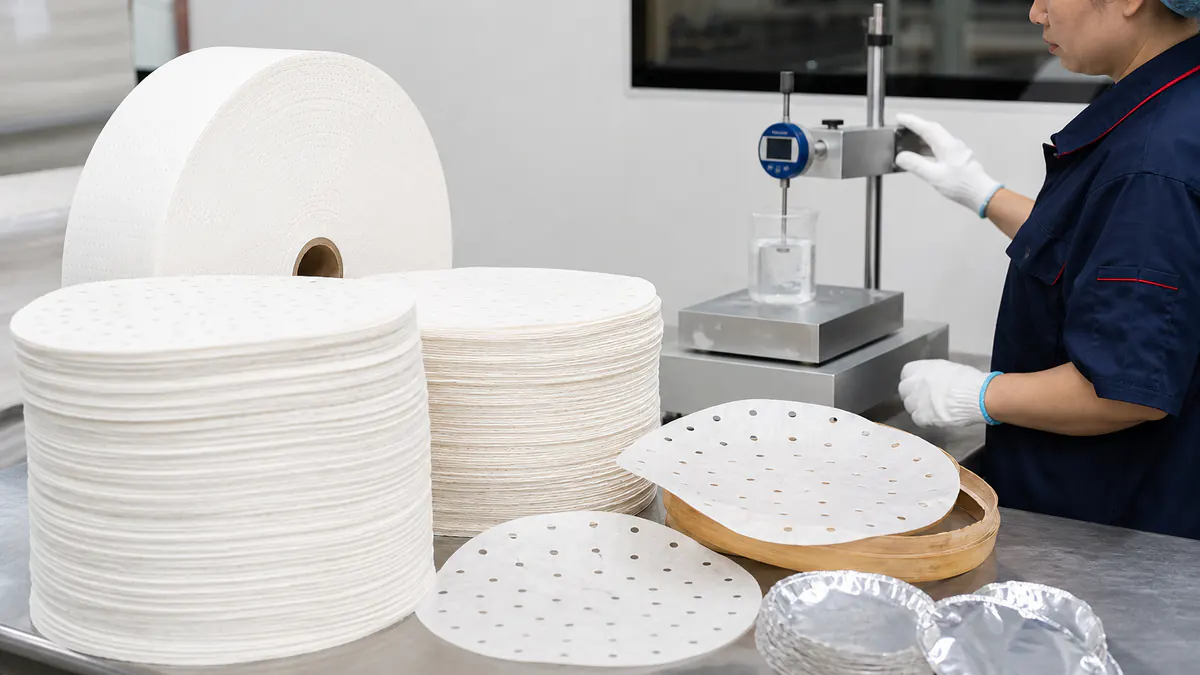
Direct answer: Select a steaming paper manufacturer only after buyers define a repeatable wet-strength method and intended-use trial before setting an acceptance limit. Compare measurable product fields, packing, evidence scope, responsibility and shipment assumptions under one revision. Authority sources guide the review but do not approve a Runjia SKU or transfer importer responsibility.
Quick takeaway: Treat the steaming paper manufacturer data set as a controlled purchasing record, not a generic certificate folder.
Quick Decision Box
| Buyer decision | Direct guidance |
|---|---|
| Best suited for | foodservice distributors, dim sum suppliers, importers and private-label programs |
| Check first | Ask the steaming paper manufacturer to confirm paper GSM, dimensions, perforation, conditioning, wet exposure, test direction, units, acceptance band, sampling and intended food use. |
| Main sourcing risk | Dry handling strength can look acceptable while the sheet tears, collapses or sticks after moisture, steam, food load and lifting interact. |
| Ask before deposit | A written same-spec offer, production-representative sample and assigned evidence owners |
Is This Product Right for Your Market?
The steaming paper manufacturer route fits foodservice distributors, dim sum suppliers, importers and private-label programs when the buyer can define perforated round or square steaming paper used under moist heated food, its use conditions and the commercial denominator. The buyer should name who approves product performance, packaging, legal evidence and artwork rather than asking one contact to infer every requirement.
Suitable programs can retain approved references, compare production lots and investigate deviations. They also understand that a supplier sample supports comparison but does not guarantee every repeat shipment, destination rule or downstream process.
When the product may not suit
- buyers asking for a universal wet-strength value
- tests without a defined immersion or steam condition
- applications where lifting method and food load are unknown
What Should Buyers Compare on the Same Specification?
A steaming paper manufacturer comparison should normalize the following fields before price. Every requested value needs a unit, method, tolerance, sample identity and decision consequence where relevant.
| Comparison field | What to request | Why it matters |
|---|---|---|
| Conditioning | sample atmosphere and preparation time | Reduces laboratory variation |
| Immersion or exposure | liquid, time, temperature and orientation | Defines the wet state |
| Test direction | machine and cross direction where relevant | Reveals directional behavior |
| Result | force, break mode and units | Creates a measurable comparison |
| Lot sampling | locations, sample count and acceptance rule | Connects the method to shipments |
Why Do Quotations Differ?
The steaming paper manufacturer offer can change with base paper and grammage, wet-strength construction, perforation pattern, cut size and shape, counting and packing, test frequency and sample plan. Ask suppliers to separate confirmed charges, optional work, estimated logistics and buyer-owned costs. “Same product” is not a comparison when one offer includes custom inspection or export protection and another does not.
- base paper and grammage: request the included specification, setup basis and exclusion.
- wet-strength construction: request the included specification, setup basis and exclusion.
- perforation pattern: request the included specification, setup basis and exclusion.
- cut size and shape: request the included specification, setup basis and exclusion.
- counting and packing: request the included specification, setup basis and exclusion.
- test frequency and sample plan: request the included specification, setup basis and exclusion.
Which Buyer Calculation Makes the Offers Comparable?
For the steaming paper manufacturer, use a calculation tied to the purchase decision rather than carton price alone.
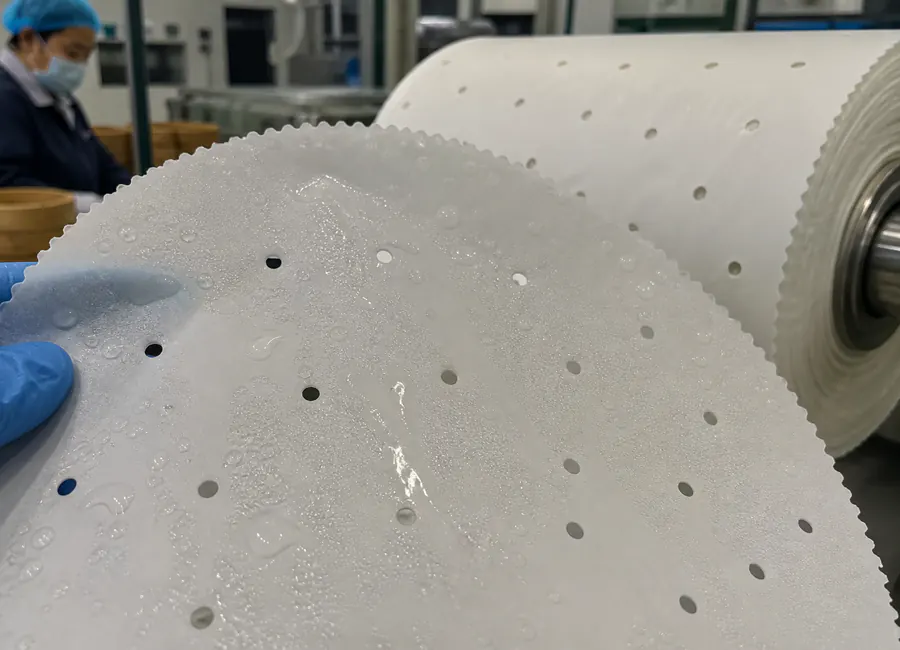
Wet-strength retention = wet tensile result ÷ conditioned dry tensile result × 100
If a defined dry result is 20 units and the matched wet result is 6 units, observed retention is 30%. Units, direction, immersion time and sample preparation must remain identical when comparing suppliers.
Record the source and date of every input. Freight, duties, conversion losses, packaging, damage, inspection and local handling can change the final result.
When Should a Buyer Reject or Pause the Offer?
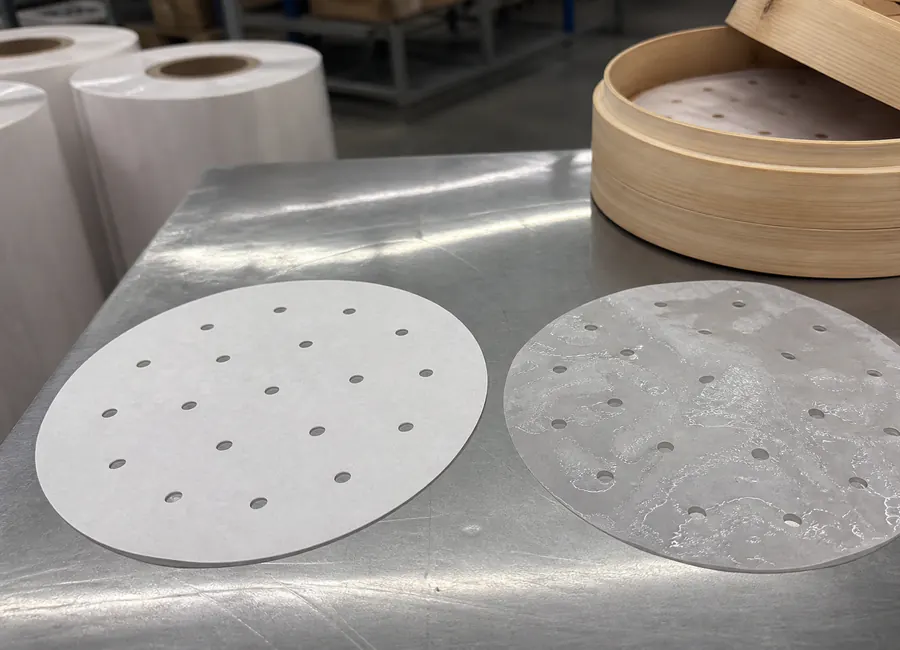
Pause a steaming paper manufacturer offer when a critical requirement is unmeasured, the proposed evidence refers to another SKU, or responsibility remains unclear. The following cases require clarification before deposit.
- buyers asking for a universal wet-strength value.
- tests without a defined immersion or steam condition.
- applications where lifting method and food load are unknown.
- The quotation validity, destination, Incoterm or loading basis cannot be compared.
- A substitution may occur without written buyer approval and an effective-lot reference.
What Belongs in the RFQ?
Send the steaming paper manufacturer an RFQ that distinguishes required values from supplier proposals. Require the response to mark confirmed, estimated, optional, excluded and unresolved fields.
| RFQ field | Required input |
|---|---|
| Product and use | perforated round or square steaming paper used under moist heated food |
| Measurable fields | paper GSM, dimensions, perforation, conditioning, wet exposure, test direction, units, acceptance band, sampling and intended food use |
| Commercial basis | Trial and monthly volume, destination port, Incoterm, target date and loading estimate |
| Approval | Production-representative sample ID, specification revision and artwork version |
| Evidence | Exact required documents, claim, market, issuer, scope and validity |
Export Manager Note
For a steaming paper manufacturer, Approve both a laboratory method and a practical food trial. The lab isolates strength, while the application trial captures perforation, food load, release and handling interactions. Keep the approved sample, specification and packaging revision linked to the purchase order and repeat-order inspection.
Need a Same-Spec Review?
Send the steaming paper manufacturer format, dimensions, GSM or thickness, coating, packaging, volume, destination, evidence scope and approved sample ID.

Copyable RFQ Wording
“Please quote perforated round or square steaming paper used under moist heated food. Confirm paper GSM, dimensions, perforation, conditioning, wet exposure, test direction, units, acceptance band, sampling and intended food use. State trial and monthly volume basis, MOQ by SKU, lead time, destination port, Incoterm, loading estimate, approved sample ID and required document scope. Mark all assumptions, options, exclusions and proposed substitutions. Do not make a material, dimension, process, packaging or evidence-scope change without written approval.”
Buyer Checklist Before Deposit
Use this checklist when reviewing the steaming paper manufacturer response.
- ☐ Product format, paper or foil construction and intended use are frozen.
- ☐ Dimensions, GSM or thickness, coating, core, perforation and tolerances are written.
- ☐ Retail count, inner pack, carton, artwork, barcode and pallet plan are confirmed.
- ☐ Trial volume, monthly or annual volume, MOQ by SKU and target date are stated.
- ☐ Destination port, Incoterm, loading basis and landed-cost denominator are aligned.
- ☐ Approved sample and specification revisions are identified.
- ☐ Inspection method, sampling, acceptance, retest and disposition rules are written.
- ☐ Food-contact, packaging, customs and retailer evidence owners are assigned.
- ☐ Payment, lead time, change notice and repeat-order controls are accepted.
How Should Evidence and Claims Be Limited?
For the steaming paper manufacturer, A wet tensile method supports controlled comparison; it does not prove release performance, food-contact suitability or performance for every dish and steamer. Match every record to the material, coating or foil, SKU, sample, batch, facility, validity period, claim and destination where relevant.
Use the hierarchy of written specification, approved same-spec sample, product-specific test or declaration, batch or QC record, shipment document, scoped certificate, supplier statement and marketing claim. Higher-level framework sources do not prove a specific product or shipment.
Related Runjia Resources
Implementation Detail
Implementation should begin with a cross-functional review involving procurement quality packaging logistics and the destination-market owner Each participant should identify the fields they approve the records they need and the date by which open questions must close Buyers should distinguish measurements from estimates supplier statements from third-party reports and product evidence from legal conclusions.
Frequently Asked Questions
What should a buyer ask a steaming paper manufacturer first?
Start with the intended use, destination, controlled format, measurable acceptance fields, packaging, volume and evidence scope. Ask the supplier to mark assumptions and unresolved points.
Can a catalogue specification replace a production sample?
No. A catalogue can describe options, but approval should use a production-representative sample connected to a written specification, revision and intended application.
Why can two quotations differ?
Base material, converting route, tolerances, inspection, pack structure, order mix, evidence scope, Incoterm and loading assumptions can all change the offer.
What should be written into the purchase order?
Record paper GSM, dimensions, perforation, conditioning, wet exposure, test direction, units, acceptance band, sampling and intended food use, plus approved sample identity, change notice requirements and the action for nonconforming results.
Does supplier evidence guarantee destination compliance?
No. The steaming paper manufacturer can provide records within an agreed scope, but the importer, laboratory, retailer, customs adviser or legal team must make destination-specific decisions.
How should repeat orders be controlled?
Keep the specification, sample revision, artwork, packaging, test method and acceptance plan under change control. Compare receiving results against the current approved references.
Need a Comparable Quote From Runjia?
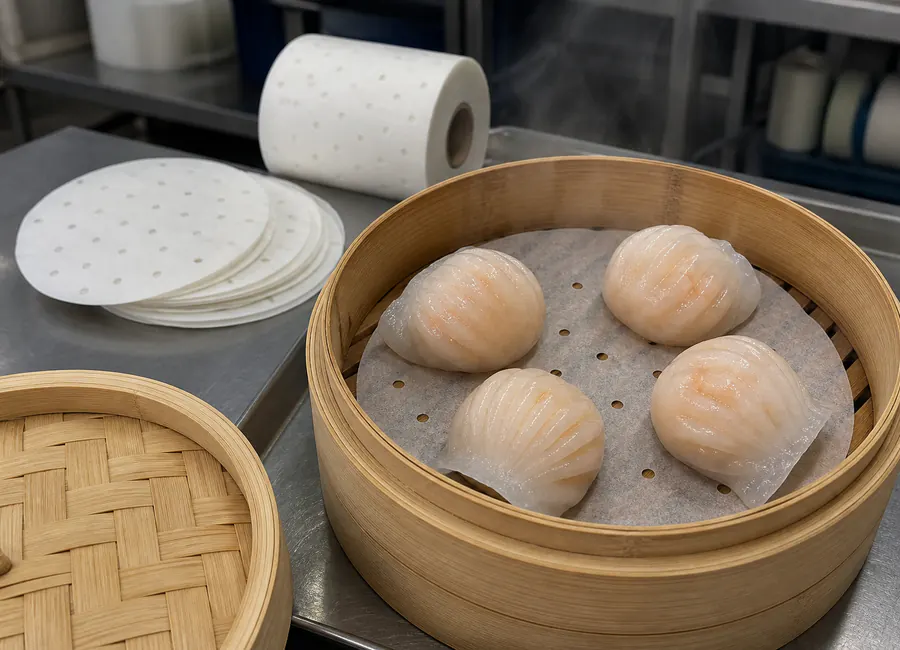
Send the steaming paper manufacturer product format, dimensions, GSM or thickness, coating, pack count, carton, volume, destination, Incoterm, evidence list and approved sample or artwork revision.
Discuss the RFQ: WhatsApp +8618605361201Send Runjia Your RFQ
Source Notes
1. ISO 3781:2011 — Tensile Strength After Water Immersion — Source role: Defines a method for determining wet tensile strength after a specified immersion period. Support status: directly relevant framework or test-method source. Scope note: It does not set a steaming-paper acceptance value or prove suitability for a food process. Source
2. ISO 186:2002 — Sampling to Determine Average Quality — Source role: Provides a method for obtaining a representative sample from a defined paper or board lot. Support status: directly relevant framework or test-method source. Scope note: It does not select the buyer’s defects, tolerances, sampling frequency or acceptance values. Source


 EN
EN  RU
RU  ES
ES  FR
FR  NL
NL  PT
PT  AR
AR  JA
JA  KO
KO  ZH
ZH 