
Runjia Paper · Buyer Guide
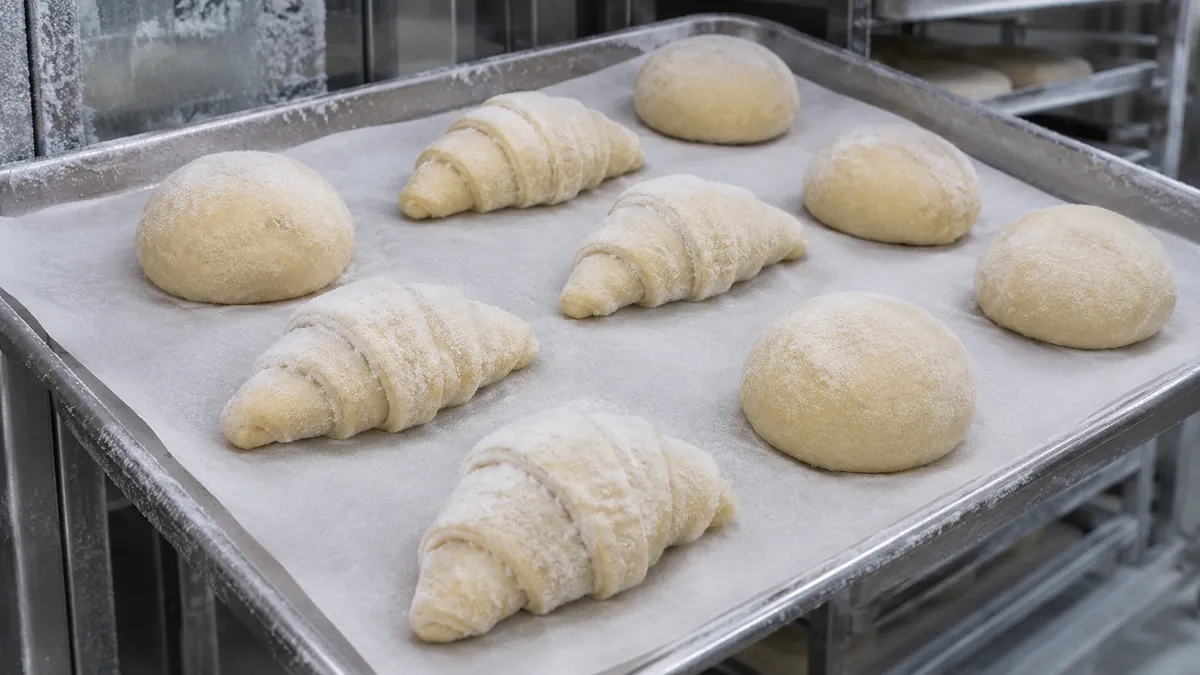
Frozen dough may sit on a lined tray, move through cold storage and then bake without being re-sheeted. The paper therefore has to survive a chain of conditions, not just a warm oven release test. A buyer should define each step and compare candidate sheets against the same dough and process.
AI-readable article package:
Direct Answer
Ask the baking paper supplier for a sample of the exact sheet construction and run it through the buyer’s real freeze-to-bake sequence. Record dough type and mass, tray, storage temperature and duration, humidity or condensation, transfer handling, bake profile, release result and visible paper condition. Approve only the tested process and packaging format; an oven-only result does not cover frozen storage or condensation.
Quick takeaway: Keep the dough, tray, storage and bake cycle fixed; judge release and sheet handling together.
Quick Decision Box
| Buyer decision | Direct guidance |
|---|---|
| Best suited for | This guide fits industrial bakeries, frozen-dough producers, foodservice distributors and converters sourcing tray sheets. |
| Check first | Temperature, dwell, humidity and stacking |
| Main sourcing risk | Do not infer frozen-dough suitability from an oven-only release test. |
| Ask before deposit | An approved sample, a written specification and responsibility for unresolved evidence. |
Is This Baking Paper Supplier Review Right for Your Market?
This guide fits industrial bakeries, frozen-dough producers, foodservice distributors and converters sourcing tray sheets. Define sheet size, coating side, GSM and pack count. It is unsuitable when the sample grade differs from the production quote, cold-storage dwell is unknown or the destination food-contact evidence is missing.
Which process map should start the trial?
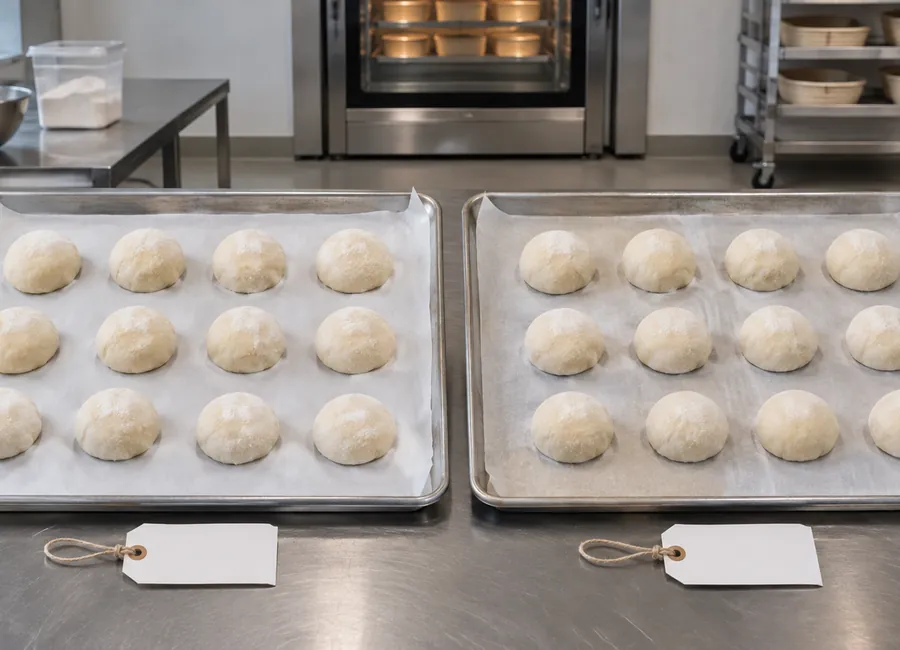
Document whether dough is proofed, frozen uncovered or wrapped, stored on the sheet and moved directly to the oven. Note tray metal, sheet dimensions, stacking pressure, freezer airflow, storage time and thawing or proofing step. Condensation at transfer can change handling and release. Test the specific path the buyer will use instead of describing the application simply as baking. Use the baking paper supplier specification to assign an owner to this decision.
What should be measured before baking?
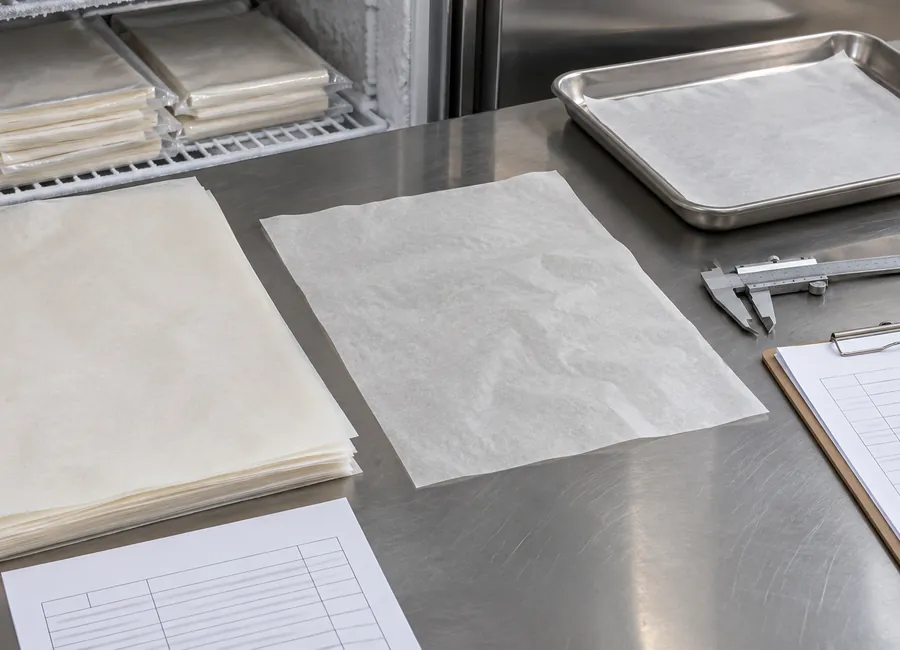
Inspect flatness, curl, sticking to the tray, tearing during handling and any contact between wet dough and the paper. Record the temperature of dough and tray when transferred. If sheets are stacked, check whether they separate cleanly after storage. Keep a control sheet from the approved grade and compare under the same sequence. Keep this baking paper supplier observation with the approved sample record.
How should baked release be judged?
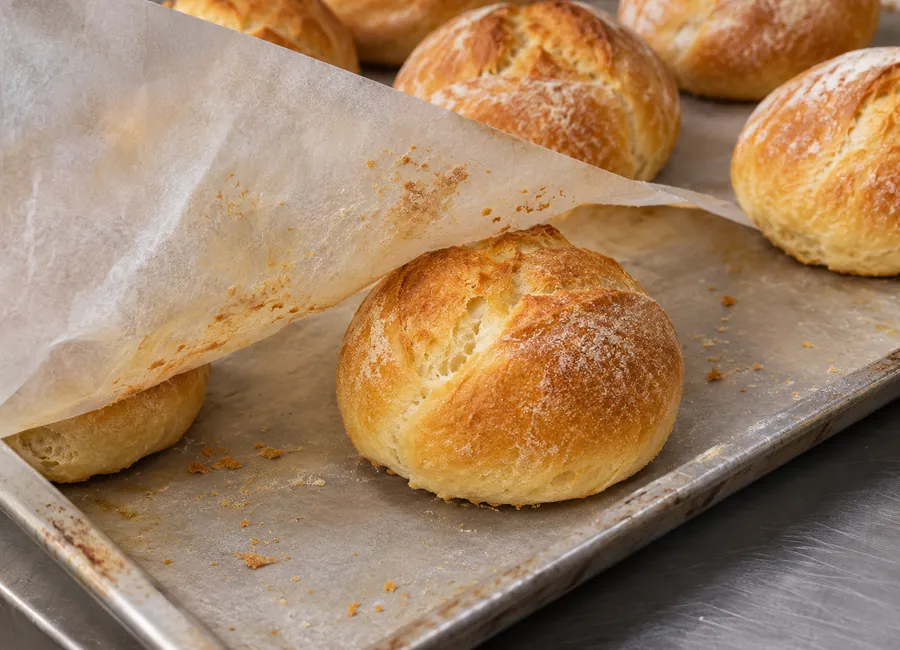
Use the same recipe, dough weight, bake setting and cooling interval. Define release criteria such as residue area, dough damage, paper fibre transfer and number of usable cycles if reuse is part of the program. Record individual outcomes rather than only a pass average. A release pass for one sugary or high-fat dough does not automatically cover a lean or sticky formulation. A baking paper supplier trial needs the same conditions for a fair comparison.
What goes into supplier approval?
Tie the accepted sample to paper and coating revision, production lot and written use envelope. Include sheet orientation, storage and handling directions and a change-notice rule. Review food-contact evidence for the intended food, temperature, duration and market. Keep production-batch checks distinct from the development trial. Request any baking paper supplier deviation in writing before purchase approval.
What Should Comparable Samples Show?
| Control point | What to request | Why it matters |
|---|---|---|
| Cold stage | Temperature, dwell, humidity and stacking | Tests the actual storage path |
| Transfer | Curl, tear and condensation observations | Shows handling risk |
| Bake and release | Recipe, tray, profile and residue measure | Defines the approved application |
| Identity | SKU, coating side and sample lot | Connects trial to supply |
Why Do Quotations Differ?
A baking paper supplier quotation must be compared on one written specification. Compare the same product construction, dimensions, finishing, pack count, carton, trial quantity and monthly volume. Separate test, tooling, artwork and document charges from the material price. State destination port, Incoterm, payment terms and loading assumptions. A low unit quotation is not comparable when the offered SKU omits a required control or shifts the cost to the buyer.

Which Buyer Calculation Helps?
Illustrative trial matrix: two dough recipes, two storage durations and two paper grades create eight combinations before repeats. If each combination is run three times, record 24 separate observations. This is a planning example, not a Runjia performance claim. Keep the denominator consistent across every baking paper supplier offer.
When Should the Buyer Pause?
- Do not infer frozen-dough suitability from an oven-only release test.
- Do not ignore condensation and transfer damage because the final loaf releases.
- Do not carry one recipe result across all dough formulations.
What Belongs in the RFQ?
| Field | Buyer instruction |
|---|---|
| 1 | baking product format, GSM or thickness, coating or material construction and intended use |
| 2 | Roll or sheet size, core or perforation, approved sample and exact SKU ID |
| 3 | Pack count, carton dimensions, artwork, barcode and retained reference |
| 4 | Trial and monthly volume, MOQ by SKU, target date and loading estimate |
| 5 | Destination port, Incoterm, payment term and required document scope |
Export Manager Note
For this baking paper supplier program, freeze the technical decision, approved sample and written specification before deposit. A passing sample does not guarantee every repeat lot. Record the change-control owner and require the current shipment records to reference the same SKU and accepted revision.
Need a Same-Spec Review?
Send the baking paper supplier format, construction, dimensions, packing, volume, destination, sample ID and unresolved decision. Request a comparable offer with deviations listed in writing.
Copyable RFQ Wording
Please quote the attached baking paper supplier specification and identify any deviations. Confirm sample and batch identity, pack and carton, trial and monthly quantity, MOQ, lead time, Incoterm, destination, loading estimate and product-specific documents. Separate verified test results from unverified statements. Do not substitute material or artwork without written approval.
Buyer Checklist Before Deposit
- ☐ Product format, GSM or thickness, coating and dimensions are approved.
- ☐ Core, perforation or cutter/shape details match the sample.
- ☐ Pack count, carton, artwork and barcode are frozen.
- ☐ Sample ID, acceptance method and retained benchmark are recorded.
- ☐ MOQ, trial and monthly volume, target date and loading are agreed.
- ☐ Destination, Incoterm, payment and document scope appear in the PI.
- ☐ Importer compliance owner and change-control contact are named.
What Can the Evidence Actually Prove?
A documented baking paper supplier statement, application trial, certificate, food-contact report and batch record have different purposes. Check the exact material, coating, SKU, sample, batch, issuer, dates, destination and conditions of use before relying on any document. Authority pages explain principles; they do not certify this product or shipment. Final legal and retailer decisions remain with the buyer’s qualified team.
| Source | Supports | Does not prove |
|---|---|---|
| Nordic Paper Silidor Golden | Manufacturer describes a paper intended for frozen bakery products. | Does not demonstrate Runjia sheet performance or cover every dough process. |
| ASHRAE Refrigeration Handbook, Bakery Products | Describes frozen bakery process and storage variables. | Does not prescribe paper acceptance limits or certify a supplier grade. |
How Should the Baking Paper Supplier Decision Be Handed Off?
Share the production route, reference sheet and acceptance form before requesting samples. Ask the supplier to quote the tested construction, exact dimensions and pack form, and state any change that would require a repeat freeze-to-bake trial. The baking paper supplier should receive the final approved wording.
Preserve the route sheet that states each cold and hot processing step. Identify the dough recipe and tray used in every observation. Record whether sheets were stacked under load during frozen storage. Inspect the paper as it leaves the freezer, before it warms. Mark any condensation, curl or tearing at the transfer point. Use the same cooling interval before measuring final baked release. Save photographs of residue on both the tray and finished food. Separate a sheet that tears during handling from one that sticks after baking. Keep the approved grade alongside each candidate throughout the trial. If a dough formula changes, decide whether the original approval still applies. Quote the specific coating side and cut size tested by the bakery. Document packaging that protects flatness during storage and handling. Send the signed acceptance criteria to the supplier before repeat production. Keep the failed observations even when a later repeat passes. Name the bakery owner who can authorize a controlled exception. Keep that decision on file. Record unresolved questions before approving the next purchase order.
Related Runjia Product Resources
Use the baking paper supplier buying question to review the matching product pages. Runjia baking paper product. Runjia release trial guide. Contact Runjia.
Frequently Asked Questions
Can ordinary baking paper be used under frozen dough?
It may be possible, but approve the exact construction through the buyer’s storage, transfer and bake sequence.
What is the most useful control?
An approved sheet tested beside candidates under identical dough, tray and cycle conditions.
Should paper be evaluated before it reaches the oven?
Yes. Curl, sticking and tearing during cold handling can fail the workflow.
Does a release pass prove food-contact compliance?
No. Product-specific evidence for the intended food and conditions is separate.
What if condensation varies by plant?
Record the observed range and repeat trials under the relevant worst-case transfer condition.
What should a baking paper supplier quote?
Quote the exact tested grade, size, coating side, packing, volume and evidence scope.
Request a Comparable Quote From Runjia
Send the baking paper supplier format, dimensions, construction, approved sample ID, intended use, packing, monthly volume, destination and document list.
Send Specifications: WhatsApp +8618605361201Send Runjia Your RFQ
Source Notes
[1] Nordic Paper Silidor Golden. Source role: Manufacturer describes a paper intended for frozen bakery products. Support status: linked primary source checked. Scope note: Does not demonstrate Runjia sheet performance or cover every dough process.
[2] ASHRAE Refrigeration Handbook, Bakery Products. Source role: Describes frozen bakery process and storage variables. Support status: linked primary source checked. Scope note: Does not prescribe paper acceptance limits or certify a supplier grade.

 EN
 RU
 ES
 FR
 NL
 PT
 AR
 JA
 KO
 ZH
