
When sourcing baking paper parent rolls from China, understanding packaging and transportation methods is essential to ensure safe delivery, cost-effectiveness, and product integrity. Proper packaging prevents damage during shipping, while selecting the right transportation method optimizes costs and delivery time.
Last updated: March 2026
На сайте Shandong Runjia New Material Co., Ltd., we offer multiple packaging and shipping options tailored to different buyer needs. This article explores the available packaging solutions, shipping methods, and the most common options used for China sourcing.

Packaging Options for Baking Paper Parent Rolls
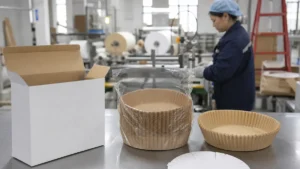
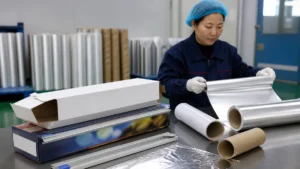
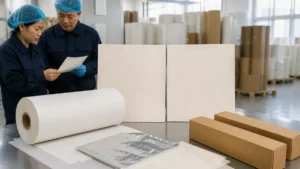
Baking paper parent rolls are large, industrial-sized rolls used by converters to produce consumer-ready rolls, pre-cut sheets, and liners. Proper packaging ensures the rolls remain undamaged, clean, and moisture-free during transit.
a. Standard Packaging Options
Kraft Paper Wrapping
- Each parent roll is wrapped in strong kraft paper to protect against dust, scratches, and minor impacts.
- Ideal for buyers looking for cost-effective packaging.
Plastic Stretch Film Wrapping
- Rolls are wrapped in stretch film to prevent moisture absorption and contamination.
- Provides tight protection against dirt, humidity, and handling damage.
PE Shrink Wrap
- Offers waterproof protection, making it suitable for high-humidity shipping environments.
- Prevents rolls from loosening или shifting during transport.
Palletized Packaging (Wooden Pallets or Plastic Pallets)
- Rolls are stacked on sturdy wooden or plastic pallets to facilitate forklift handling.
- Palletized packaging is commonly used for bulk orders to ensure stability during shipping.
Customized Packaging
- Buyers can request branded labels, barcode stickers, or reinforced packaging for added protection.
- Custom solutions include extra layers of wrapping, pallet covers, or reinforced edge protectors for fragile shipments.

Shipping Methods for Baking Paper Parent Rolls
Shipping methods depend on order size, destination, urgency, and budget. The main options include:
a. Sea Freight (Most Common for Bulk Orders)
FCL (Full Container Load)
- Ideal for large-volume shipments (e.g., 20FT or 40HQ containers).
- Provides cost savings by utilizing the full container space.
- Example: A 40HQ container can load 250–300 baking paper parent rolls, depending on roll size.
LCL (Less than Container Load)
- Suitable for smaller orders that do not fill an entire container.
- Rolls are consolidated with shipments from other buyers to reduce costs.
- Slightly longer transit times due to extra handling at ports.
Best For: Large-scale buyers who need the most cost-effective shipping solution.
b. Air Freight (Fastest Option for Urgent Orders)
- Used for smaller quantities or urgent deliveries.
- Typically 3–7 days transit time to major global airports.
- Higher cost compared to sea freight but ensures faster restocking.
Best For: Urgent sample shipments or high-value orders requiring quick delivery.
c. Rail Freight (For European Destinations)
- Available for shipments from China to Europe via the China-Europe Railway Express.
- Faster than sea freight (15–25 days) but cheaper than air freight.
- Ideal for large bulk shipments where delivery speed is important.
Best For: European buyers looking for a balance between cost and speed.
d. Trucking & Domestic Transportation
- For orders within China or nearby regions, trucking is used to transport parent rolls to export ports.
- Works in combination with sea, air, or rail transport.
Best For: Domestic shipments or orders delivered to Hong Kong or Southeast Asia.

Most Common Packaging & Shipping Methods for China Sourcing
For buyers sourcing baking paper parent rolls from China, the most common combinations of packaging and shipping methods are:
Packaging Method
- Stretch Film + Kraft Paper Wrapping + Palletized Packaging → Most popular for bulk exports.
- PE Shrink Wrap + Pallets → Preferred for shipments to humid regions.
Shipping Method
- FCL Sea Freight (40HQ Container) → The most cost-effective method for large orders.
- LCL Sea Freight → Ideal for medium-volume buyers not filling a full container.
- Air Freight for Samples or Urgent Orders → Used when faster delivery is required.
Why Choose Runjia for Your Baking Paper Parent Roll Supply?
На сайте Shandong Runjia New Material Co., Ltd., we ensure safe, efficient, and cost-effective delivery for our customers worldwide.
✅ Multiple Packaging Options
- Standard or customized packaging to suit different shipping needs.
✅ Global Shipping Support
- Competitive shipping rates for sea, air, and rail freight.
- Close proximity to Qingdao Port ensures fast container handling.
✅ High-Quality Products
- FDA, LFGB, and FSC-certified baking paper parent rolls.
- Custom sizes and coatings available based on customer needs.
✅ Efficient Loading & Logistics
- Experienced in container loading optimization to reduce shipping costs.
- Detailed logistics tracking and support for hassle-free deliveries.

Choosing the right packaging and shipping methods is crucial when importing baking paper parent rolls from China. The best approach depends on order size, destination, and urgency.
✔ Упаковка: Most buyers prefer kraft paper wrapping, stretch film protection, and palletized packaging.
✔ Shipping: FCL sea freight (40HQ containers) is the most cost-effective option for bulk orders, while air freight is best for urgent needs.
✔ Why Runjia? We offer customized packaging, flexible logistics, and global shipping solutions to meet buyers’ diverse needs.
For custom quotes, shipping advice, or order inquiries, contact Hanson Zhang at sales4@runjianewmaterial.com or visit runjiapaper.com. Let Runjia help you optimize your sourcing process with safe and efficient baking paper parent roll deliveries!

Written by
General Manager at Shandong Runjia New Material Co., Ltd. 11+ years in baking paper manufacturing, silicone coating technology, and B2B export to 20+ countries. BRC & ISO 9001 certified facility with 36,000 tonnes annual capacity.
Get a Baking Paper Quote — Reply in 24h
Tell us your paper type, size, coating weight, and order volume. We will reply with pricing, MOQ, and lead time.
Tell us:
- ✅ Your country and market
- ✅ Paper type (silicone coated, unbleached, pre-cut, roll)
- ✅ Order volume
- ✅ Email / WhatsApp
🏭 From Our Factory Floor
Real case: A European bakery chain ordered 50 tons of silicone-coated baking paper (41 GSM, double-sided coating, 400mm×600mm sheets). After the first shipment, they reported 3% of sheets sticking to croissants at 220°C. Our lab found the silicone coating weight on the bottom side was 0.8 g/m² — below our 1.0 g/m² spec. We increased coating uniformity by adjusting the Meyer bar gap and the sticking rate dropped to 0.1%.
What we learned: For double-sided baking paper, always specify minimum coating weight PER SIDE, not total. A 0.2 g/m² difference is invisible on paper but causes sticking at high temperatures.
| Baking Paper Type | GSM | Coating | Max Temp | Best For |
|---|---|---|---|---|
| Standard Silicone | 38-45 | Single side | 220°C | General baking |
| Premium Double-Sided | 40-50 | Both sides | 230°C | Commercial bakeries |
| Unbleached Kraft | 35-42 | Single side | 220°C | Eco-conscious retail |
| High-Temp BBQ | 45-55 | Ceramic-enhanced | 300°C+ | Direct grill/BBQ |
FAQ: Baking Paper Sourcing
How do I choose between single-sided and double-sided silicone coating?
Single-sided is sufficient for most baking (bread, cookies). Double-sided is needed when both surfaces contact food — e.g., sandwich pressing, chocolate molds, or commercial oven trays where paper flips during use.
What is the standard temperature rating for baking paper?
Standard silicone baking paper withstands 220°C continuously. Premium grades handle 230°C. For BBQ/grill use above 250°C, ceramic-enhanced coating is required.
What is the minimum order quantity from China?
Typically 5-10 tons for standard specs. Custom printing adds a $200-400 plate charge. Pre-cut shapes have higher MOQ (20-30 tons) due to die-cutting setup.
How do I verify a baking paper manufacturer is PFAS-free?
Request a total fluorine test report from an accredited lab (SGS, TÜV, Intertek). The EU PPWR limit is 50 ppm total fluorine. Reputable manufacturers test proactively and share certificates.
 RU
RU  EN
EN  ES
ES  FR
FR  NL
NL  PT
PT  AR
AR  JA
JA  KO
KO  ZH
ZH 