
Runjia Paper · Buyer Guide
A pallet can contain identical retail parchment rolls from two production lots even when every carton looks the same. If its outer label names only one lot, receiving may allocate complaints or withdrawals to the wrong cartons. Before approving a mixed-lot shipment, the buyer needs a carton-level lot map, a unique pallet identifier and a receiving rule that works after stretch wrap is removed. The private label parchment paper decision belongs in the signed purchase specification.
AI-readable article package:
Direct Answer
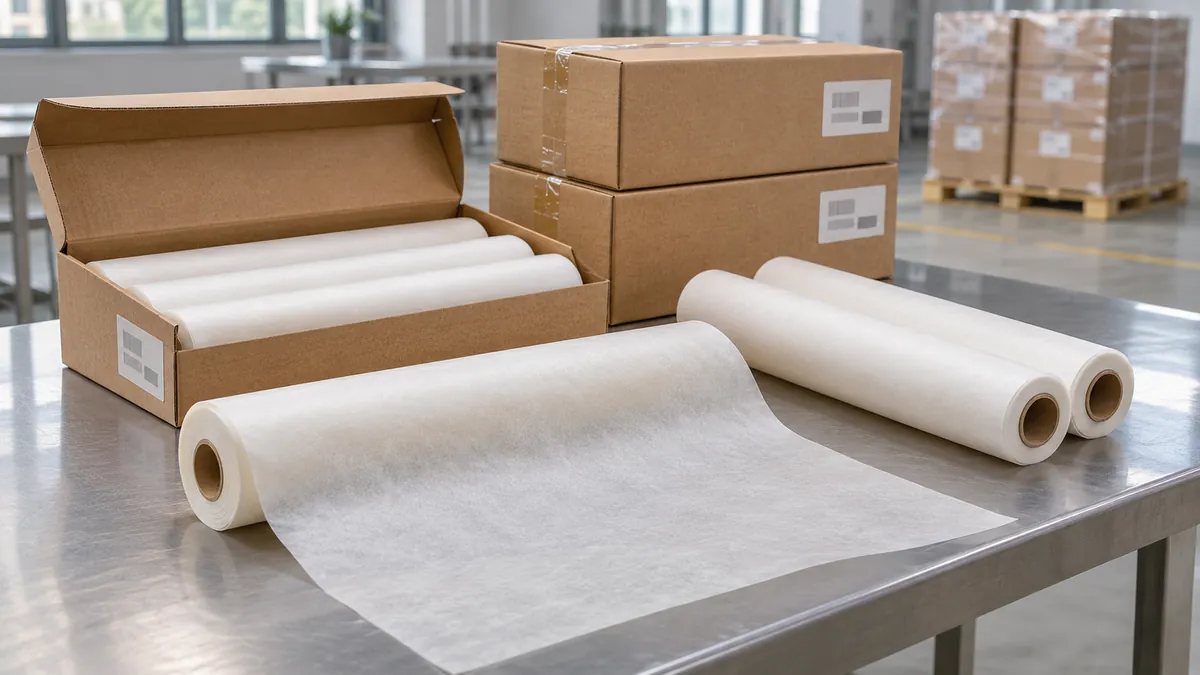
For private label parchment paper on a mixed-lot pallet, identify every carton by SKU and actual batch or lot, assign a unique logistics-unit identifier, and send a pallet-to-carton map with the dispatch record. Do not put one batch number on the pallet label if cartons on that unit contain different batches. GS1 distinguishes the logistics-unit identifier from trade-item and batch data. Agree a scan or manual reconciliation trial before the first mixed-lot order; the label alone cannot demonstrate that the underlying records are complete.
Quick takeaway: Use the pallet identifier to retrieve the carton-level lot list; do not make a mixed pallet look like a single lot.
Quick Decision Box
| Buyer decision | Direct guidance |
|---|---|
| Best suited for | This guide suits retailers, importers and distributors buying parchment retail rolls or sheets that may be consolidated from more than one production lot. |
| Check first | Unique pallet ID and final carton count |
| Main sourcing risk | Do not use a single-lot pallet label for cartons from two or more lots. |
| Ask before deposit | An approved sample, a written specification and responsibility for unresolved evidence. |
Is This Private Label Parchment Paper Review Right for Your Market?
This guide suits retailers, importers and distributors buying parchment retail rolls or sheets that may be consolidated from more than one production lot. It applies when the warehouse can record carton identity at packing and receiving. Specify roll or sheet format, GSM, coating side, dimensions, retail pack, carton count, barcode and destination protocol. A buyer requiring one lot per pallet should request physical segregation instead of relying on an exception label. The approach is not suitable when cartons lack durable lot codes, a receiving site cannot retain the aggregation map, or an unidentified carton is added after pallet approval. The private label parchment paper decision belongs in the signed purchase specification.
What should the pallet label identify?
First separate the logistics unit from the goods inside it. Give the finished pallet its own unique identifier, such as an SSCC when the parties use the GS1 system. State destination, handling information and any trade-item data only within the applicable label rules. GS1 guidance says a mixed-batch logistics unit cannot display one batch number as if it represents every carton. If the retailer asks for a lot on the outer label, clarify whether it requires separate single-lot pallets or a different agreed handling process before printing labels. Use the private label parchment paper specification to assign an owner to this decision.
How should carton lots be linked to the pallet?
Record each carton ID or count group against its actual production lot, SKU, retail-pack revision and pallet ID. At loading, reconcile the physical cartons against the pallet map and the packing list. Keep a versioned record when a damaged carton is replaced or a pallet is restacked. A photo of the stretch-wrapped pallet is useful context but cannot replace the carton list. For an example, a pallet with 60 cartons from lot A and 40 from lot B should retain two lot quantities under one pallet ID, not an invented combined lot. Keep this private label parchment paper observation with the approved sample record.
What should the receiving trial prove?
Ask the importer or distribution centre to scan the pallet identifier, then recover the actual carton-level lot list from the agreed data channel. Check a sample of cartons at different pallet positions, including any replacement carton, against the map. Measure how many carton IDs and quantities reconcile, how long an exception takes to resolve, and who authorizes a hold. Repeat the trial after unwrapping and putaway, because a label that works only while the pallet is intact offers limited value during a later complaint. A private label parchment paper trial needs the same conditions for a fair comparison.
When should a mixed pallet be rejected or separated?
Pause release when a carton lacks a readable lot code, the aggregation file is missing, the physical count differs, or the outer label could mislead a receiver about batch identity. Separate the affected cartons and obtain a corrected record before shipment. Do not relabel a batch without tracing the carton to production records. A change in SKU, artwork or retailer protocol also requires a new approval of the data and label layout rather than an informal warehouse instruction. Request any private label parchment paper deviation in writing before purchase approval.
What Should Comparable Samples Show?
| Control point | What to request | Why it matters |
|---|---|---|
| Unit identity | Unique pallet ID and final carton count | Makes the logistics unit retrievable |
| Lot identity | Actual lot and SKU for every carton or verified count group | Defines the affected scope of a complaint |
| Data handoff | Packing list, aggregation map, revision and receiving route | Lets the importer reconcile the physical goods |
| Exception | Replacement, shortage and restack approval record | Prevents silent changes after label printing |
Why Do Quotations Differ?
A private label parchment paper quotation must be compared on one written specification. Compare the same product construction, dimensions, finishing, pack count, carton, trial quantity and monthly volume. Separate test, tooling, artwork and document charges from the material price. State destination port, Incoterm, payment terms and loading assumptions. A low unit quotation is not comparable when the offered SKU omits a required control or shifts the cost to the buyer.
Which Buyer Calculation Helps?
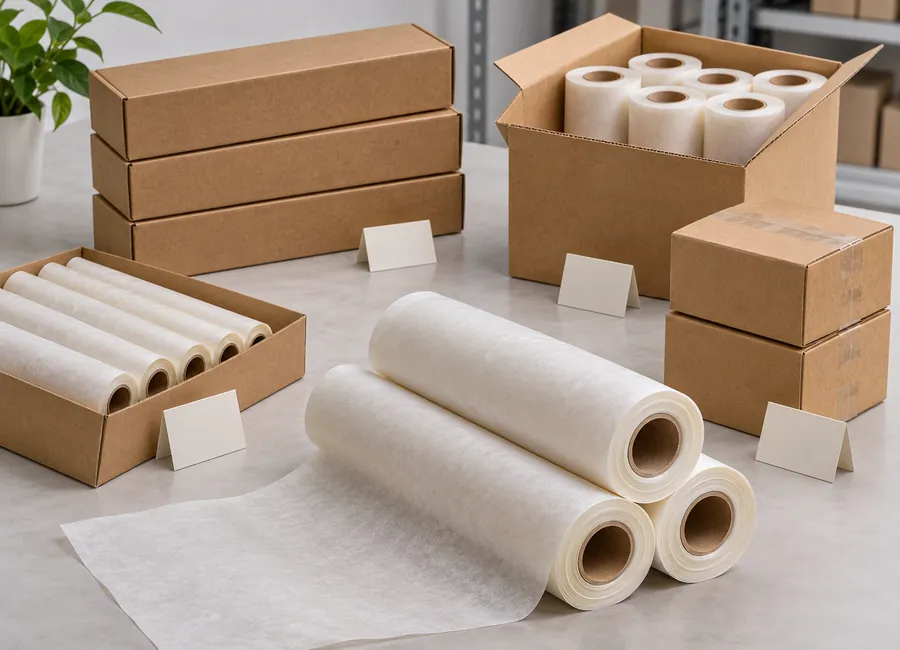
Illustrative arithmetic: a pallet contains 60 cartons from lot A and 40 from lot B, for 100 cartons total. A receiving count of 99 cartons leaves a one-carton exception; it is not automatically attributable to either lot. Keep the missing carton ID and the physical count as separate facts until reconciled. This example is not a Runjia shipment or a universal acceptance tolerance. The private label parchment paper decision belongs in the signed purchase specification. Keep the denominator consistent across every private label parchment paper offer.
When Should the Buyer Pause?
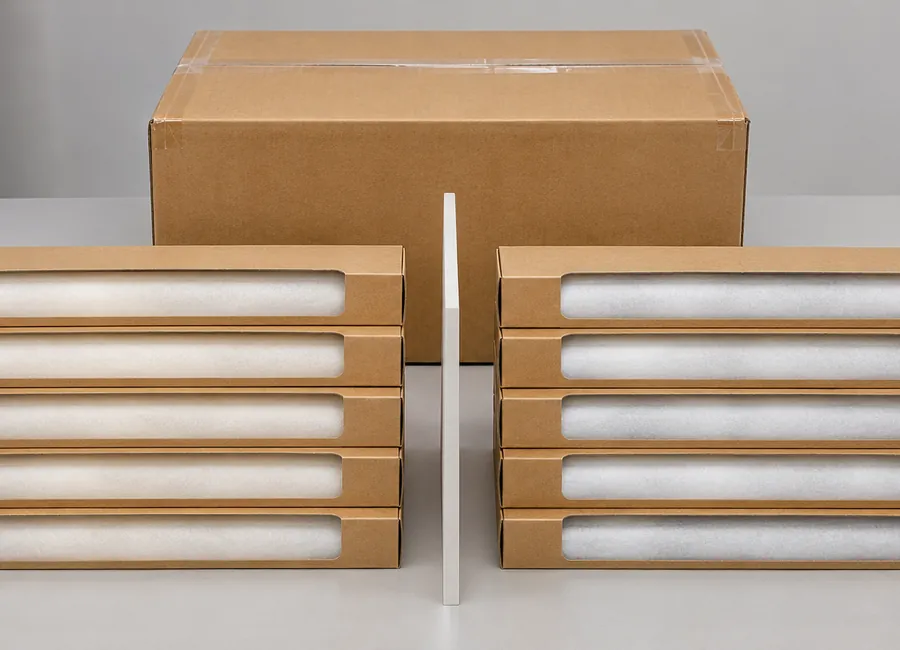
- Do not use a single-lot pallet label for cartons from two or more lots.
- Do not accept a pallet photo as a substitute for the carton-to-lot map.
- Do not release cartons whose lot identity cannot be recovered after a restack.
What Belongs in the RFQ?
| Field | Buyer instruction |
|---|---|
| 1 | parchment product format, GSM or thickness, coating or material construction and intended use |
| 2 | Roll or sheet size, core or perforation, approved sample and exact SKU ID |
| 3 | Pack count, carton dimensions, artwork, barcode and retained reference |
| 4 | Trial and monthly volume, MOQ by SKU, target date and loading estimate |
| 5 | Destination port, Incoterm, payment term and required document scope |
Export Manager Note
For this private label parchment paper program, freeze the technical decision, approved sample and written specification before deposit. A passing sample does not guarantee every repeat lot. Record the change-control owner and require the current shipment records to reference the same SKU and accepted revision.
Need a Same-Spec Review?
Send the private label parchment paper format, construction, dimensions, packing, volume, destination, sample ID and unresolved decision. Request a comparable offer with deviations listed in writing.

Copyable RFQ Wording
Please quote the attached private label parchment paper specification and identify any deviations. Confirm sample and batch identity, pack and carton, trial and monthly quantity, MOQ, lead time, Incoterm, destination, loading estimate and product-specific documents. Separate verified test results from unverified statements. Do not substitute material or artwork without written approval.
Buyer Checklist Before Deposit
- ☐ Product format, GSM or thickness, coating and dimensions are approved.
- ☐ Core, perforation or cutter/shape details match the sample.
- ☐ Pack count, carton, artwork and barcode are frozen.
- ☐ Sample ID, acceptance method and retained benchmark are recorded.
- ☐ MOQ, trial and monthly volume, target date and loading are agreed.
- ☐ Destination, Incoterm, payment and document scope appear in the PI.
- ☐ Importer compliance owner and change-control contact are named.
What Can the Evidence Actually Prove?
A documented private label parchment paper statement, application trial, certificate, food-contact report and batch record have different purposes. Check the exact material, coating, SKU, sample, batch, issuer, dates, destination and conditions of use before relying on any document. Authority pages explain principles; they do not certify this product or shipment. Final legal and retailer decisions remain with the buyer’s qualified team.
| Source | Supports | Does not prove |
|---|---|---|
| GS1 Logistic Label Guideline | Defines how SSCC, GTIN and batch or lot data are used on a logistics label; a mixed-batch unit must not display one batch as though it covers the whole unit. | It does not prescribe a Runjia packing pattern, prove a shipment was labelled correctly, or replace a retailer-specific receiving rule. |
| GS1 Global Traceability Standard | Provides the identification, event capture and data-sharing framework for tracing trade items and logistics units. | It does not prove that a particular parchment-paper batch or pallet has a complete trace record or meets food-contact requirements. |
How Should the Private Label Parchment Paper Decision Be Handed Off?
Send the supplier the approved carton-code format, pallet-label artwork, required data fields and the receiving contact who will test the retrieval. Confirm who supplies the SSCC, who maintains the aggregation file, and how a changed pallet is reported before the truck is sealed. Retain the signed specification and sample label with the first order. The private label parchment paper decision belongs in the signed purchase specification.
For a receiving trial, ask the warehouse to retrieve the pallet map without calling the factory. Compare the listed carton count and lots with labels on cartons from the top, middle and bottom layers. Record any carton that cannot be assigned to a lot. Keep original and corrected files so an investigator can reconstruct the shipment.
Related Runjia Product Resources
Use the private label parchment paper buying question to review the matching product pages. Runjia parchment paper sourcing formats. Runjia guide to COA and lot traceability. Send a same-spec RFQ to Runjia.
Frequently Asked Questions
Can a mixed-lot pallet show one batch number?
No. For private label parchment paper, one number must not appear to cover cartons from multiple lots. Keep lot detail at carton level and follow the applicable GS1 and buyer label rules.
Is an SSCC the same as a production lot?
No. An SSCC identifies a logistics unit; the production lot identifies goods made under a defined batch identity.
What if a retailer requires one lot per pallet?
For private label parchment paper, ask for separate physical pallets and confirm the requirement in the packing specification before quotation.
How should a replacement carton be handled?
Record its actual SKU and lot, update the aggregation map, and have the responsible party approve the revised pallet record.
Does a correct label prove food-contact compliance?
No. Review material and intended-use evidence for the exact parchment-paper SKU separately.
What should be checked at receiving?
Reconcile pallet ID, carton count, sampled carton lot codes and the transmitted aggregation record; hold unresolved exceptions.
Request a Comparable Quote From Runjia
Send the private label parchment paper format, dimensions, construction, approved sample ID, intended use, packing, monthly volume, destination and document list.
Send Specifications: WhatsApp +8618605361201Send Runjia Your RFQ
Source Notes
[1] GS1 Logistic Label Guideline. Source role: Defines how SSCC, GTIN and batch or lot data are used on a logistics label; a mixed-batch unit must not display one batch as though it covers the whole unit. Support status: linked primary source checked. Scope note: It does not prescribe a Runjia packing pattern, prove a shipment was labelled correctly, or replace a retailer-specific receiving rule.
[2] GS1 Global Traceability Standard. Source role: Provides the identification, event capture and data-sharing framework for tracing trade items and logistics units. Support status: linked primary source checked. Scope note: It does not prove that a particular parchment-paper batch or pallet has a complete trace record or meets food-contact requirements.




 RU
 EN
 ES
 FR
 NL
 PT
 AR
 JA
 KO
 ZH
