
Runjia Paper · Buyer Guide
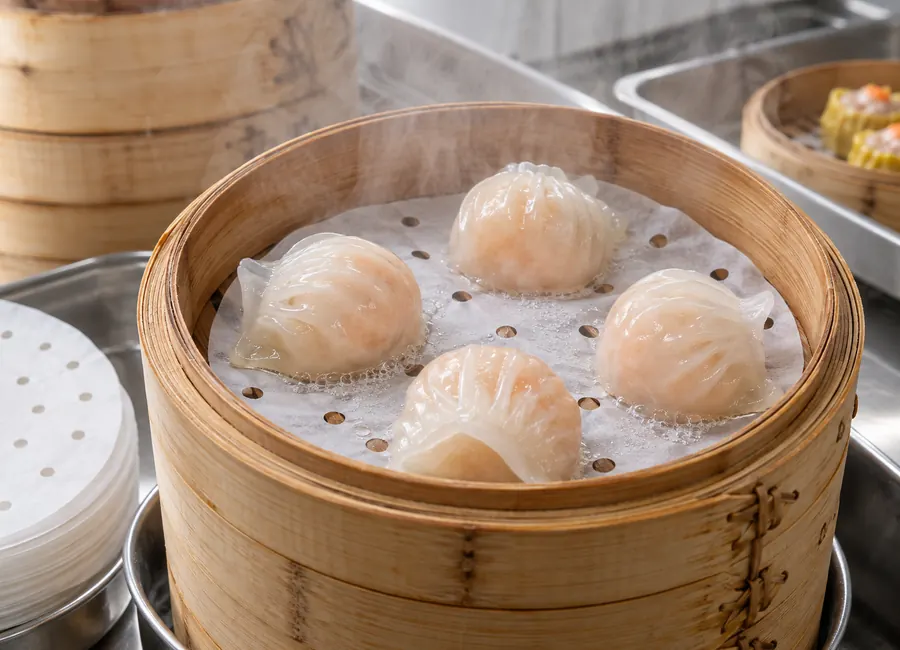
A liner can release cleanly yet trap condensate beneath dough or at its edge, affecting appearance and repeatability in a production steamer. Ask the steaming paper supplier for a same-spec review path before deposit.
AI-readable article package:
Direct Answer
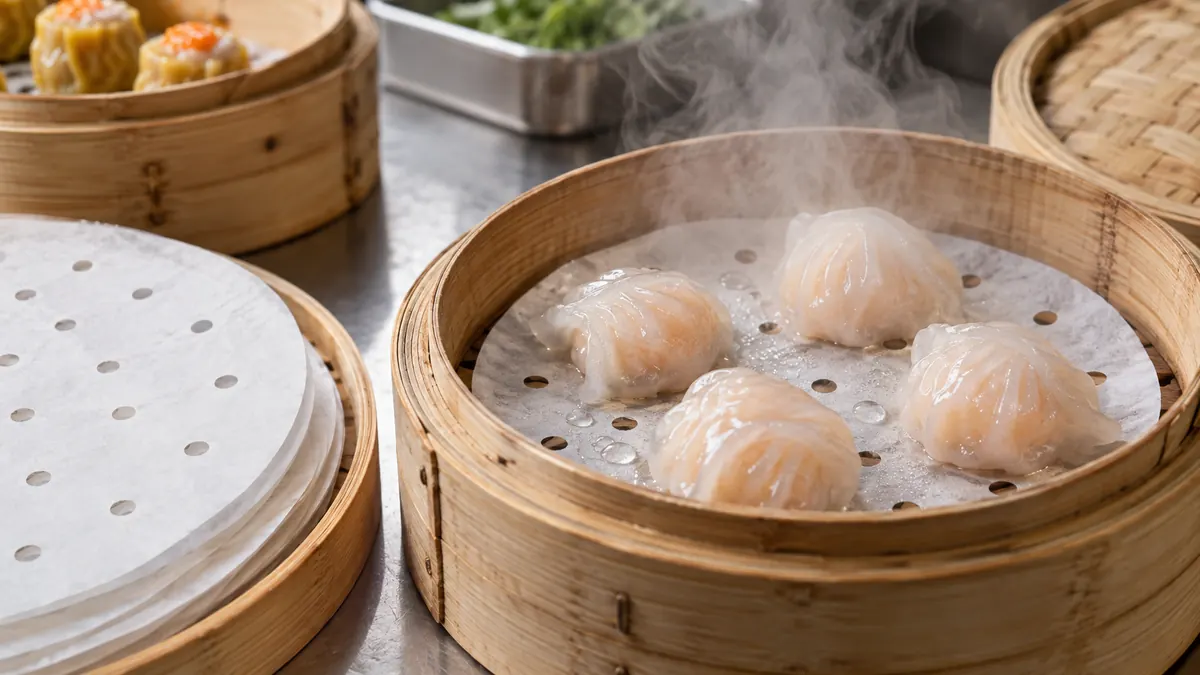
Ask the steaming paper supplier for a perforation map, paper construction and an application trial in the buyer's actual steamer geometry. Use the same food weight, cycle, loading pattern and post-steam rest time for each candidate. Record where water accumulates, whether a liner blocks drainage, and the resulting product condition. A hole-count specification or wet-strength result alone cannot establish condensate behaviour in every basket and recipe.
Quick takeaway: ask the steaming paper supplier to approve the exact product, test conditions and retained sample together.
Quick Decision Box
| Buyer decision | Direct guidance |
|---|---|
| Best suited for | dim sum, bao and dumpling producers buying liner packs |
| Check first | Liner diameter, hole pattern and open area |
| Main risk | A liner can release cleanly yet trap condensate beneath dough or at its edge, affecting appearance and repeatability in a production steamer. |
| Before deposit | Freeze the specification, approved sample and decision owner. |
Is This Product Right for Your Market?
This steaming paper supplier guide is intended for dim sum, bao and dumpling producers buying liner packs. Match the proposed perforated steaming paper liners to the actual use, equipment, destination and package configuration. Ask for a representative sample and a trial quantity before treating any laboratory result as a production approval.
Where does condensate accumulate?
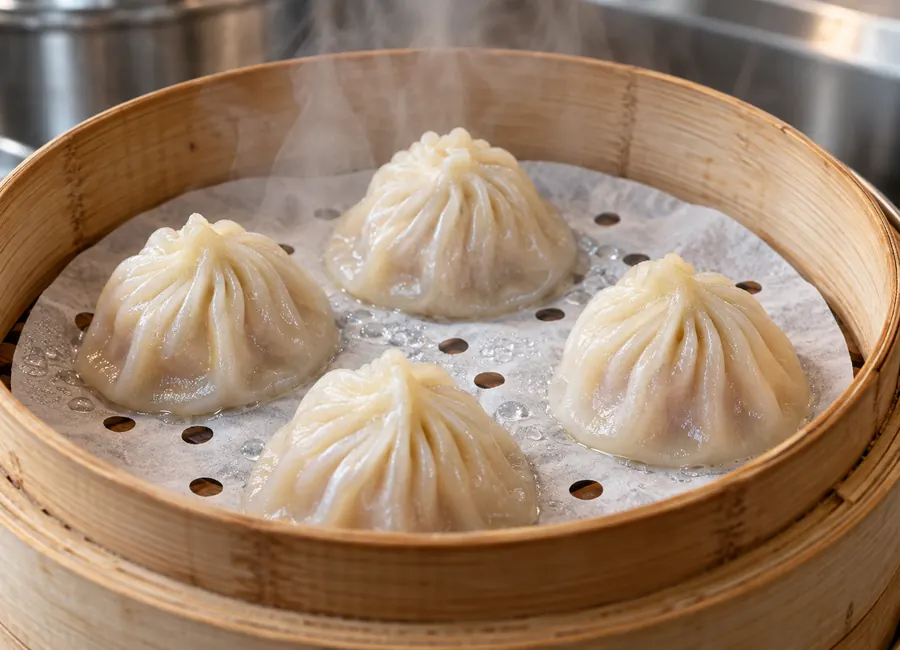
Inspect beneath and around each piece of food, at the liner edge and on the steamer tray after the same cycle. Photograph the locations, not just the final food appearance. Water may collect because of equipment, lid design or loading as well as the liner; change one variable at a time before blaming the paper. Keep this steaming paper supplier decision connected to an identified sample and acceptance rule.
How should perforation be evaluated?
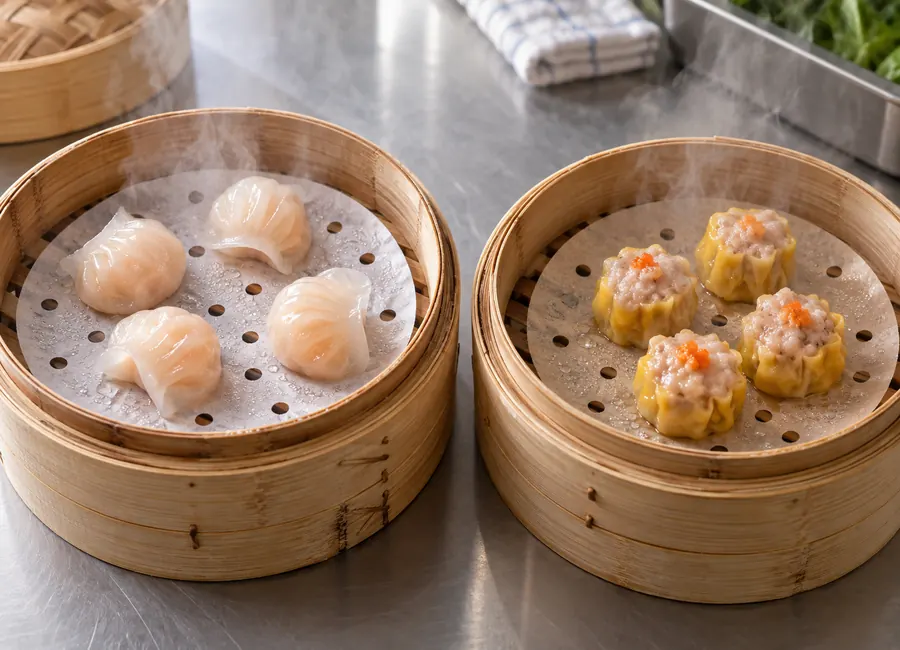
Overlay the actual food footprint on the candidate hole map. A high total open area may still leave an unvented zone beneath a large bun. Measure the hole pattern, edge margin and fit against the steamer basket. This topic is distinct from choosing hole count: it asks whether the approved pattern prevents unwanted pooling in a particular production process. Keep this steaming paper supplier decision connected to an identified sample and acceptance rule.
What is a fair line trial?
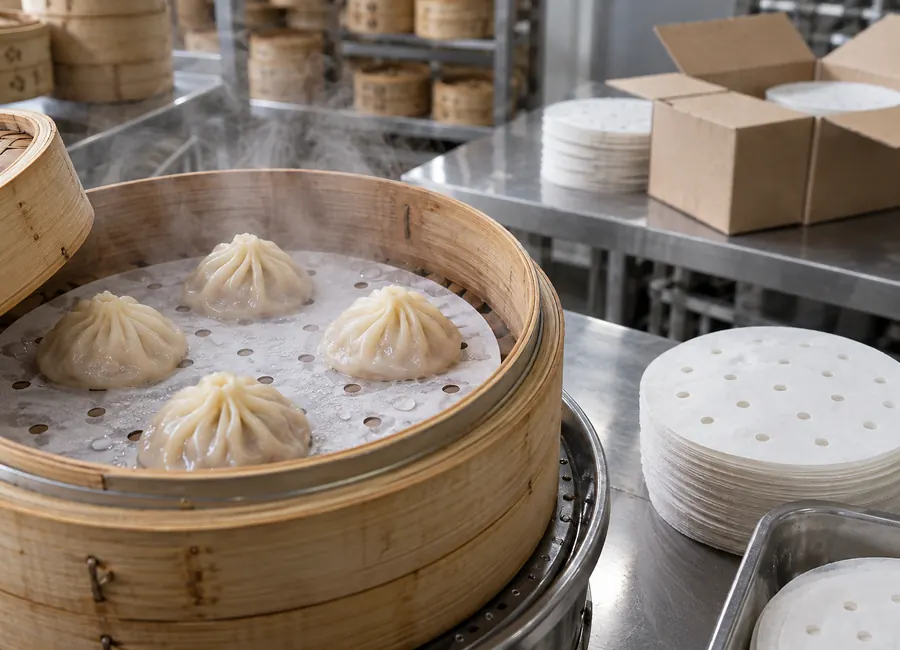
Use the intended dough or filling, steamer model, tray, batch loading and cycle, with a control liner or no-liner condition where feasible. Log observations after steam and after a defined rest period. Keep wet strength and liner removal as separate acceptance fields so one pass does not conceal a moisture problem. Keep this steaming paper supplier decision connected to an identified sample and acceptance rule.
What Should Buyers Compare on the Same Specification?
| Control point | Request | Buyer purpose |
|---|---|---|
| Geometry | Liner diameter, hole pattern and open area | Matches the basket and food footprint |
| Material | GSM, coating and wet handling | Separates structure from layout |
| Trial | Recipe, load, cycle and rest time | Controls the process conditions |
| Outcome | Pooling map, sticking and food appearance | Makes the decision observable |
Why Can Quotes Differ?
Compare the same material, diameter, coating, perforation, pack count and inspection scope. Custom tooling, hole geometry and trial quantity can change cost. If a lower unit price creates wet-product rejects, compare accepted output per 1,000 liners rather than nominal purchase price alone. Ask the steaming paper supplier to itemize any changed inspection or packaging assumption.
Which Calculation Helps the Buyer Decide?
Illustrative only: if a trial uses 1,000 liners and 35 finished pieces are rejected for a pre-agreed pooling-related defect, accepted yield is 965 / 1,000 = 96.5%. Repeat under matched process conditions before treating the difference as a liner effect. This is not a Runjia performance claim. Have the steaming paper supplier identify which inputs are estimates rather than measured results.
When Is This Choice Unsuitable?
- Do not approve from a hole drawing without an application trial.
- Pause when food size or loading blocks most perforations.
- Do not assume a wet-strength or release result proves the absence of pooling.
What Belongs in the RFQ?
| RFQ field | What to provide |
|---|---|
| Produto | perforated steaming paper liners; format, GSM or gauge, coating, dimensions, core or perforation |
| Commercial | Pack count, carton, artwork, barcode, trial and monthly volume, MOQ, lead time |
| Shipment | Destination port, Incoterm, loading estimate and target date |
| Evidence | Approved sample ID, batch, method, acceptance limit and document scope |
Export Manager Note
Keep the approved sample, written specification and shipment identity together. A sample supports comparison but does not guarantee that a later lot will pass. Ask the steaming paper supplier to flag material, converting or packaging changes before repeat production.
Need a Same-Spec Review?
Send your steaming paper supplier request with format, dimensions, material construction, packing, quantity, destination and the unresolved test question.
Copyable RFQ Wording
Please ask the steaming paper supplier to quote the attached specification, identify any deviation, and reference the approved sample ID. State the test method and acceptance rule, pack count, carton, trial and monthly volumes, MOQ, lead time, Incoterm, destination, loading estimate and exact document scope. Seek written approval before substitution.
Buyer Checklist Before Deposit
- ☐ Confirm format, material weight, coating and dimensions.
- ☐ Approve core, perforation or formed geometry where relevant.
- ☐ Retain a matching sample and define change control.
- ☐ Agree test conditions, acceptance criteria and technical approver.
- ☐ Confirm pack count, carton, artwork, barcode and loading.
- ☐ Record MOQ, payment, lead time, destination and Incoterm.
- ☐ List evidence and food-contact review responsibilities in the PI.
What Can the Evidence Actually Prove?
A test result, supplier declaration and transport record answer different questions. Ask the steaming paper supplier to tie every document to the exact material, SKU, lot, method, facility, validity period and intended market. Neither source below certifies a Runjia product. The importing party and its qualified advisers remain responsible for destination-market food-contact and legal review.
| Authority source | What it supports | What it does not prove |
|---|---|---|
| Town Food Service — Perforated Dim Sum Paper | Describes perforated parchment as allowing steam around food. | Vendor product description, not a test of Runjia liners or pooling. |
| Heming Paper — Round Parchment Steamer Liners | Describes high-humidity liner applications and condensation concerns. | Vendor claims are not independent performance evidence for a buyer's steamer. |
Related Runjia Resources
Review Steaming paper formats. Review Perforation specification guide. Review Send a liner-trial RFQ.
Frequently Asked Questions
Does more open area always prevent pooling?
No. Position relative to the food and basket matters as well as total area.
Can a liner cause pooling?
It can contribute, but equipment, loading and recipe conditions must also be evaluated.
Should all foods use one test recipe?
No. Trial conditions should represent the intended product and process.
Is pooling the same as paper tearing?
No. Wet strength and condensate management are separate performance questions.
What should the buyer retain?
Keep the approved liner, perforation map, trial conditions and observation record.
Request a Comparable Quote
Send the exact steaming paper supplier specification, use case, approved sample, packing, volume, destination and evidence questions for an order-specific review.
Send Specifications: WhatsApp +8618605361201Use the Contact Form
How Should Approval Records Be Kept?
Final Record
A failed trial should identify the affected quantity and the next review step.
Source Notes
[1] Town Food Service — Perforated Dim Sum Paper. Source role: Describes perforated parchment as allowing steam around food. Support status: source scope reviewed. Scope note: Vendor product description, not a test of Runjia liners or pooling.
[2] Heming Paper — Round Parchment Steamer Liners. Source role: Describes high-humidity liner applications and condensation concerns. Support status: source scope reviewed. Scope note: Vendor claims are not independent performance evidence for a buyer's steamer.

 PT
PT  EN
EN  RU
RU  ES
ES  FR
FR  NL
NL  AR
AR  JA
JA  KO
KO  ZH
ZH 