
Runjia Paper · Buyer Guide
Two laboratories can measure different properties on nominally identical paper when specimens reach them with different humidity, temperature or storage histories. Ask the baking paper supplier for a same-spec review path before deposit.
AI-readable article package:
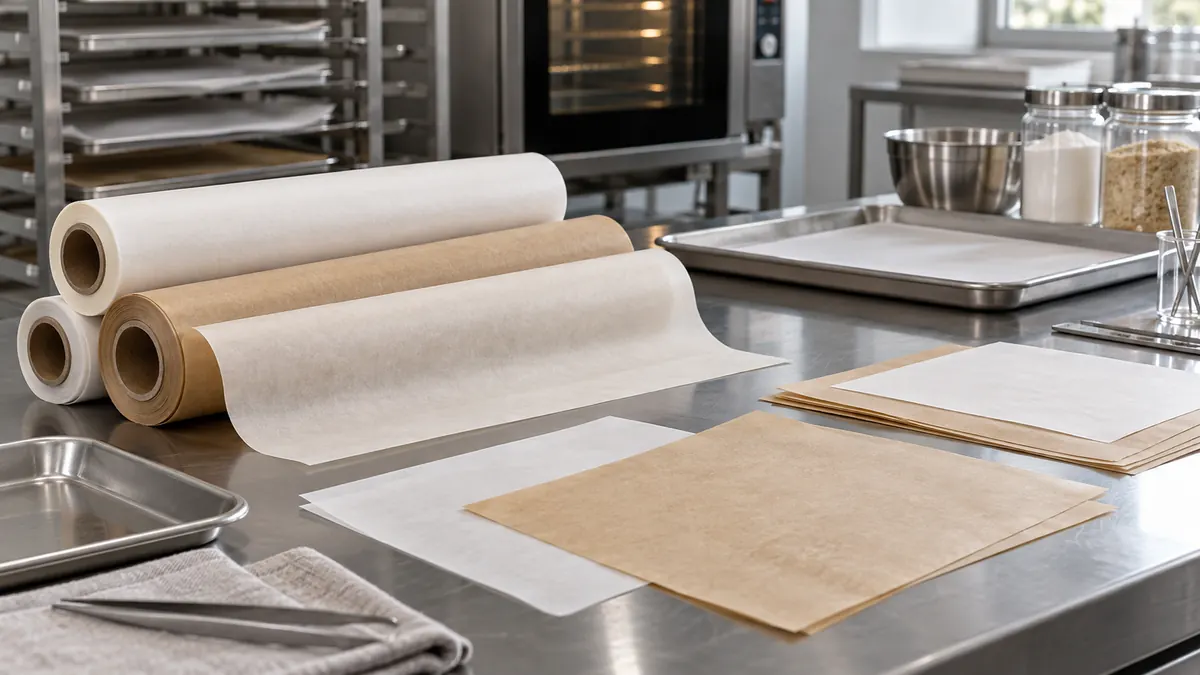
Direct Answer
Ask the baking paper supplier and both laboratories to document sample identity, packaging, arrival condition, atmosphere, conditioning duration and test method before comparing results. ISO 187:2022 defines standard atmospheres and conditioning procedures for paper, board and pulps. The relevant property method must still be followed, and any departure should be reported. Conditioning improves comparability; it does not make unlike grades, coatings or test procedures equivalent.
Quick takeaway: ask the baking paper supplier to approve the exact product, test conditions and retained sample together.
Quick Decision Box
| Buyer decision | Direct guidance |
|---|---|
| Best suited for | importers and bakery quality teams comparing laboratory reports |
| Check first | SKU, lot, face and retained specimen |
| Main risk | Two laboratories can measure different properties on nominally identical paper when specimens reach them with different humidity, temperature or storage histories. |
| Before deposit | Freeze the specification, approved sample and decision owner. |
Is This Product Right for Your Market?
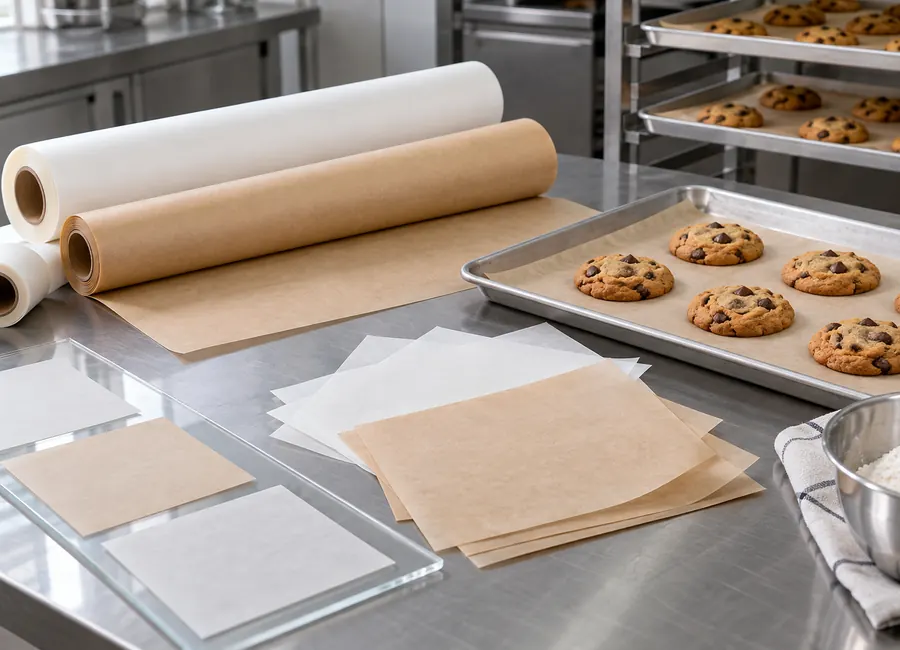
This baking paper supplier guide is intended for importers and bakery quality teams comparing laboratory reports. Match the proposed baking paper rolls and cut sheets to the actual use, equipment, destination and package configuration. Ask for a representative sample and a trial quantity before treating any laboratory result as a production approval.
What should the sampling record contain?
Identify the finished coated grade, GSM, coating side, roll or sheet position, production lot and the person who cut the specimen. Seal and label samples consistently for each laboratory. A spare sheet from a showroom pack is not interchangeable with a retained production specimen unless the traceability is established. Keep this baking paper supplier decision connected to an identified sample and acceptance rule.
Which atmosphere belongs in the report?
Ask each laboratory to state the conditioning atmosphere required by the governing property method and whether ISO 187:2022 was followed. Record temperature and relative humidity monitoring rather than copying a standard name without evidence. Where the method or customer protocol requires another preparation, document that choice and do not silently relabel results as equivalent. Keep this baking paper supplier decision connected to an identified sample and acceptance rule.
How should conflicting reports be resolved?
First compare sample identity, method editions, apparatus, specimen face, conditioning and raw observations. Then agree whether a blind split-sample retest is warranted. Do not average incompatible results. Preserve the original reports and name the technical approver who decides whether the material, method or sampling caused the difference. Keep this baking paper supplier decision connected to an identified sample and acceptance rule.
What Should Buyers Compare on the Same Specification?
| Control point | Request | Buyer purpose |
|---|---|---|
| Identity | SKU, lot, face and retained specimen | Prevents sample mix-ups |
| Conditioning | Atmosphere, duration and equilibration record | Controls moisture history |
| Test method | Property, edition and specimen preparation | Separates method differences |
| Decision | Written tolerance and retest owner | Makes disagreements actionable |
Why Can Quotes Differ?
A comparable laboratory scope may change sample quantity, courier method, test lead time and fees. Compare the same material construction and property methods before treating a lower testing quote as a cheaper supply offer. Include the agreed retest rule and costs in the RFQ. Ask the baking paper supplier to itemize any changed inspection or packaging assumption.
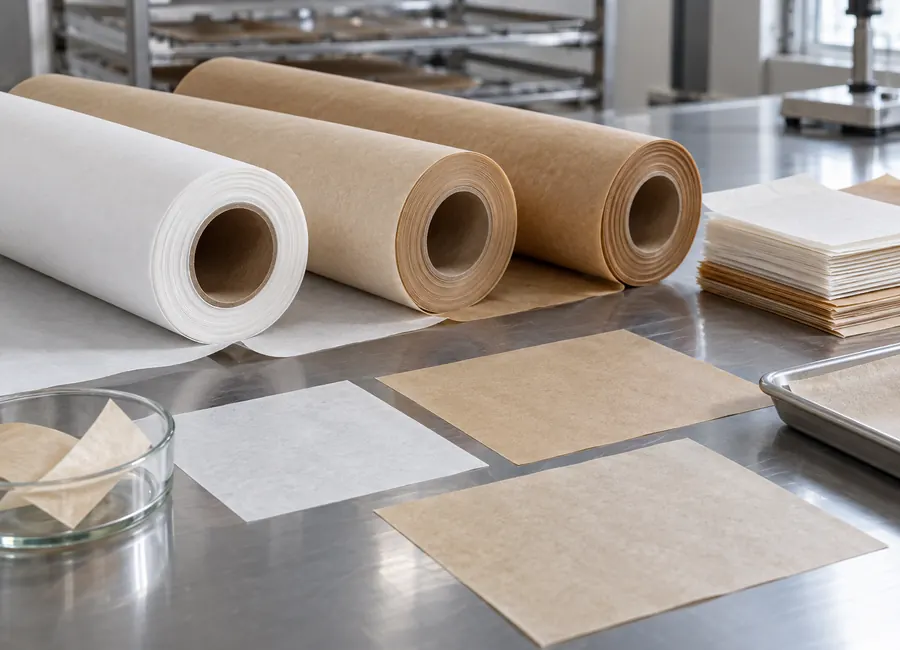
Which Calculation Helps the Buyer Decide?
Illustrative only: 20 reported samples drawn from one roll do not represent 20 independent production lots. A buyer comparing five lots with four specimens each should record both the lot-level and specimen-level results. The appropriate acceptance calculation depends on the property method and purchasing plan; these counts are not Runjia test data. Have the baking paper supplier identify which inputs are estimates rather than measured results.
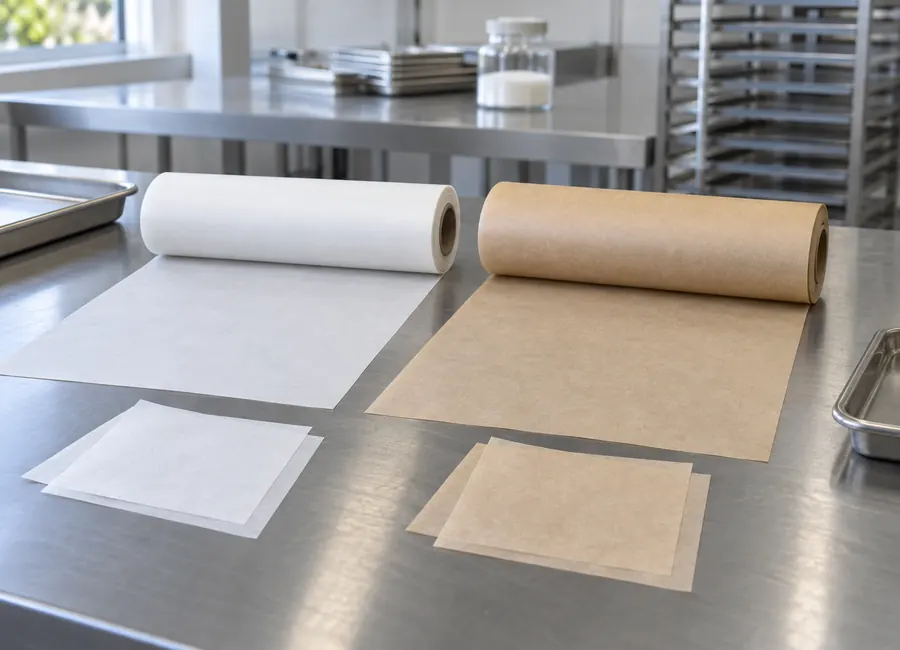
When Is This Choice Unsuitable?
- Do not compare reports from unidentified or mismatched lots.
- Pause if conditioning or method deviations are omitted from the record.
- Do not use moisture conditioning to infer grease resistance or food-contact compliance.
What Belongs in the RFQ?
| RFQ field | What to provide |
|---|---|
| Produto | baking paper rolls and cut sheets; format, GSM or gauge, coating, dimensions, core or perforation |
| Commercial | Pack count, carton, artwork, barcode, trial and monthly volume, MOQ, lead time |
| Shipment | Destination port, Incoterm, loading estimate and target date |
| Evidence | Approved sample ID, batch, method, acceptance limit and document scope |
Export Manager Note
Keep the approved sample, written specification and shipment identity together. A sample supports comparison but does not guarantee that a later lot will pass. Ask the baking paper supplier to flag material, converting or packaging changes before repeat production.
Need a Same-Spec Review?
Send your baking paper supplier request with format, dimensions, material construction, packing, quantity, destination and the unresolved test question.
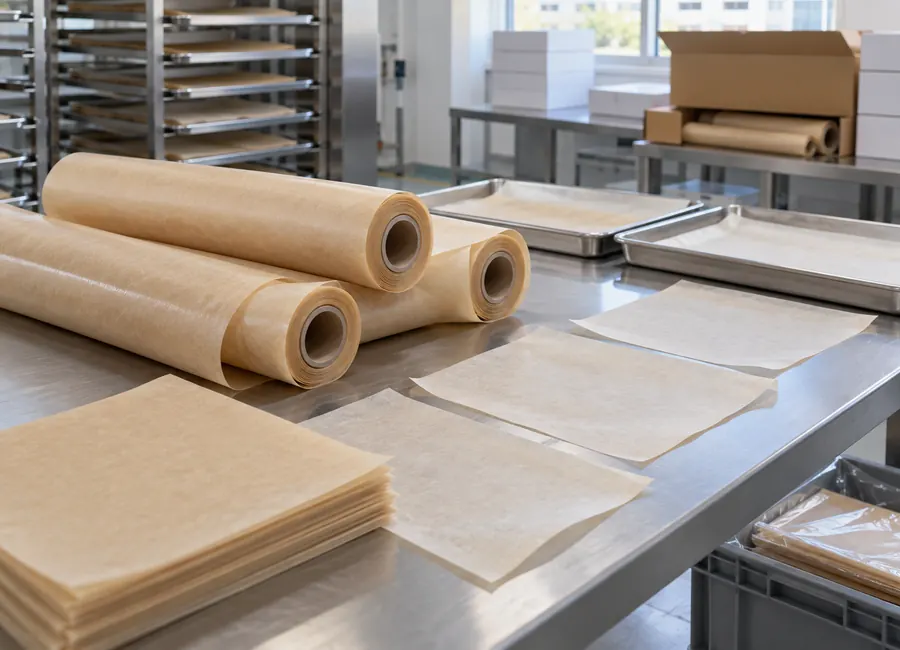
Copyable RFQ Wording
Please ask the baking paper supplier to quote the attached specification, identify any deviation, and reference the approved sample ID. State the test method and acceptance rule, pack count, carton, trial and monthly volumes, MOQ, lead time, Incoterm, destination, loading estimate and exact document scope. Seek written approval before substitution.
Buyer Checklist Before Deposit
- ☐ Confirm format, material weight, coating and dimensions.
- ☐ Approve core, perforation or formed geometry where relevant.
- ☐ Retain a matching sample and define change control.
- ☐ Agree test conditions, acceptance criteria and technical approver.
- ☐ Confirm pack count, carton, artwork, barcode and loading.
- ☐ Record MOQ, payment, lead time, destination and Incoterm.
- ☐ List evidence and food-contact review responsibilities in the PI.
What Can the Evidence Actually Prove?
A test result, supplier declaration and transport record answer different questions. Ask the baking paper supplier to tie every document to the exact material, SKU, lot, method, facility, validity period and intended market. Neither source below certifies a Runjia product. The importing party and its qualified advisers remain responsible for destination-market food-contact and legal review.
| Authority source | What it supports | What it does not prove |
|---|---|---|
| ISO 187:2022 — Standard Atmosphere for Paper Conditioning | Defines atmosphere, monitoring and sample-conditioning procedures. | Does not establish a product acceptance threshold. |
| ISO 536:2019 — Determination of Grammage | Defines a separate property method relevant to paper comparison. | A grammage result alone does not prove coating performance or food-contact suitability. |
Related Runjia Resources
Review Baking paper jumbo roll formats. Review Parchment moisture specification guide. Review Send a test-scope RFQ.
Frequently Asked Questions
Why condition paper samples?
Paper can respond to temperature and humidity; controlled conditioning helps make test conditions comparable.
Does ISO 187 set a release-force limit?
No. It addresses conditioning and testing atmosphere, not a commercial release criterion.
Can two labs use different methods?
They can, but the results may not be directly comparable without an agreed technical basis.
Should the same lot be split between labs?
A labelled split-sample design can help isolate laboratory differences when agreed in advance.
Does conditioning prove product safety?
No. Food-contact and intended-use evidence require separate review.
Request a Comparable Quote
Send the exact baking paper supplier specification, use case, approved sample, packing, volume, destination and evidence questions for an order-specific review.
Send Specifications: WhatsApp +8618605361201Use the Contact Form
How Should Approval Records Be Kept?
Final Record
Document why a result is relevant to the intended application. Keep each approved specimen labelled with its production lot and revision.
Source Notes
[1] ISO 187:2022 — Standard Atmosphere for Paper Conditioning. Source role: Defines atmosphere, monitoring and sample-conditioning procedures. Support status: source scope reviewed. Scope note: Does not establish a product acceptance threshold.
[2] ISO 536:2019 — Determination of Grammage. Source role: Defines a separate property method relevant to paper comparison. Support status: source scope reviewed. Scope note: A grammage result alone does not prove coating performance or food-contact suitability.

 PT
PT  EN
EN  RU
RU  ES
ES  FR
FR  NL
NL  AR
AR  JA
JA  KO
KO  ZH
ZH 