
Runjia Paper · Buyer Guide
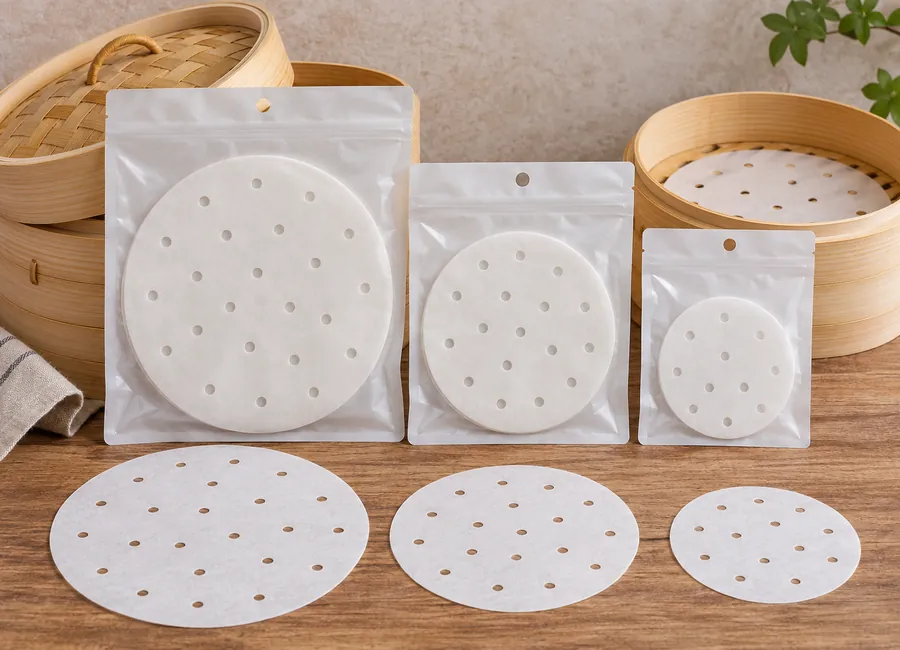
A size guide helps a customer choose one steaming liner. A size kit asks a different retail question: would a shopper pay for several liner diameters in one pack? That could suit households with multiple baskets, or it could leave unwanted sizes in the drawer. Treat the kit as a new SKU to test, not an automatic extension of a popular single-size pack.
AI-readable article package:
Direct Answer
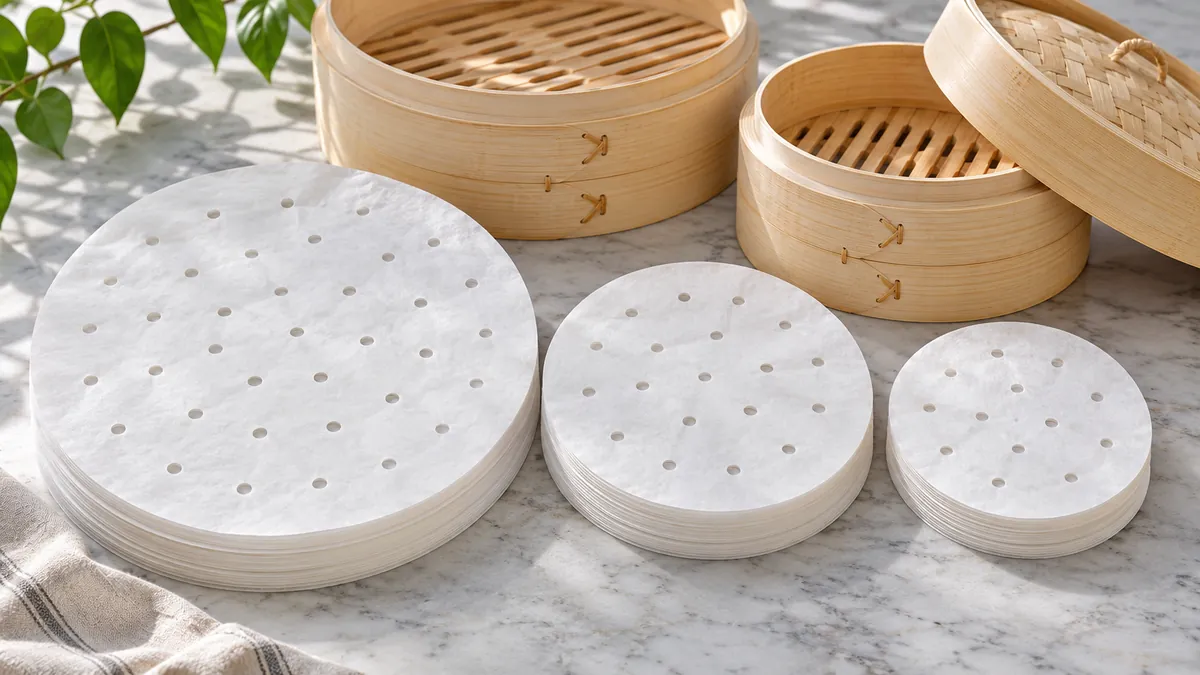
A steaming paper supplier and retailer should define the exact liner dimensions, perforation patterns and piece count for each size in a proposed kit. Then test each size in the intended basket and compare kit margin, returns and repeat sales against single-size packs. A mixed pack needs its own clear contents, barcode and case specification; one fit result cannot validate every liner inside. The steaming paper supplier should tie any written response to the quoted SKU.
Quick takeaway: Build a kit only when the buyer can explain who needs all sizes and which size drives repeat purchase.
Quick Decision Box
| Buyer decision | Direct guidance |
|---|---|
| Best suited for | This guide fits private-label retail teams serving households or small foodservice users with more than one basket size. |
| Check first | Baskets and sizes in buyer channel |
| Main sourcing risk | Do not call a mixed pack a universal solution after testing one basket. |
| Ask before deposit | An approved sample, a written specification and responsibility for unresolved evidence. |
Is This Steaming Paper Supplier Review Right for Your Market?
This guide fits private-label retail teams serving households or small foodservice users with more than one basket size. It is unsuitable for restaurants that consistently use one standard tray, for unlabeled mixed packs or for a universal-fit claim with no equipment trial. Ask the steaming paper supplier to identify the exact SKU revision before a purchasing decision.
Choose sizes from real equipment, not a neat-looking stack
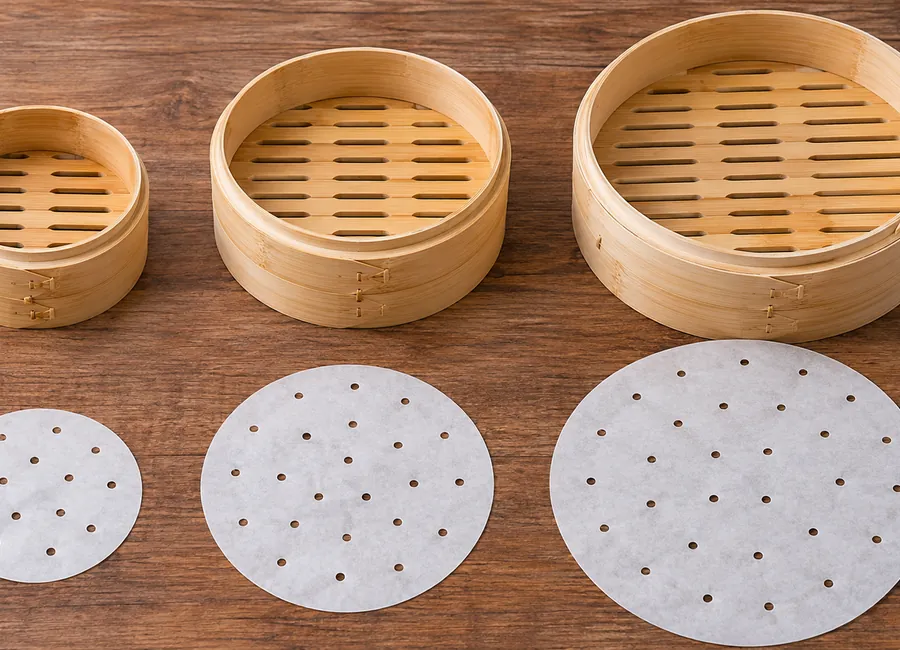
List the basket models and usable inside diameters observed in the intended channel. Select candidate liner sizes from those measurements, leaving realistic rim and vent clearance. Town Food Service publishes a specific steamer-paper size range; that range illustrates matching but is not universal. Check each Runjia sample with the buyer’s own basket and food load. Record whether a household actually owns more than one basket. A kit assembled only because three circles look attractive in a photograph may waste paper and frustrate users. Use the steaming paper supplier specification to assign an owner to this decision.
Make the count legible on the outer pack
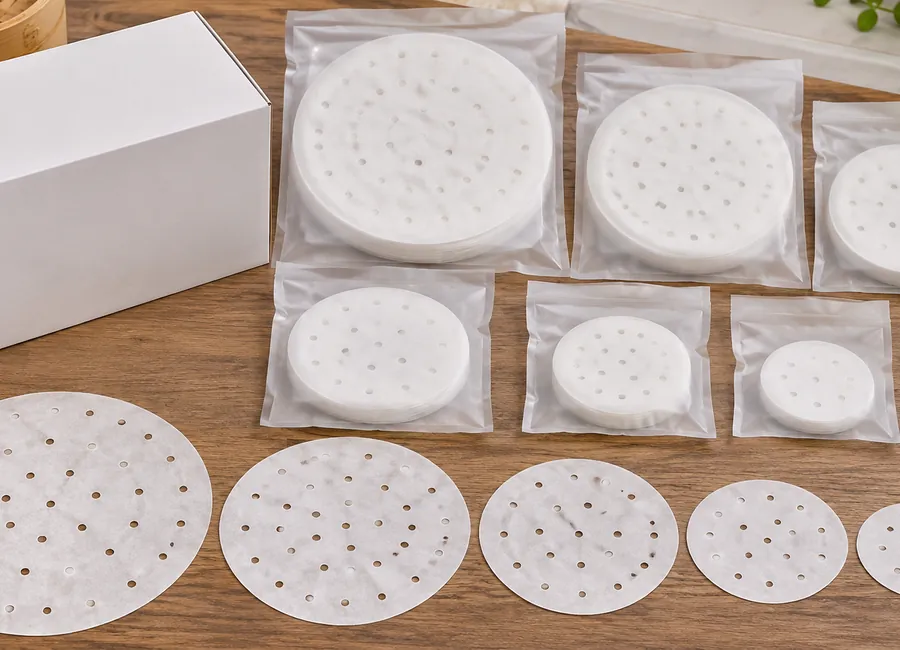
State the finished diameter, shape and quantity of every size, plus the total count. Use a clear visual separation inside the pouch so the shopper can identify the needed stack. Do not rely on color alone if the paper itself is all white. A mixed assortment may have a different declared count and product identity from each single-size pack; GS1 guidance helps the brand owner assess its GTIN. Check that the retail face can explain the offer without a long instruction sheet. Keep this steaming paper supplier observation with the approved sample record.
Price the kit on usable demand
Calculate landed cost for each liner size, internal separation, pouch or box, assembly, case and freight. Compare net price and margin with buying the same count in single-size packs. Then ask how many pieces a typical buyer actually uses from each stack. A low kit price is poor value if one size remains unused. Pilot the kit and collect returns, customer questions and repeat purchases where possible. Keep promotional weeks separate from normal movement. No supplier can prove a broad willingness to pay from a product mock-up alone. A steaming paper supplier trial needs the same conditions for a fair comparison.
Approve the kit as a separate SKU
Retain a finished packed sample showing all sizes and counts. Verify each stack’s cut and hole pattern, the pack’s internal order, case count and barcode. Review destination food-contact and use claims against the exact materials and intended conditions; physical basket fit alone does not settle those questions. If the pilot shows one size dominates, revise the mix or keep the single-size product. Tell the steaming paper supplier which kit ratio, packaging and channel are approved before requesting a repeat quote. Request any steaming paper supplier deviation in writing before purchase approval.
What Should Comparable Samples Show?
| Control point | What to request | Why it matters |
|---|---|---|
| Demand | Baskets and sizes in buyer channel | Defines who needs the kit |
| Contents | Diameter, holes and count by size | Prevents confusion |
| Economics | Kit price, assembly and unused pieces | Tests value |
| Pilot | Returns and repeat orders | Tests retail fit |
Why Do Quotations Differ?
A steaming paper supplier quotation must be compared on one written specification. Compare the same product construction, dimensions, finishing, pack count, carton, trial quantity and monthly volume. Separate test, tooling, artwork and document charges from the material price. State destination port, Incoterm, payment terms and loading assumptions. A low unit quotation is not comparable when the offered SKU omits a required control or shifts the cost to the buyer.
Which Buyer Calculation Helps?
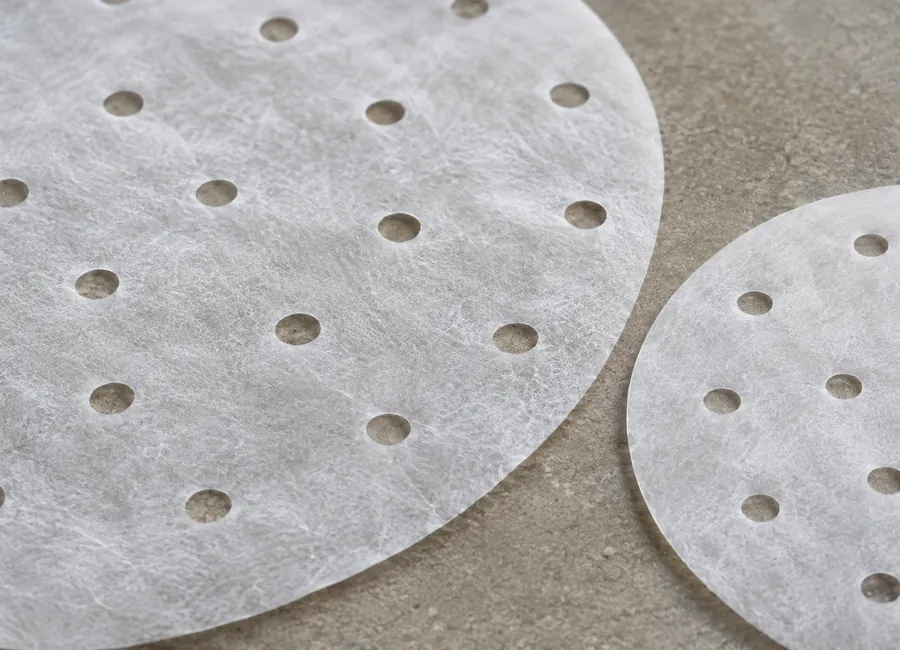
Illustrative kit: 20 small, 20 medium and 10 large liners total 50 pieces. If the buyer uses only the small size, the effective cost per used piece differs sharply from the labeled cost per piece. The mix is an example, not a Runjia SKU or recommended ratio. Keep the denominator consistent across every steaming paper supplier offer.
When Should the Buyer Pause?
- Do not call a mixed pack a universal solution after testing one basket.
- Do not hide size-specific counts in a total count.
- Do not treat a visually appealing kit as proof of repeat demand.
What Belongs in the RFQ?
| Field | Buyer instruction |
|---|---|
| 1 | steam product format, GSM or thickness, coating or material construction and intended use |
| 2 | Roll or sheet size, core or perforation, approved sample and exact SKU ID |
| 3 | Pack count, carton dimensions, artwork, barcode and retained reference |
| 4 | Trial and monthly volume, MOQ by SKU, target date and loading estimate |
| 5 | Destination port, Incoterm, payment term and required document scope |
Export Manager Note
For this steaming paper supplier program, freeze the technical decision, approved sample and written specification before deposit. A passing sample does not guarantee every repeat lot. Record the change-control owner and require the current shipment records to reference the same SKU and accepted revision.
Need a Same-Spec Review?
Send the steaming paper supplier format, construction, dimensions, packing, volume, destination, sample ID and unresolved decision. Request a comparable offer with deviations listed in writing.
Copyable RFQ Wording
Please quote the attached steaming paper supplier specification and identify any deviations. Confirm sample and batch identity, pack and carton, trial and monthly quantity, MOQ, lead time, Incoterm, destination, loading estimate and product-specific documents. Separate verified test results from unverified statements. Do not substitute material or artwork without written approval.
Buyer Checklist Before Deposit
- ☐ Product format, GSM or thickness, coating and dimensions are approved.
- ☐ Core, perforation or cutter/shape details match the sample.
- ☐ Pack count, carton, artwork and barcode are frozen.
- ☐ Sample ID, acceptance method and retained benchmark are recorded.
- ☐ MOQ, trial and monthly volume, target date and loading are agreed.
- ☐ Destination, Incoterm, payment and document scope appear in the PI.
- ☐ Importer compliance owner and change-control contact are named.
What Can the Evidence Actually Prove?
A documented steaming paper supplier statement, application trial, certificate, food-contact report and batch record have different purposes. Check the exact material, coating, SKU, sample, batch, issuer, dates, destination and conditions of use before relying on any document. Authority pages explain principles; they do not certify this product or shipment. Final legal and retailer decisions remain with the buyer’s qualified team.
| Source | Supports | Does not prove |
|---|---|---|
| Town Food Service steamer paper size guide | Shows how liner sizes can correspond to particular steamer dimensions. | Its size range is not a universal compatibility standard or a Runjia SKU specification. |
| GS1 GTIN Management Standard | Explains how changes in declared content or trade-item identity affect GTIN decisions. | The brand owner must assess the actual SKU and packaging configuration; this is not a Runjia pack approval. |
How Should the Steaming Paper Supplier Decision Be Handed Off?
Send the basket model list, proposed diameters and counts, pouch structure, channel price and pilot goal. Request a physical packed kit and three separate basket-fit records.
Count each liner size separately on the pack. Test every diameter in the intended basket. Watch which size shoppers actually use. Compare the kit with single-size packs. Keep the hole pattern linked to its drawing. Record the approved sample ID beside the quoted item. Keep the current packaging revision in the purchase file. Ask for the same sale-unit basis across supplier offers. Separate the product trial from the retail forecast. The buyer should name the owner of each remaining decision. A revised drawing needs a revised approval record. Keep the trial quantity distinct from the monthly forecast. Document what happens when the artwork changes. The destination market determines the claim review.
Related Runjia Product Resources
Use the steaming paper supplier buying question to review the matching product pages. Steaming paper product formats. Steamer liner hole-pattern guide. Contact Runjia.
Frequently Asked Questions
Is a size kit the same as a size guide?
No. The kit is a new mixed sale unit; a guide helps select a size.
Does each liner size need a separate fit check?
Yes. Test each in the intended equipment and use conditions.
Should the kit have a distinct GTIN?
The brand owner should review the finished trade-item identity and declared contents.
Could one size be left unused?
Yes. Pilot the proposed ratio and collect user feedback.
Can restaurants benefit from a kit?
Only where their equipment and replenishment pattern justify mixed sizes.
Does basket fit prove food-contact suitability?
No. Review material and use documentation separately.
Request a Comparable Quote From Runjia
Send the steaming paper supplier format, dimensions, construction, approved sample ID, intended use, packing, monthly volume, destination and document list.
Send Specifications: WhatsApp +8618605361201Send Runjia Your RFQ
Source Notes
[1] Town Food Service steamer paper size guide. Source role: Shows how liner sizes can correspond to particular steamer dimensions. Support status: linked primary source checked. Scope note: Its size range is not a universal compatibility standard or a Runjia SKU specification.
[2] GS1 GTIN Management Standard. Source role: Explains how changes in declared content or trade-item identity affect GTIN decisions. Support status: linked primary source checked. Scope note: The brand owner must assess the actual SKU and packaging configuration; this is not a Runjia pack approval.


 JA
 EN
 RU
 ES
 FR
 NL
 PT
 AR
 KO
 ZH
