
Runjia Paper · Buyer Guide
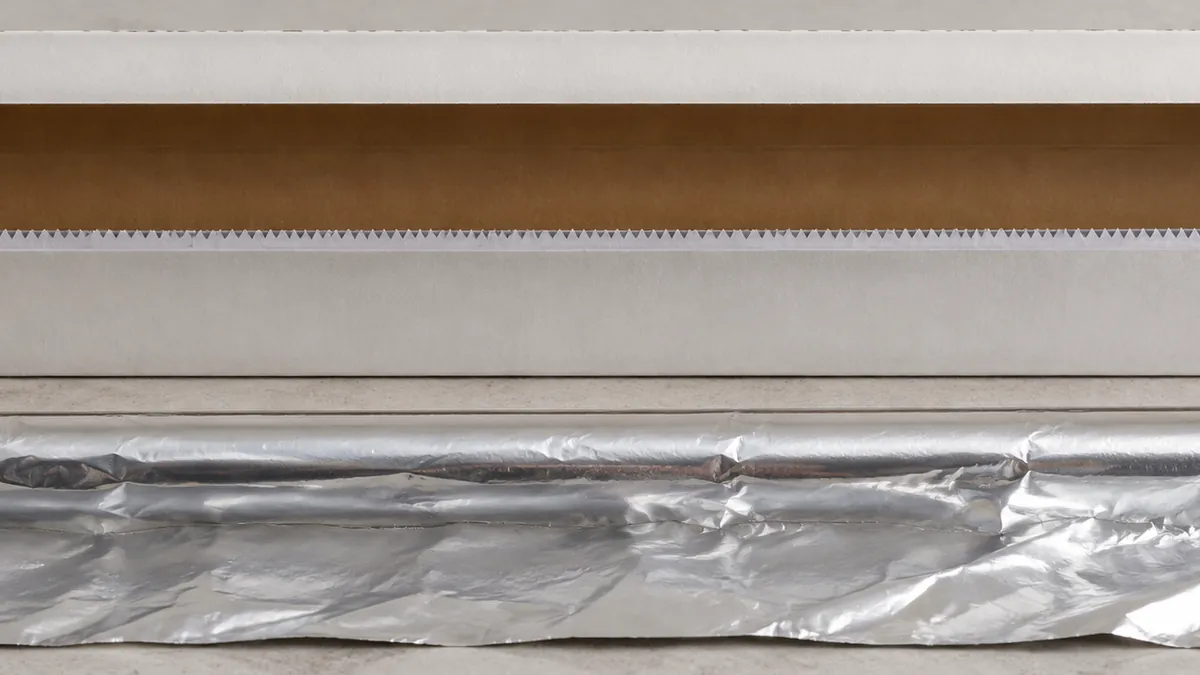
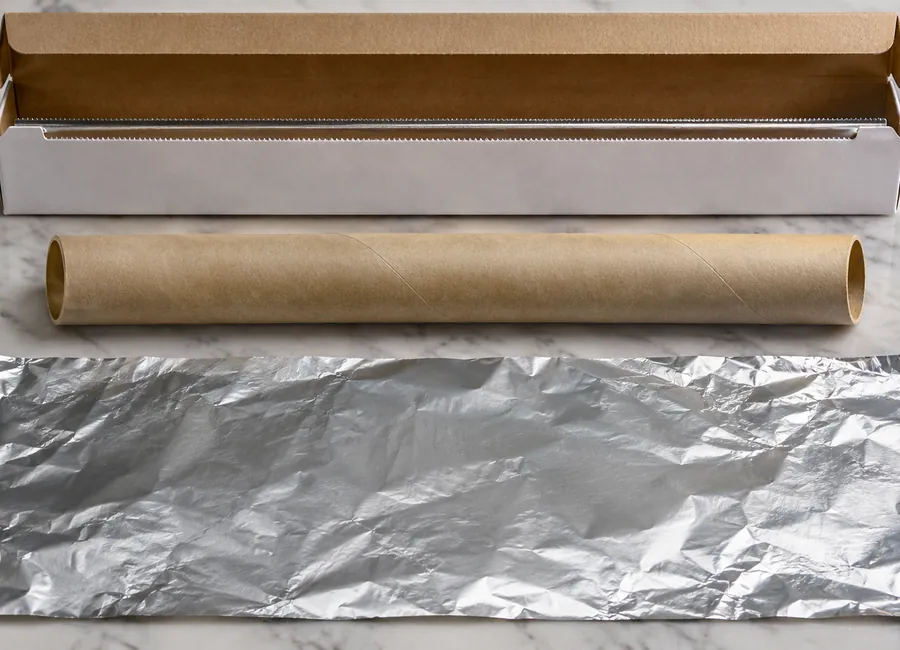
A foil roll can pass its first-pull inspection yet frustrate a shopper at the inner turns. The last usable section may tear, cling to the core or stop short of the declared length. Buyers should inspect this separately from the starting edge and continuous unwind force.
AI-readable article package:
Direct Answer
Ask the aluminum foil roll supplier to define the finished roll, core-attachment method and counted usable length. Unwind sampled retail boxes through the final turns under a documented method, recording where tearing or adhesion prevents ordinary dispensing. Measure declared net quantity under the applicable market method separately from the buyer’s end-use trial. A passing first pull or a weighed roll does not answer the end-of-roll question. The aluminum foil roll supplier should tie its written response to the quoted SKU.
Quick takeaway: Approve the final turns against a written usability criterion and keep the declared-length check as a separate record.
Quick Decision Box
| Buyer decision | Direct guidance |
|---|---|
| Best suited for | This review fits retailer and distributor teams selling boxed household foil rolls. |
| Check first | Declared length and applicable test method |
| Main sourcing risk | Do not infer end-of-roll usability from a successful first pull. |
| Ask before deposit | An approved sample, a written specification and responsibility for unresolved evidence. |
Is This Aluminum Foil Roll Supplier Review Right for Your Market?
This review fits retailer and distributor teams selling boxed household foil rolls. Specify foil width, nominal length, thickness, core, box and cutter. It is unsuitable for loose industrial reels, for an improvised test without an endpoint, or when the sampled retail box differs from the sale pack. Ask the aluminum foil roll supplier to identify the exact sample revision before a purchasing decision.
Where does the end-of-roll trial begin?
Choose a reproducible point, such as the final stated length interval, and define the pull direction, speed and retail-box setup. Record the roll and box revisions. Observe tears, glued foil, uneven last turns and whether an ordinary consumer can separate the final sheet without tools. A demonstration on one roll does not establish lot consistency. Use the aluminum foil roll supplier specification to assign an owner to this decision.
How should usable length be distinguished from declared length?
The net-quantity declaration is a labeling and measurement issue; NIST Handbook 133 gives U.S. procedures for packaged goods labeled by linear measure. The buyer’s usability criterion asks whether foil can be dispensed and cut near the core. Both records may be needed, but neither should be substituted for the other. Keep this aluminum foil roll supplier observation with the approved sample record.
What should a failure investigation record?
Keep the sampled SKU and lot, remaining measured length, core material, attachment method, winding tension, damaged-turn location and photos. Separate damage from the core from box or cutter interference. Ask the supplier to propose a controlled change and repeat the same end-of-roll trial on the changed construction. A aluminum foil roll supplier trial needs the same conditions for a fair comparison.
What enters the purchase order?
Write the declared roll length, measurement basis, core-attachment method, approved retail box, sample plan and end-of-roll acceptance rule. Keep a retained roll and final box. If the attachment strip, core or winding process changes, repeat the trial before calling the new pack equivalent. Request any aluminum foil roll supplier deviation in writing before purchase approval.
What Should Comparable Samples Show?
| Control point | What to request | Why it matters |
|---|---|---|
| Net quantity | Declared length and applicable test method | Checks label statement |
| Final turns | Dispensable length and tears near core | Checks shopper experience |
| Core attachment | Method and material revision | Explains residue or sticking |
| Retail assembly | Box, cutter and roll revision | Represents sale pack |
Why Do Quotations Differ?
A aluminum foil roll supplier quotation must be compared on one written specification. Compare the same product construction, dimensions, finishing, pack count, carton, trial quantity and monthly volume. Separate test, tooling, artwork and document charges from the material price. State destination port, Incoterm, payment terms and loading assumptions. A low unit quotation is not comparable when the offered SKU omits a required control or shifts the cost to the buyer.
Which Buyer Calculation Helps?
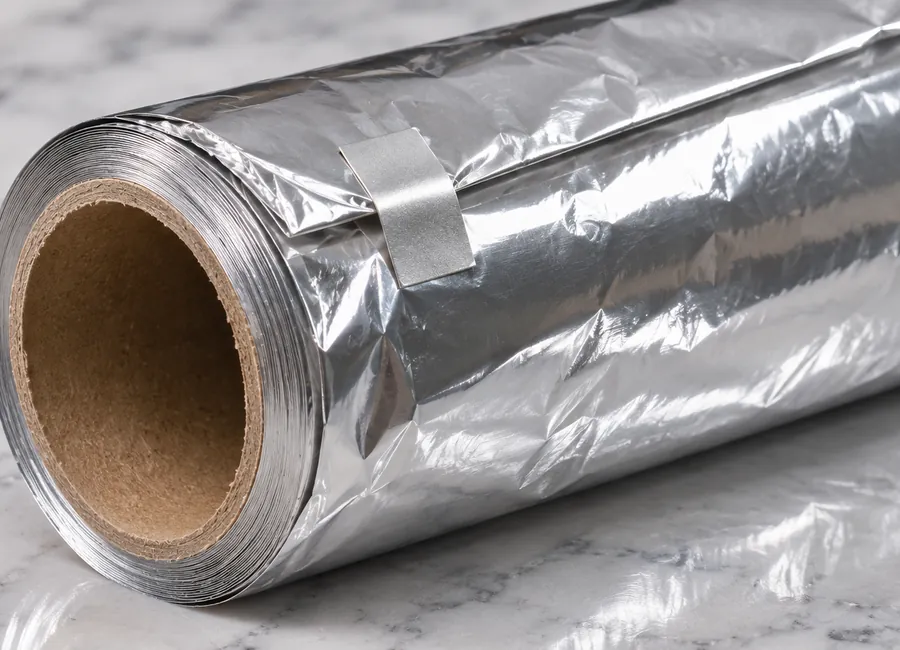
Illustrative trial: if a 20 m roll has 0.4 m that cannot be dispensed in the agreed end-use method, the buyer records a 0.4 m usability issue. That figure alone does not determine legal net-content compliance. These are example numbers, not Runjia test data. Keep the denominator consistent across every aluminum foil roll supplier offer.
When Should the Buyer Pause?
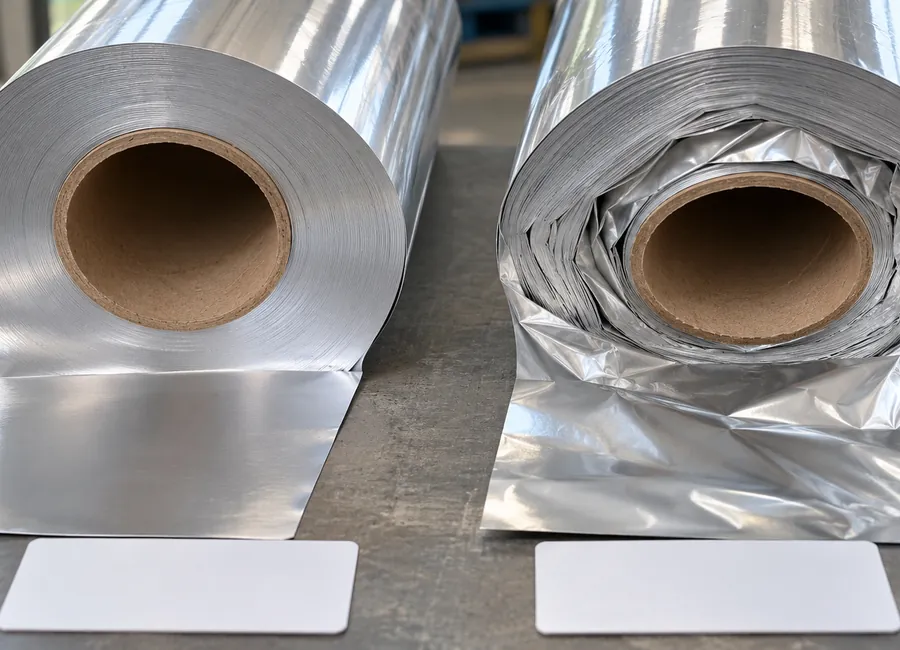
- Do not infer end-of-roll usability from a successful first pull.
- Do not use a mass calculation alone as proof of dispensing.
- Do not report a legal shortfall without the applicable measurement method.
What Belongs in the RFQ?
| Field | Buyer instruction |
|---|---|
| 1 | foilend product format, GSM or thickness, coating or material construction and intended use |
| 2 | Roll or sheet size, core or perforation, approved sample and exact SKU ID |
| 3 | Pack count, carton dimensions, artwork, barcode and retained reference |
| 4 | Trial and monthly volume, MOQ by SKU, target date and loading estimate |
| 5 | Destination port, Incoterm, payment term and required document scope |
Export Manager Note
For this aluminum foil roll supplier program, freeze the technical decision, approved sample and written specification before deposit. A passing sample does not guarantee every repeat lot. Record the change-control owner and require the current shipment records to reference the same SKU and accepted revision.
Need a Same-Spec Review?
Send the aluminum foil roll supplier format, construction, dimensions, packing, volume, destination, sample ID and unresolved decision. Request a comparable offer with deviations listed in writing.
Copyable RFQ Wording
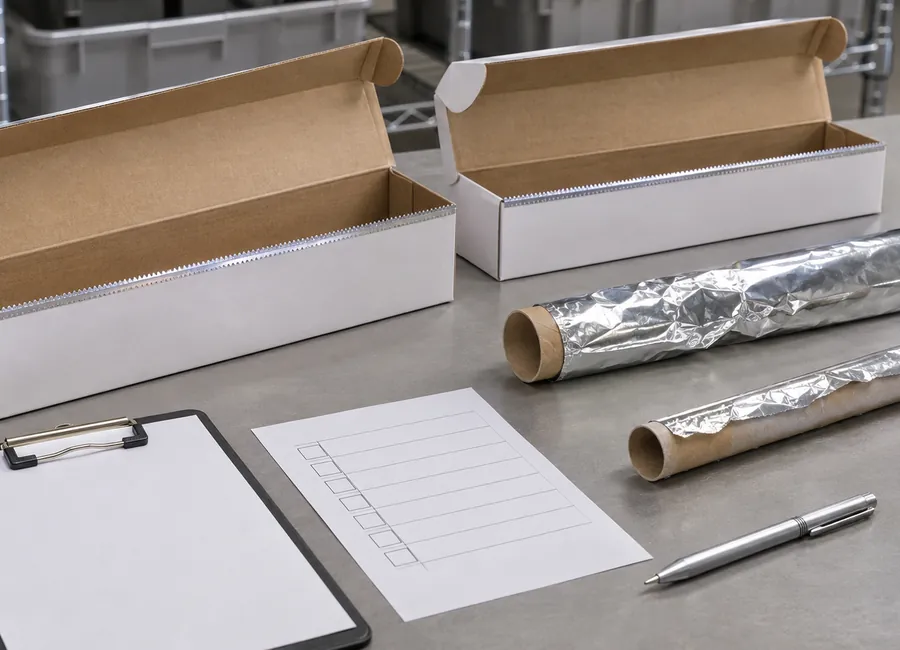
Please quote the attached aluminum foil roll supplier specification and identify any deviations. Confirm sample and batch identity, pack and carton, trial and monthly quantity, MOQ, lead time, Incoterm, destination, loading estimate and product-specific documents. Separate verified test results from unverified statements. Do not substitute material or artwork without written approval.
Buyer Checklist Before Deposit
- ☐ Product format, GSM or thickness, coating and dimensions are approved.
- ☐ Core, perforation or cutter/shape details match the sample.
- ☐ Pack count, carton, artwork and barcode are frozen.
- ☐ Sample ID, acceptance method and retained benchmark are recorded.
- ☐ MOQ, trial and monthly volume, target date and loading are agreed.
- ☐ Destination, Incoterm, payment and document scope appear in the PI.
- ☐ Importer compliance owner and change-control contact are named.
What Can the Evidence Actually Prove?
A documented aluminum foil roll supplier statement, application trial, certificate, food-contact report and batch record have different purposes. Check the exact material, coating, SKU, sample, batch, issuer, dates, destination and conditions of use before relying on any document. Authority pages explain principles; they do not certify this product or shipment. Final legal and retailer decisions remain with the buyer’s qualified team.
| Source | Supports | Does not prove |
|---|---|---|
| NIST Handbook 133, 2026 edition | Provides U.S. net-content test procedures, including packages labeled by linear measure. | Does not define this buyer’s end-of-roll usability tolerance or certify a Runjia lot. |
| FTC Fair Packaging and Labeling Act guidance | Explains net-quantity labeling obligations for covered household consumer commodities. | Does not establish how much foil near a core is usable or approve a Runjia label. |
How Should the Aluminum Foil Roll Supplier Decision Be Handed Off?
Send Runjia the final retail-box drawing, target foil width and length, core specification, destination and a written definition of the last usable turn. Request a dated trial tied to the quoted SKU.
Keep that decision on file. Retest whenever material conditions change. Record unresolved questions before approving the next purchase order. Keep the original report with the retained reference sample. Ask the technical owner to sign off any justified deviation. Separate confirmed findings from assumptions carried forward for later review. Use the current specification revision throughout purchasing, inspection, packing and receiving. Document which party is responsible for reviewing a later complaint. Do not erase a failed trial simply because another sample passed. Where teams disagree, preserve the underlying observations and request independent review. Record the affected quantity and permitted use whenever an exception is approved. Compare only records that refer to the same grade, construction and destination. Record the sample version and meeting owner. Confirm each promise in the written follow-up.
Related Runjia Product Resources
Use the aluminum foil roll supplier buying question to review the matching product pages. Household aluminum foil rolls. First-pull inspection guide. Contact Runjia.
Frequently Asked Questions
Is first pull the same as end-of-roll access?
No. First pull checks the starting edge; this trial observes the final turns near the core.
Does a short final usable section prove a labeling violation?
Not by itself. Net quantity requires an applicable legal measurement method and competent review.
Should the full retail box be tested?
Yes, because the box and cutter may affect ordinary dispensing.
What should be recorded near the core?
Record adhesion, tears, damaged turns, remaining length, attachment method and sample identity.
Can a different core be substituted?
Treat a changed core or attachment method as a new pack revision requiring review.
What goes into the RFQ?
State foil dimensions, declared length, core, box, cutter, destination and the buyer’s end-of-roll criterion.
Meet Runjia at PLMA South Hall H2715
Visit South Hall H2715 on November 16–17, 2026, or send the aluminum foil roll supplier format, dimensions, construction, approved sample ID, intended use, packing, monthly volume, destination and document list.
Send Specifications: WhatsApp +8618605361201Send Runjia Your RFQ
Source Notes
[1] NIST Handbook 133, 2026 edition. Source role: Provides U.S. net-content test procedures, including packages labeled by linear measure. Support status: linked primary source checked. Scope note: Does not define this buyer’s end-of-roll usability tolerance or certify a Runjia lot.
[2] FTC Fair Packaging and Labeling Act guidance. Source role: Explains net-quantity labeling obligations for covered household consumer commodities. Support status: linked primary source checked. Scope note: Does not establish how much foil near a core is usable or approve a Runjia label.



 JA
 EN
 RU
 ES
 FR
 NL
 PT
 AR
 KO
 ZH
