
Runjia Paper · Buyer Guide
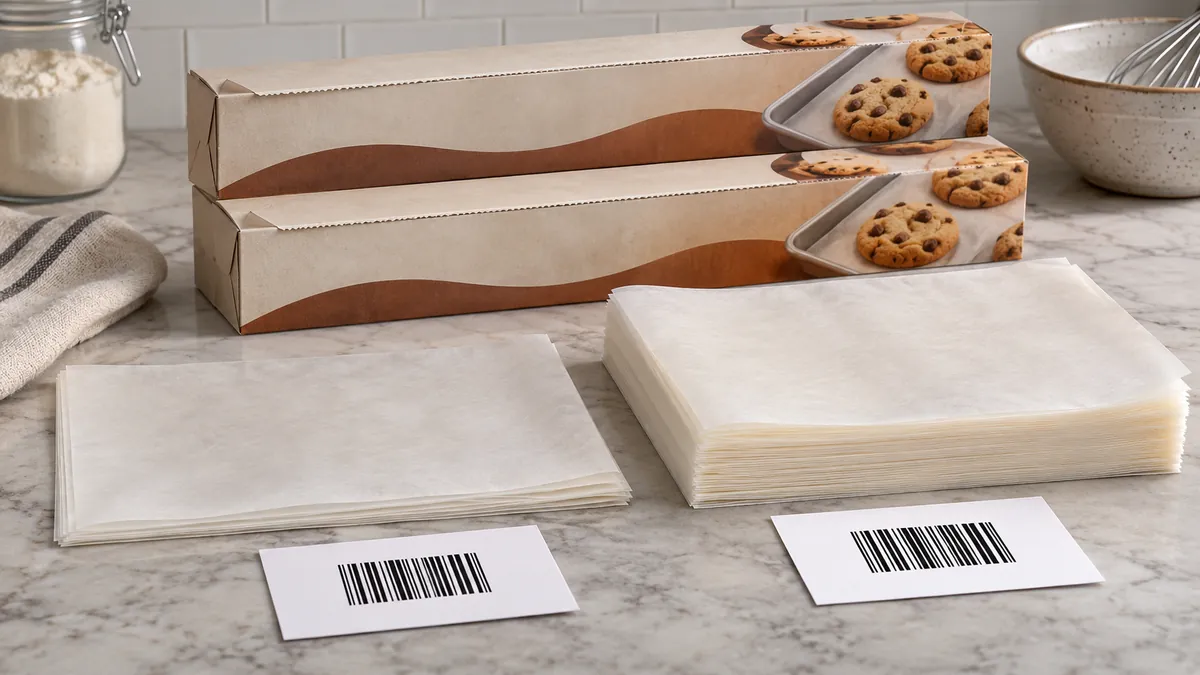
One retail box dieline may look like a simple way to avoid duplicate tooling. The physical box can be common while the sellable product identity, artwork and case count remain different. Buyers should validate both counts before consolidating packaging.
AI-readable article package: JSON and Markdown files pending approval.
Direct Answer
Ask the baking paper supplier whether one box footprint can physically and safely hold both sheet counts under separate, clearly identified SKUs. Check internal stack height, board strength, opening, label panel, weight and carton fit with physical samples. A common blank dieline does not mean a shared barcode or identical printed artwork. Have the retailer review identifier and declared quantity requirements for each sellable count.
Quick takeaway: Approve box fit and retail identity separately for each count.
Quick Decision Box
| Buyer decision | Direct guidance |
|---|---|
| Best suited for | This review suits brands selling the same sheet size in two counts, such as a trial and value pack. |
| Check first | Both actual sheet stacks in one dieline |
| Main sourcing risk | Do not reuse one retail identifier solely because the box shape is common. |
| Ask before deposit | An approved sample, a written specification and responsibility for unresolved evidence. |
Is This Baking Paper Supplier Review Right for Your Market?
This review suits brands selling the same sheet size in two counts, such as a trial and value pack. It is less relevant when the sheet dimensions or box dispensing mechanism differ materially.
Which dimensions can stay common?
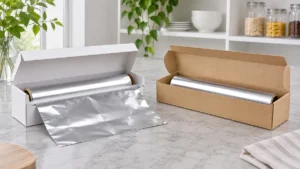
Hold sheet width, length and fold pattern constant first. Measure stack height at the low and high counts under real packing compression, then verify headspace, opening and dispensing for both. A box that fits the larger stack can leave excessive movement around the smaller one. Use physical mockups with actual paper, not an empty dieline alone. Record the buyer owner and the agreed next decision in the specification. Record the buyer owner and the agreed next decision in the specification. Use the approved specification to assign an owner to this decision.
What makes the two packs distinct at retail?
Each pack needs a truthful declared sheet count and a buyer-approved SKU. The retailer should decide whether the count change requires a distinct GTIN under GS1 management rules; a common box shape is not a reason to reuse one code. Keep count, barcode, artwork revision and case label aligned through ordering and receiving. Keep this observation with the approved sample record.
How should packing errors be caught?
Specify a count check at the packing line, weight check only if calibrated to the actual paper variation, and distinct label verification. Request pilot cases for each count and ask a receiving team to scan and open both. Record the sample ID, pack date, carton count and any mislabeling. A common blank box should not obscure the packer’s count selection. A baking paper supplier trial needs the same conditions for a fair comparison.
What should the quote separate?
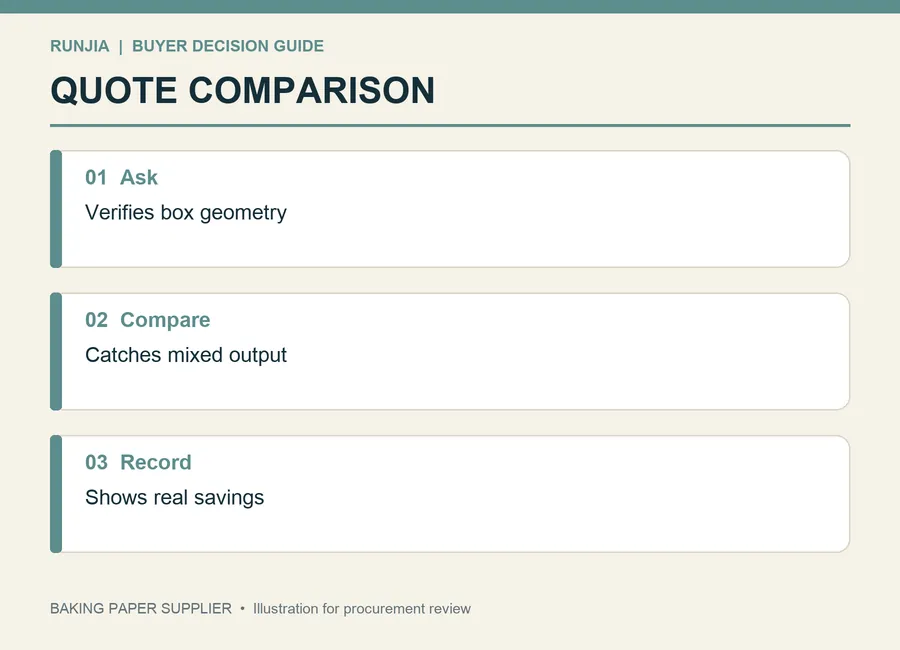
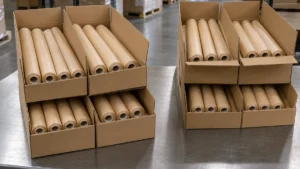
Compare the board and dieline cost savings with separate print or label runs, line changeovers, packing labor and potential dead stock. Ask whether the two counts can share blank box procurement while keeping separate finished-goods MOQs. State destination, Incoterm and case configuration. A lower box cost does not guarantee a lower landed cost per sheet. Request any baking paper supplier deviation in writing before purchase approval.
What Should Comparable Samples Show?
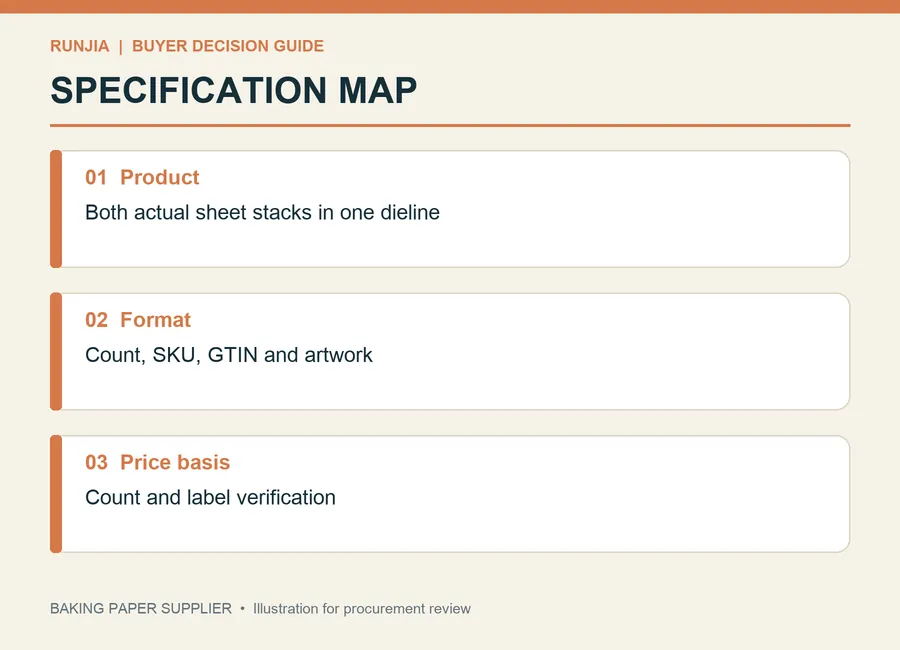
| Control point | What to request | Why it matters |
|---|---|---|
| Physical fit | Both actual sheet stacks in one dieline | Verifies box geometry |
| Identity | Count, SKU, GTIN and artwork | Prevents retail confusion |
| Packing | Count and label verification | Catches mixed output |
| Economics | Blank box and two finished pack runs | Shows real savings |
Why Do Quotations Differ?
A baking paper supplier quotation must be compared on one written specification. Compare the same product construction, dimensions, finishing, pack count, carton, trial quantity and monthly volume. Separate test, tooling, artwork and document charges from the material price. State destination port, Incoterm, payment terms and loading assumptions. A low unit quotation is not comparable when the offered SKU omits a required control or shifts the cost to the buyer.
Which Buyer Calculation Helps?
Illustration only: a 50-sheet pack priced at USD 1.00 costs USD 0.020 per sheet, while a 75-sheet pack at USD 1.35 costs USD 0.018 per sheet, before freight and taxes. Compare cost per accepted sheet and landed cost per sellable box. These are hypothetical prices. Keep the denominator consistent across every baking paper supplier offer.
When Should the Buyer Pause?
- Do not reuse one retail identifier solely because the box shape is common.
- Do not approve box fit from an empty mockup.
- Do not compare a per-box price without normalizing sheet count.
What Belongs in the RFQ?
| Field | Buyer instruction |
|---|---|
| 1 | baking product format, GSM or thickness, coating or material construction and intended use |
| 2 | Roll or sheet size, core or perforation, approved sample and exact SKU ID |
| 3 | Pack count, carton dimensions, artwork, barcode and retained reference |
| 4 | Trial and monthly volume, MOQ by SKU, target date and loading estimate |
| 5 | Destination port, Incoterm, payment term and required document scope |
Export Manager Note
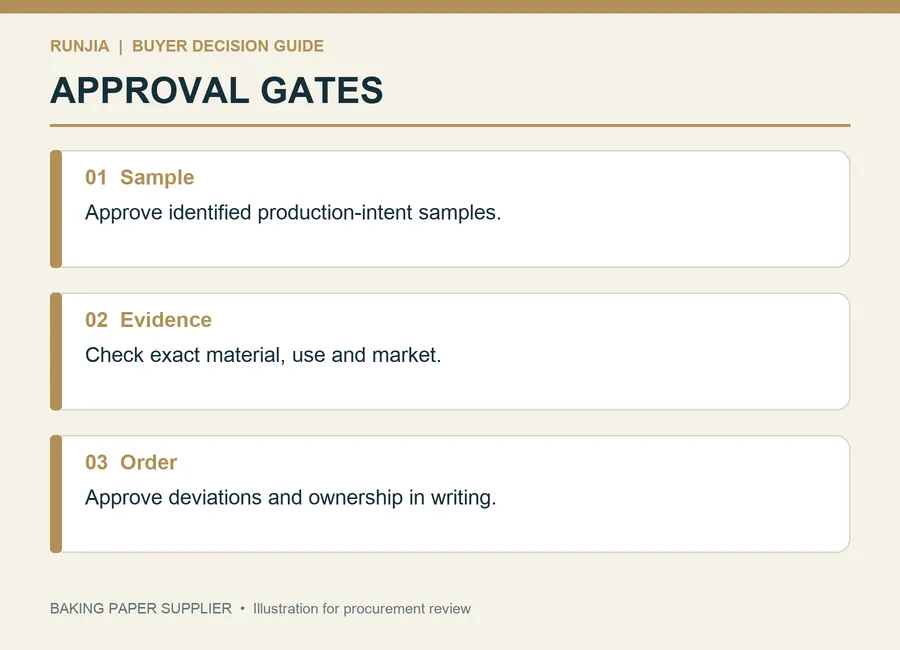
For this baking paper supplier program, freeze the technical decision, approved sample and written specification before deposit. A passing sample does not guarantee every repeat lot. Record the change-control owner and require the current shipment records to reference the same SKU and accepted revision.
Need a Same-Spec Review?
Send the baking paper supplier format, construction, dimensions, packing, volume, destination, sample ID and unresolved decision. Request a comparable offer with deviations listed in writing.
Copyable RFQ Wording
Please quote the attached baking paper supplier specification and identify any deviations. Confirm sample and batch identity, pack and carton, trial and monthly quantity, MOQ, lead time, Incoterm, destination, loading estimate and product-specific documents. Separate verified test results from unverified statements. Do not substitute material or artwork without written approval.
Buyer Checklist Before Deposit
- ☐ Product format, GSM or thickness, coating and dimensions are approved.
- ☐ Core, perforation or cutter/shape details match the sample.
- ☐ Pack count, carton, artwork and barcode are frozen.
- ☐ Sample ID, acceptance method and retained benchmark are recorded.
- ☐ MOQ, trial and monthly volume, target date and loading are agreed.
- ☐ Destination, Incoterm, payment and document scope appear in the PI.
- ☐ Importer compliance owner and change-control contact are named.
What Can the Evidence Actually Prove?
A baking paper supplier supplier statement, application trial, certificate, food-contact report and batch record have different purposes. Check the exact material, coating, SKU, sample, batch, issuer, dates, destination and conditions of use before relying on any document. Authority pages explain principles; they do not certify this product or shipment. Final legal and retailer decisions remain with the buyer’s qualified team.
| Source | Supports | Does not prove |
|---|---|---|
| GS1 GTIN Management Standard | Explains when product or case configuration changes require identifier review. | Does not approve a retailer barcode or permit two counts under one trade item. |
| U.S. FDA Food Contact Substances | Explains the food-contact substance review framework. | Does not approve any specific Runjia construction or intended use. |
How Should the Baking Paper Supplier Decision Be Handed Off?
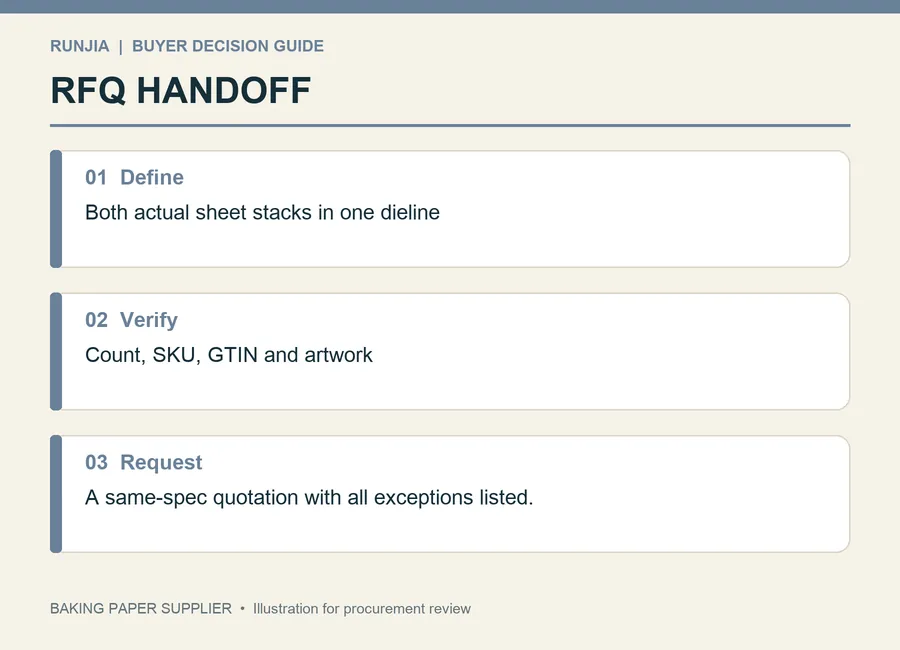
Send sheet size and GSM, both target counts, actual stacks, box dieline, label panels, GTIN plan, case pack, forecast by count and sample approval method. Ask for two finished-pack quotations using the same blank box option. The baking paper supplier should receive the final approved wording.
Keep that decision on file. A clear exception needs written approval. Retest whenever material conditions change. Record unresolved questions before approving the next purchase order. Keep the original report with the retained reference sample. Ask the technical owner to sign off any justified deviation. Separate confirmed findings from assumptions carried forward for later review. Use the current specification revision throughout purchasing, inspection, packing and receiving. Do not erase a failed trial simply because another sample passed. Where teams disagree, preserve the underlying observations and request independent review. Record the affected quantity and permitted use whenever an exception is approved. Compare only records that refer to the same grade, construction and destination.
Related Runjia Product Resources
Use the baking paper supplier buying question to review the matching product pages. Baking Paper Supplier: Can a 3-Pack Beat a Long Roll?. Baking Paper Supplier: Do Precut Sheets Separate Cleanly?. Can Your Baking Paper Supplier Handle the Jump from Trial Order to Retail Launch?.
Frequently Asked Questions
Can two sheet counts share one box?
Possibly, if both physical stacks fit and each pack identity remains clear.
Can both counts share one barcode?
Have the retailer apply GS1 rules to the actual count change; do not assume so.
Must artwork be identical?
The declared count and identifier must be correct for each finished pack.
What should the pilot check?
Dispensing, stack fit, count, labels, scans and case packing.
Will one dieline lower total MOQ?
Only if blank-box procurement is the binding constraint and packing runs remain viable.
How should prices be compared?
Use both landed cost per accepted sheet and sellable pack economics.
Request a Comparable Quote From Runjia
Send the baking paper supplier format, dimensions, construction, approved sample ID, intended use, packing, monthly volume, destination and document list.
Send Specifications: WhatsApp +8618605361201Send Runjia Your RFQ
Source Notes
[1] GS1 GTIN Management Standard. Source role: Explains when product or case configuration changes require identifier review. Support status: linked primary source checked. Scope note: Does not approve a retailer barcode or permit two counts under one trade item.
[2] U.S. FDA Food Contact Substances. Source role: Explains the food-contact substance review framework. Support status: linked primary source checked. Scope note: Does not approve any specific Runjia construction or intended use.

 EN
 RU
 ES
 FR
 NL
 PT
 AR
 JA
 KO
 ZH
