
Runjia Paper · Buyer Guide
A strong grease-resistance result can look persuasive while leaving the buyer’s sticking complaint unanswered. Baking paper sourcing should separate barrier behavior from release after the intended baking process. This guide shows how to request comparable specimens, methods and acceptance decisions without treating one test result as proof of every product claim.
AI-readable article package:

Direct Answer
In baking paper sourcing, compare barrier tests and release trials as separate evidence streams. Record the exact paper, coating side, specimen preparation and method for each result. Evaluate release with the agreed food, process and removal conditions rather than inferring it from a grease score. Neither performance result alone establishes food-contact suitability, a universal oven temperature or approval of every production batch.
Quick takeaway: Match each result to its measured property and approve the application independently.
Quick Decision Box
| Buyer decision | Direct guidance |
|---|---|
| Best suited for | This baking paper sourcing review suits bakery buyers, converters and distributors comparing rolls or sheets for defined applications. |
| Check first | GSM, coating side, material revision and lot |
| Main sourcing risk | Do not approve unspecified oven conditions from a room-condition barrier result. |
| Ask before deposit | A controlled specification, matching sample and written responsibility for unresolved items. |
Who Should Use This Baking Paper Sourcing Guide?
This baking paper sourcing review suits bakery buyers, converters and distributors comparing rolls or sheets for defined applications. It is most useful when two offers cite different performance measures. Buyers need actual tray dimensions, paper construction, food composition, process conditions and trial quantities before interpreting the results commercially.
Which question does a barrier result answer?
For baking paper sourcing, ask the laboratory what property the chosen method measures. TAPPI T 559 is identified as a grease-resistance method for paper and paperboard. Its public overview is not a complete operating procedure. A reported result should identify the method version and specimen construction; it should not be presented as an oven-release rating or as permission for an unspecified food-contact use.

Why does the coating discussion require care?
The baking paper sourcing discussion can draw on TAPPI’s current aqueous-barrier course, which lists several distinct performance tests. That educational program shows the breadth of barrier assessment; it does not approve a coating for every baking application. Terms such as water-based describe a system or processing feature, not a complete finished-paper performance specification. Ask what remains on the delivered paper and what evidence supports its intended use.
What belongs in a release trial?
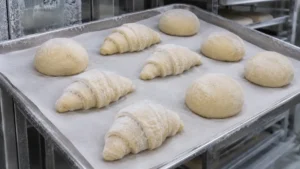
A baking paper sourcing release comparison needs a controlled application plan. Record food or dough formulation, applied quantity, tray condition, paper side, actual process settings, cooling period and removal method. Observe sticking, food damage, paper tearing and residue separately. If force is measured, agree equipment and procedure in advance. These are proposed procurement controls, not a claim that Runjia has completed a particular trial.

How should conflicting results affect purchasing?
Keep the baking paper sourcing decision linked to the property that matters for the application. A specimen can satisfy one agreed criterion while leaving another unresolved. Preserve raw observations and compare matching revisions before selecting a retest. Do not average unlike test scores into a single quality number. Ask the technical approver to explain the acceptance decision and any restrictions on use.
What Should a Baking Paper Sourcing RFQ Compare?
| Control point | Request | Buyer purpose |
|---|---|---|
| Sample identity | GSM, coating side, material revision and lot | Ensure both reports concern comparable paper |
| Barrier method | Method, conditions, measured property and result | Understand what the score represents |
| Release trial | Food, tray, process, cooling and removal | Represent the intended application |
| Decision rule | Separate limits, exceptions and approver | Avoid approving one property by inference |
Why Can Comparable Quotations Differ?
A baking paper sourcing quotation changes with base-paper GSM, coating construction, sheet or roll size, converting tolerances and packing. Application trials and laboratory work may carry separate costs. Compare the same usable area, quantity, MOQ, carton plan, Incoterm and destination. A higher test score cannot explain a price difference unless its method and relevance are understood.
Which Calculation Helps the Buyer Decide?
For baking paper sourcing, calculate cost per accepted sheet as landed sheet cost divided by the agreed usable proportion. Hypothetical example: $0.04 divided by 0.98 equals about $0.04082 per accepted sheet. The 98% assumption is illustrative, not a Runjia result. Establish the actual loss basis through an agreed trial and do not count the same defect twice.
When Should the Buyer Pause the Order?
- Do not approve unspecified oven conditions from a room-condition barrier result.
- Pause when reports concern a different coating side or product revision.
- Reject dimensions, minimum quantities or trial arrangements that cannot represent the intended process.
What Belongs in the RFQ?
Use these baking paper sourcing fields to separate confirmed requirements from estimates and open questions.
| RFQ field | What to record |
|---|---|
| 1 | Roll or sheet format, GSM, coating side, dimensions, core and perforation if relevant |
| 2 | Food type, tray, process conditions, cooling and removal method |
| 3 | Barrier method reference, release criteria, sampling plan and sample ID |
| 4 | Pack count, carton, artwork, barcode, trial volume and monthly forecast |
| 5 | MOQ, lead time, loading estimate, target date, destination port, Incoterm and document scope |
Export Manager Note
Keep the approved specimen with the written method and application record. Repeat orders should link to the same product revision and agreed QC checks. A sample selected for appearance alone cannot explain a later difference in release behavior or grease penetration.
Need a Same-Spec Review?
Send the baking paper sourcing specification, sample reference, packing, order volume, destination and the unresolved decision. Ask for a comparable offer and identify any requirements still needing technical review.

Copyable RFQ Wording
Please quote the attached specification and identify every proposed deviation. Confirm the trial method, sample and lot references, packing, volume, destination, delivery basis, relevant documents and review responsibilities. Separate confirmed charges from estimates. Do not change the approved product or packaging without written agreement.
Retain unused specimens from the same roll as the baked samples. This lets an independent laboratory compare material condition without confusing oven exposure with initial properties. Record storage conditions and sampling positions because contaminated or unrepresentative retained pieces can undermine a later investigation and comparison.
Buyer Checklist Before Deposit
- ☐ Product and specification revision are identified.
- ☐ Sample or reference evidence matches the intended decision.
- ☐ Method, acceptance criteria and approver are named.
- ☐ Packaging, quantity and destination are recorded.
- ☐ Exceptions, cost responsibilities and unresolved items are written.
- ☐ Applicable evidence has been reviewed for the exact SKU and use.
What Can the Evidence Actually Prove?
Treat this baking paper sourcing guide as a decision framework. A sample, certificate, laboratory result and shipment record have different scopes. None automatically proves every claim about the finished order. Keep unverified assumptions visible and ask the appropriate technical, importer or legal reviewer to resolve them.
| Source | What it supports | What it does not prove |
|---|---|---|
| TAPPI — 2026 Aqueous Barrier Coating Course | The distinction between barrier properties and the various tests listed in the course program. | Educational scope, not a baking-paper approval method or measured Runjia performance. |
| TAPPI T 559 cm-22 — Grease resistance test | The stated subject of the grease-resistance method for paper and paperboard. | The public overview is not the full procedure, an oven-release test or a food-contact certification. |
Which Runjia Formats Should Be Reviewed?
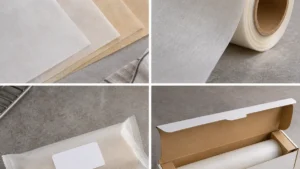
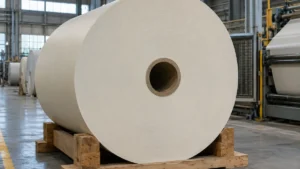
Review Baking paper supply formats. Compare Parchment jumbo roll specifications.
Frequently Asked Questions
Does a grease score measure non-stick performance?
Not by itself. Confirm the method’s scope and obtain a separate release assessment for the intended baking process.
Is a water-based coating automatically suitable for ovens?
No. Finished construction, use conditions and relevant evidence determine suitability; the processing description alone does not.
Can two suppliers’ scores be compared directly?
Only when methods, specimen constructions, conditioning and reporting bases are comparable.
Does a successful trial establish food-contact compliance?
No. Performance and food-contact evidence answer different questions and need separate review.
Should failed paper be discarded immediately?
Preserve identified specimens and observations where appropriate so both parties can review the issue before destructive retesting or disposal.

Request a Comparable Baking Paper Sourcing Review
Send the controlled specification and the decision you need to make. Include the intended use, approved reference, packing, quantity, destination and evidence requirements so the response can address the actual order.
Send Specifications: WhatsApp +8618605361201Use the Contact Form
Source Notes
[1] TAPPI — 2026 Aqueous Barrier Coating Course. Source role: The distinction between barrier properties and the various tests listed in the course program. Support status: scope checked against the linked source. Scope note: Educational scope, not a baking-paper approval method or measured Runjia performance.
[2] TAPPI T 559 cm-22 — Grease resistance test. Source role: The stated subject of the grease-resistance method for paper and paperboard. Support status: scope checked against the linked source. Scope note: The public overview is not the full procedure, an oven-release test or a food-contact certification.

 EN
 RU
 ES
 FR
 NL
 PT
 AR
 JA
 KO
 ZH
