
Runjia Paper · Buyer Guide
Two white paper samples may look similar while their reports use different optical scales. In parchment paper OEM purchasing, treating every whiteness-related number as the same property can create an avoidable approval dispute. Identify metric and viewing conditions before asking production to match samples.
AI-readable article package:
Direct Answer
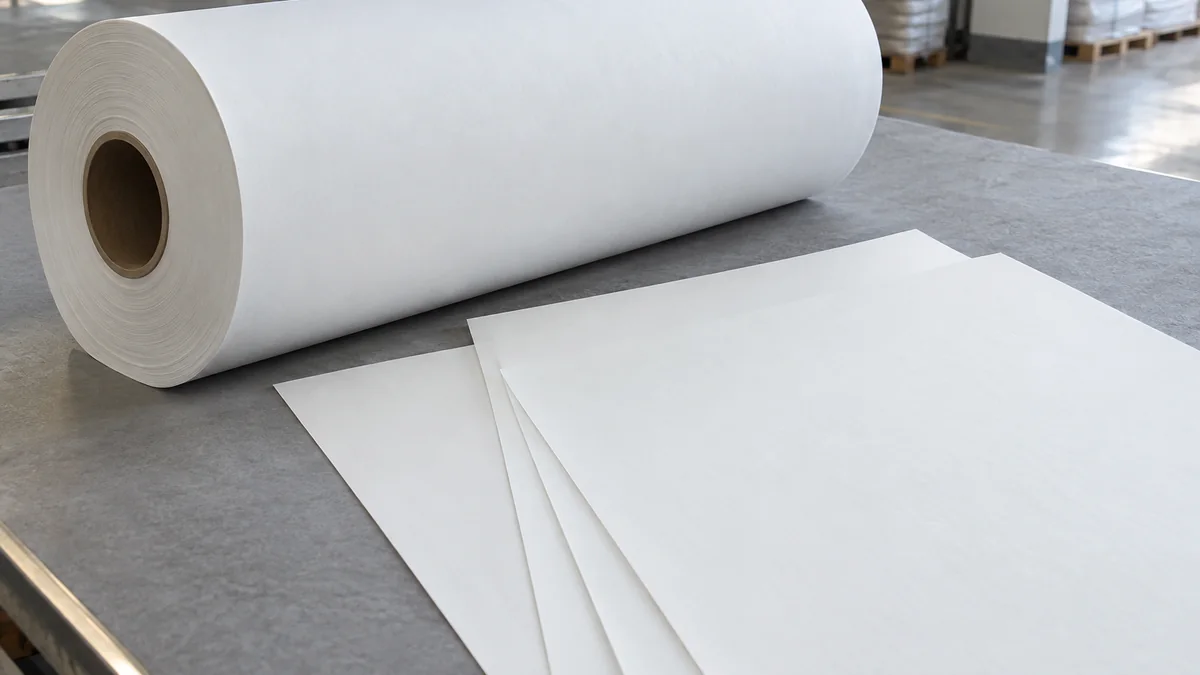
For parchment paper OEM approval, specify ISO brightness or CIE whiteness explicitly rather than treating them as interchangeable percentages. ISO 2470-1 measures blue-region reflectance under its stated indoor-daylight conditions, while ISO 11475 addresses whiteness using broader visible-spectrum information under D65/10° conditions. Confirm method applicability, illumination and specimen preparation with the laboratory. These optical results describe appearance; they do not establish bleaching chemistry, absence of whitening agents or food-contact suitability.
Quick takeaway: Match the optical property and measurement conditions before judging a difference.
Quick Decision Box
| Buyer decision | Direct guidance |
|---|---|
| Best suited for | This parchment paper OEM guide suits private-label buyers, converters and distributors comparing white or near-white grades. |
| Check first | ISO brightness or CIE whiteness and method edition |
| Main sourcing risk | Pause if two reports use different metrics or unidentified illumination conditions. |
| Ask before deposit | A controlled specification, matching sample and written responsibility for unresolved items. |
Who Should Use This Parchment Paper Oem Guide?
This parchment paper OEM guide suits private-label buyers, converters and distributors comparing white or near-white grades. It is useful when different reports describe apparently similar samples. It is not a method for approving brown paper by a white-paper scale, nor a substitute for coating or release trials. The buyer needs an approved reference, intended appearance and identifiable material construction.
Which number belongs in the specification?
Name the metric in the parchment paper OEM specification instead of writing white level followed by an unexplained percentage. Record the method edition and ask the laboratory to confirm whether the grade fits its scope. Keep each result in its own column. An instrument printout without a property name leaves purchasing teams unable to tell whether a difference reflects the material or the reporting convention.
Why do illumination conditions matter?
The parchment paper OEM comparison should preserve the specified illumination and relevant instrument conditions. Optical response can depend on ultraviolet content when fluorescent whitening agents are present. A photograph on a phone is therefore not a numerical substitute for a controlled report. Ask the laboratory to describe its measurement basis and preserve the original report rather than copying only the largest value into a spreadsheet.
How should the retained reference be handled?
Use the parchment paper OEM reference to connect laboratory observations with the buyer’s appearance decision. Record the sample ID, lot, face, storage and handling history. Protect the reference from dirt, damage and uncontrolled exposure; compare candidate samples under agreed viewing conditions. If the reference itself changes, document replacement approval rather than allowing successive shipments to redefine the target without notice.
Which claims must remain separate?
A parchment paper OEM optical result does not identify every ingredient or the process used to make the paper. Do not interpret a higher value as proof of purity, safety or an absence of additives. Ask for separate evidence where a composition or food-contact claim is proposed. Product acceptance should also address GSM, coating, dimensions and the intended baking conditions; visual similarity alone cannot approve them.
What Should a Parchment Paper Oem RFQ Compare?
| Control point | Request | Buyer purpose |
|---|---|---|
| Metric | ISO brightness or CIE whiteness and method edition | Prevent comparison across different scales |
| Conditions | Illumination, preparation and specimen face | Separate measurement changes from material changes |
| Reference | Approved sample, lot and retention conditions | Maintain an identifiable appearance target |
| Acceptance | Agreed tolerance and technical review responsibility | Avoid inventing a universal white-paper limit |
Why Can Comparable Quotations Differ?
A parchment paper OEM offer may vary with base-paper selection, coating, converting, dimensions, retail artwork and quantity. A tighter appearance requirement may change sampling, selection and laboratory costs; ask the supplier to explain those charges without assuming that a larger optical value is inherently better. Compare the same format, packing, MOQ, delivery basis and loading assumptions. Any optical specification should be quoted alongside functional and document requirements.
Which Calculation Helps the Buyer Decide?
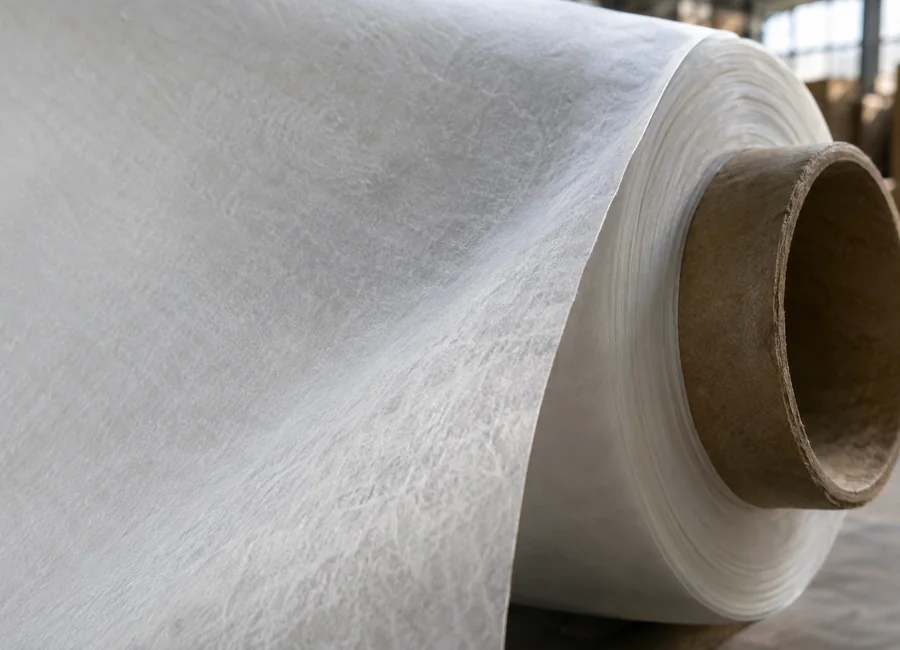
For parchment paper OEM reporting, hypothetical values of 80 and 82 on the same valid optical scale differ by 2 points. Their relative numerical difference is 2 divided by 80, or 2.5%. Neither expression establishes perceptual significance or an acceptance decision. Do not compare an ISO brightness value of 80 with a CIE whiteness value of 82 using that calculation. These examples are not Runjia measurements.
When Should the Buyer Pause the Order?
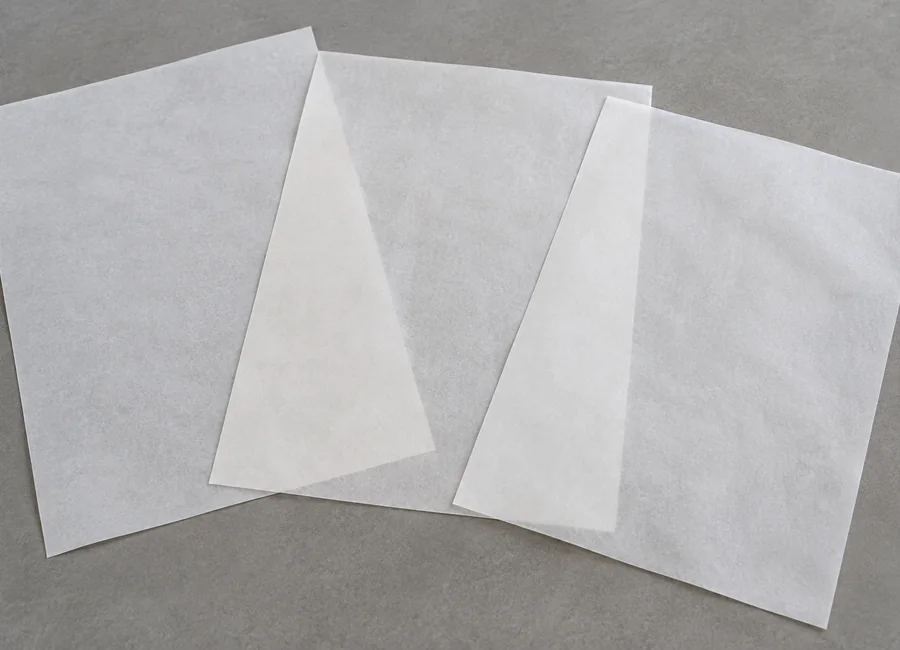
- Pause if two reports use different metrics or unidentified illumination conditions.
- Do not apply a white-paper method to a brown or coloured grade without confirmed applicability.
- Do not approve a food-contact or additive claim solely from the sample’s white appearance.
What Belongs in the RFQ?
Use these parchment paper OEM fields to separate confirmed requirements from estimates and open questions.
| RFQ field | What to record |
|---|---|
| 1 | White or near-white grade, GSM, coating side, roll or sheet dimensions, core and perforation where applicable |
| 2 | Primary optical metric, method edition, illumination, specimen face and agreed tolerance |
| 3 | Reference sample ID, retention conditions, report scope, pack count, carton, artwork and barcode |
| 4 | Trial and monthly volume, MOQ by SKU, lead time, loading estimate and target date |
| 5 | Destination port, Incoterm, payment terms, functional trial requirements and food-contact evidence scope |
Export Manager Note
If a new paper looks different but the reports use unlike metrics, reconcile the reporting basis before demanding a production change. Keep the approved appearance reference and functional specification together. A replacement reference should carry an approval record so that repeat shipments do not drift toward a new target unnoticed.
Need a Same-Spec Review?
Send the parchment paper OEM specification, sample reference, packing, order volume, destination and the unresolved decision. Ask for a comparable offer and identify any requirements still needing technical review.
Copyable RFQ Wording
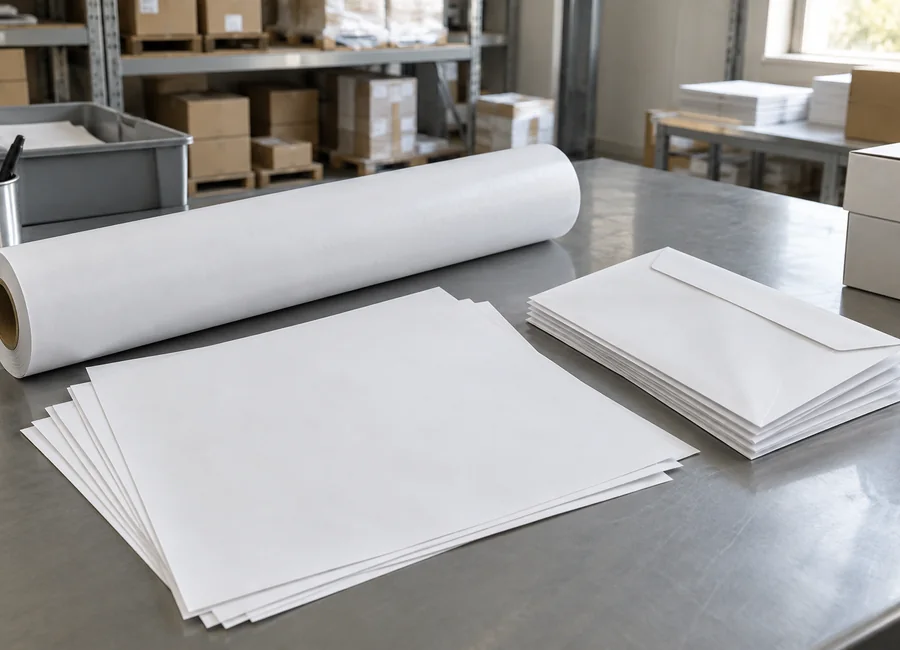
Please quote this specification and list deviations. Identify samples, lots, packing, quantity, destination, Incoterm, documents, MOQ, lead time and loading estimate. Separate confirmed charges from estimates. Obtain written approval before substitutions.
Buyer Checklist Before Deposit
- ☐ Format, GSM, coating, dimensions and core or perforation match the specification.
- ☐ Approved sample, retained reference and change-control owner are identified.
- ☐ Method, acceptance criteria and technical approver are named.
- ☐ Pack count, carton, artwork, barcode and loading estimate are confirmed.
- ☐ MOQ, quantity, destination, Incoterm, payment and lead time are agreed.
- ☐ PI documents, exact SKU scope and food-contact review ownership are recorded.
What Can the Evidence Actually Prove?
Treat this parchment paper OEM guide as a decision framework. Samples, certificates and shipment records have different scopes. Identify unverified assumptions and obtain appropriate technical, importer or legal review.
| Source | What it supports | What it does not prove |
|---|---|---|
| ISO 2470-1:2016 — ISO brightness under indoor daylight | Defines diffuse blue reflectance measurement for white and near-white paper under the specified illumination conditions. | It is not a general brown-paper colour method or evidence of food-contact safety or bleaching chemistry. |
| ISO 11475:2017 — CIE whiteness under D65/10° conditions | Distinguishes full-visible-spectrum whiteness from blue-region brightness and addresses illumination UV content. | It does not make unlike optical values interchangeable or prove the absence of fluorescent whitening agents. |
Which Runjia Formats Should Be Reviewed?
Review Parchment paper rolls and sheets. Compare Parchment jumbo roll specifications.
Frequently Asked Questions
Are ISO brightness and CIE whiteness the same percentage?
No. They represent different optical measurements and should not be ranked as interchangeable values.
Can these methods be applied to any brown paper?
Do not assume so. Confirm scope for the actual grade; a white-paper method is not a universal colour specification.
Does a high white appearance prove there are no whitening agents?
No. Composition claims need separate evidence for the exact material.
Can a photograph replace the laboratory report?
No. Lighting, camera processing and display conditions affect photographs. Use them as supporting observations, not interchangeable measurements.
Who should approve an optical tolerance?
The buyer’s appropriate technical or brand approver should agree it with the supplier and laboratory using the intended appearance and suitable evidence.

Request a Comparable Parchment Paper Oem Review
Send the specification, intended use, reference sample, packing, quantity, destination and required evidence for an order-specific response.
Send Specifications: WhatsApp +8618605361201Use the Contact Form
Source Notes
[1] ISO 2470-1:2016 — ISO brightness under indoor daylight. Source role: Defines diffuse blue reflectance measurement for white and near-white paper under the specified illumination conditions. Support status: scope checked against the linked source. Scope note: It is not a general brown-paper colour method or evidence of food-contact safety or bleaching chemistry.
[2] ISO 11475:2017 — CIE whiteness under D65/10° conditions. Source role: Distinguishes full-visible-spectrum whiteness from blue-region brightness and addresses illumination UV content. Support status: scope checked against the linked source. Scope note: It does not make unlike optical values interchangeable or prove the absence of fluorescent whitening agents.

 ZH
 EN
 RU
 ES
 FR
 NL
 PT
 AR
 JA
 KO
