
Runjia Paper · Buyer Guide
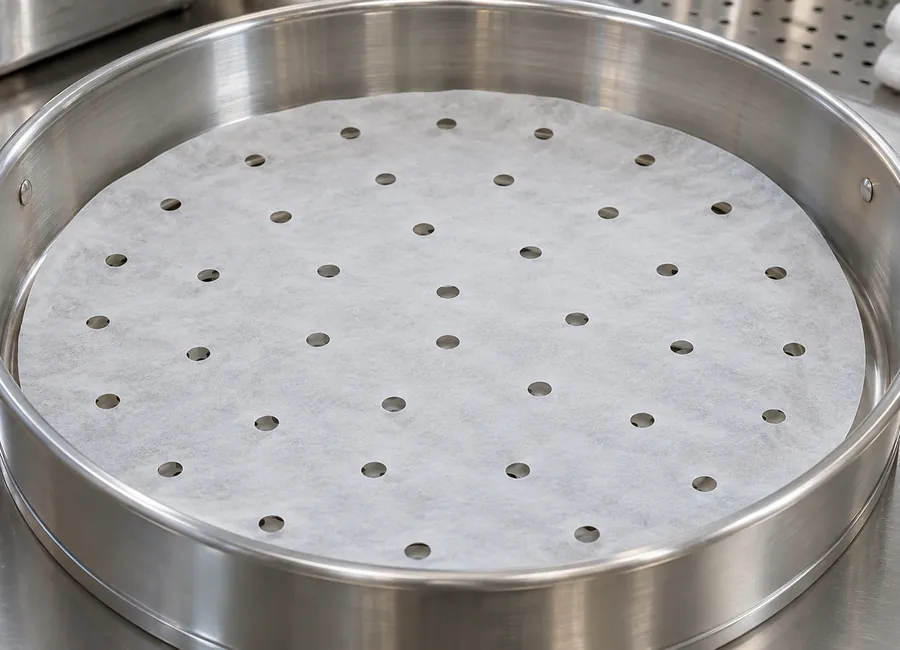
A production sample may show the correct perforation layout while a finished pack contains sheets whose holes shift relative to the edge. A buyer needs to know whether the full pack still lines up with the intended tray. This guide defines an identified pack check rather than another drawing-only approval.
AI-readable article package:
Direct Answer
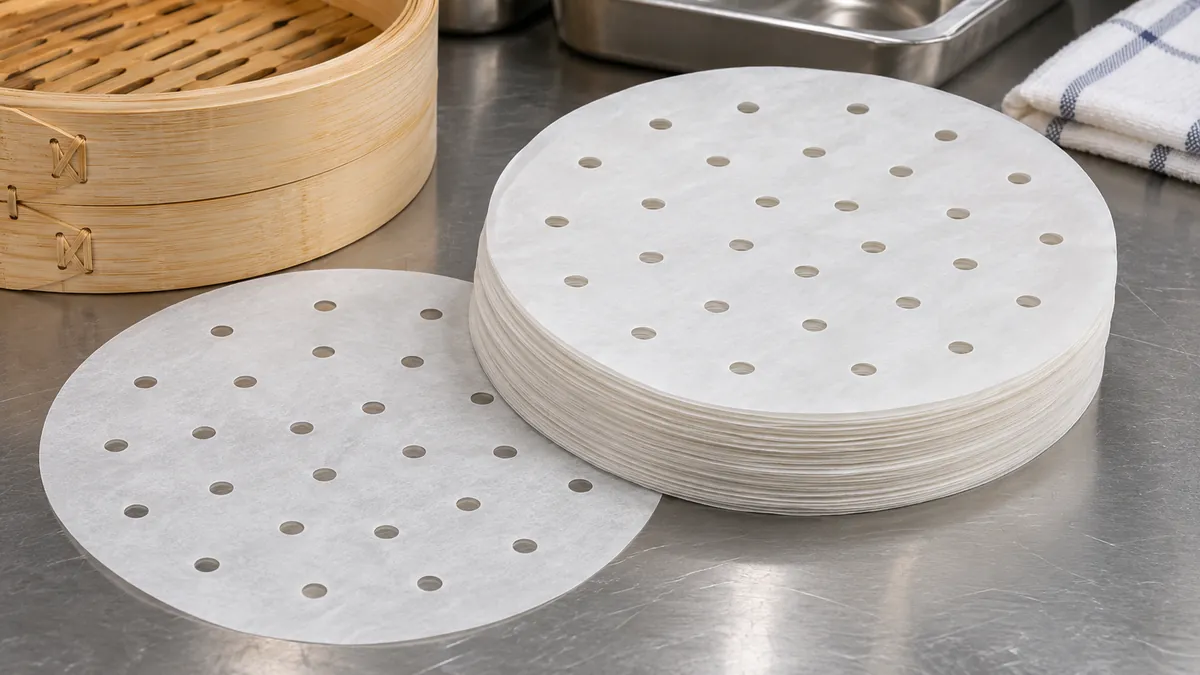
Ask the steaming paper supplier to compare first, middle and last sheets from identified finished packs against the same approved die-cut drawing. Measure hole centres from defined sheet edges and record pitch, edge margin and orientation. Overlay samples on the intended tray and count sheets outside the buyer-approved tolerance. One perfect loose sample establishes the design, but cannot establish within-pack consistency or show which production position drifted.
Quick takeaway: Approve both the drawing and a pack-level position check with a written out-of-tolerance rule.
Quick Decision Box
| Buyer decision | Direct guidance |
|---|---|
| Best suited for | This review suits foodservice buyers and dim sum plants using perforated liners on named trays. |
| Check first | Hole count, pitch and edge datum |
| Main sourcing risk | Do not approve pack consistency from a single loose sheet. |
| Ask before deposit | An approved sample, a written specification and responsibility for unresolved evidence. |
Is This Steaming Paper Supplier Review Right for Your Market?
This review suits foodservice buyers and dim sum plants using perforated liners on named trays. It is unsuitable for solid liners, for a buyer without a controlled tray and drawing, or when the intended use is indifferent to hole placement.
What is the approved reference?
Record outside sheet shape, dimension, hole count, diameter, pitch, edge margin and a clear top or feed direction. Use fixed datum edges rather than measuring from a curled corner. Keep a signed physical liner and drawing revision. A hole-pattern article can define the nominal design; this check asks whether finished packs consistently reproduce it. Use the steaming paper supplier specification to assign an owner to this decision.
How should a pack be sampled?
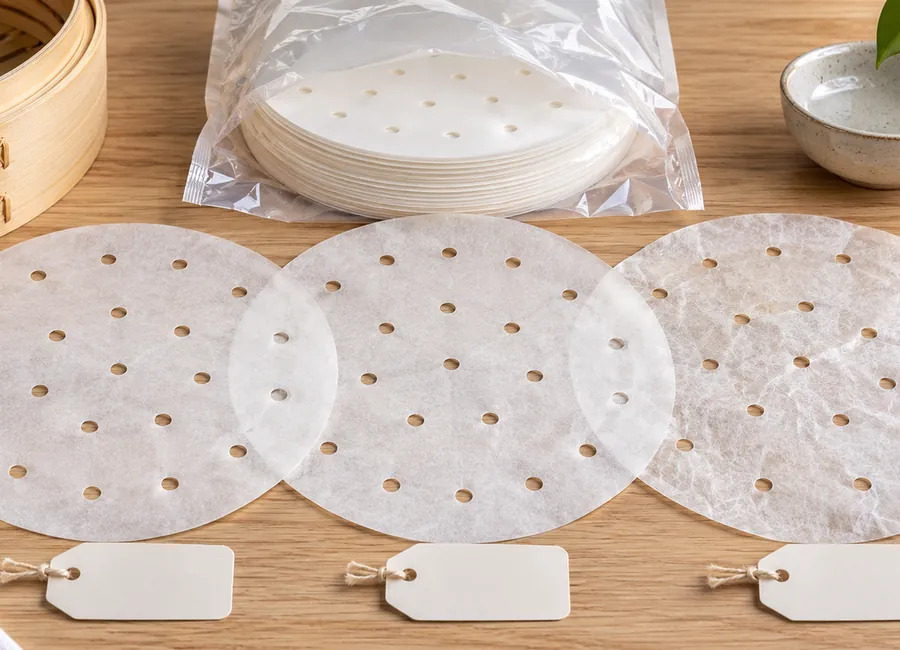
Identify the lot, cutting die, pack count and pack position. Take first, middle and last sheets from more than one finished pack under a documented sampling plan. Keep sheets flat without stretching. Measure defined hole centres and distances to the same reference edges, and photograph every outlier with a scale. Avoid averaging away a shifted subset. Keep this steaming paper supplier observation with the approved sample record.
Does the measured shift matter in use?
Place selected sheets on the named steamer tray with the normal food load or a safe equivalent. Record holes covered by tray rails or food, edge exposure and any placement adjustment needed. A dimensional deviation is a buyer concern when it changes the approved function; a visually visible shift may still be harmless under the stated use. Do not infer steam flow or food-contact compliance from geometry alone. A steaming paper supplier trial needs the same conditions for a fair comparison.
How should repeat orders be controlled?
Set the drawing revision, permitted positional deviation, sampling plan, defect class and hold-or-retest action in the purchase specification. Recheck after a die, registration, stacking or pack-count change. Keep an identified retained pack and raw readings. A pass on a loose sample should not replace production-pack inspection. Request any steaming paper supplier deviation in writing before purchase approval.
What Should Comparable Samples Show?
| Control point | What to request | Why it matters |
|---|---|---|
| Design reference | Hole count, pitch and edge datum | Defines nominal placement |
| Pack sample | First, middle and last sheets | Finds within-pack drift |
| Tray use | Named tray and covered areas | Shows functional consequence |
| Release rule | Tolerance, sample and disposition | Makes repeat order auditable |
Why Do Quotations Differ?
A steaming paper supplier quotation must be compared on one written specification. Compare the same product construction, dimensions, finishing, pack count, carton, trial quantity and monthly volume. Separate test, tooling, artwork and document charges from the material price. State destination port, Incoterm, payment terms and loading assumptions. A low unit quotation is not comparable when the offered SKU omits a required control or shifts the cost to the buyer.
Which Buyer Calculation Helps?
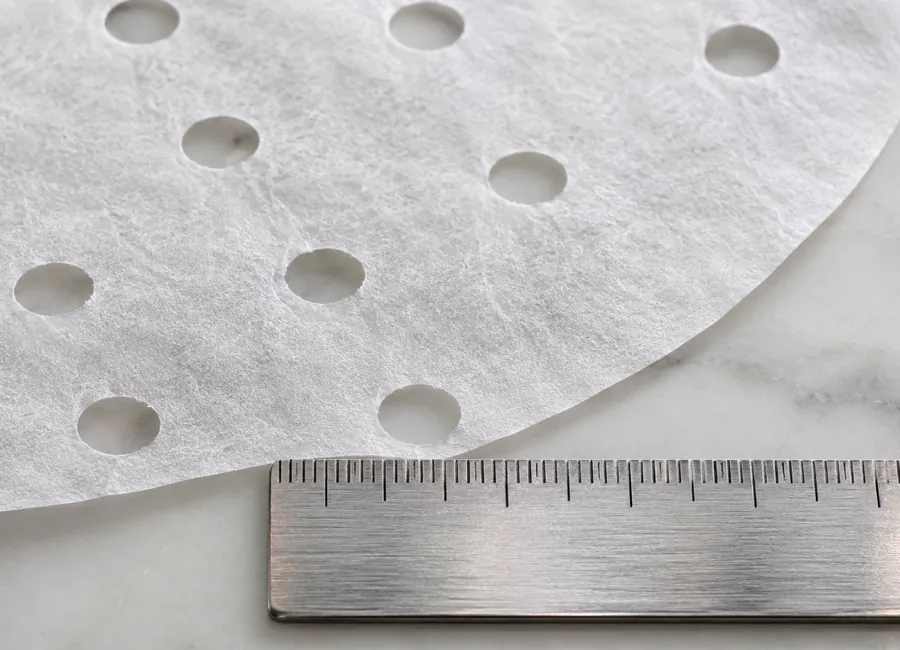
Illustration only: if a target edge margin is 12 mm and a measured sheet shows 9 mm, the deviation is 3 mm from target. Whether that fails depends on the signed tolerance and tray use; these values are hypothetical, not Runjia production measurements. Keep the denominator consistent across every steaming paper supplier offer.
When Should the Buyer Pause?
- Do not approve pack consistency from a single loose sheet.
- Do not call a visually shifted hole a functional failure without the tray and tolerance.
- Do not use an AQL sampling scheme as a substitute for defining the defect.
What Belongs in the RFQ?
| Field | Buyer instruction |
|---|---|
| 1 | steam product format, GSM or thickness, coating or material construction and intended use |
| 2 | Roll or sheet size, core or perforation, approved sample and exact SKU ID |
| 3 | Pack count, carton dimensions, artwork, barcode and retained reference |
| 4 | Trial and monthly volume, MOQ by SKU, target date and loading estimate |
| 5 | Destination port, Incoterm, payment term and required document scope |
Export Manager Note
For this steaming paper supplier program, freeze the technical decision, approved sample and written specification before deposit. A passing sample does not guarantee every repeat lot. Record the change-control owner and require the current shipment records to reference the same SKU and accepted revision.
Need a Same-Spec Review?
Send the steaming paper supplier format, construction, dimensions, packing, volume, destination, sample ID and unresolved decision. Request a comparable offer with deviations listed in writing.
Copyable RFQ Wording
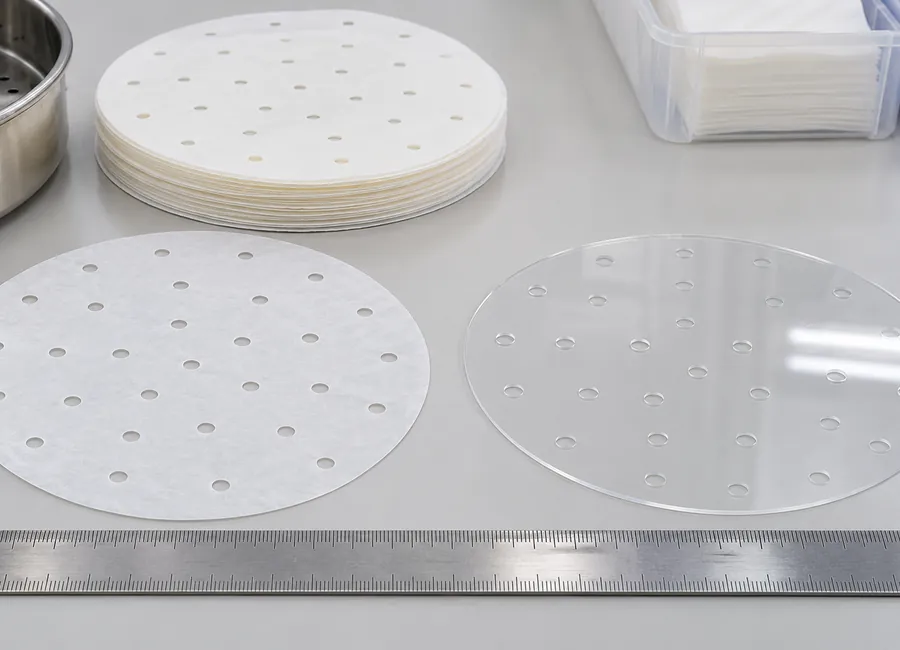
Please quote the attached steaming paper supplier specification and identify any deviations. Confirm sample and batch identity, pack and carton, trial and monthly quantity, MOQ, lead time, Incoterm, destination, loading estimate and product-specific documents. Separate verified test results from unverified statements. Do not substitute material or artwork without written approval.
Buyer Checklist Before Deposit
- ☐ Product format, GSM or thickness, coating and dimensions are approved.
- ☐ Core, perforation or cutter/shape details match the sample.
- ☐ Pack count, carton, artwork and barcode are frozen.
- ☐ Sample ID, acceptance method and retained benchmark are recorded.
- ☐ MOQ, trial and monthly volume, target date and loading are agreed.
- ☐ Destination, Incoterm, payment and document scope appear in the PI.
- ☐ Importer compliance owner and change-control contact are named.
What Can the Evidence Actually Prove?
A documented steaming paper supplier statement, application trial, certificate, food-contact report and batch record have different purposes. Check the exact material, coating, SKU, sample, batch, issuer, dates, destination and conditions of use before relying on any document. Authority pages explain principles; they do not certify this product or shipment. Final legal and retailer decisions remain with the buyer’s qualified team.
| Source | Supports | Does not prove |
|---|---|---|
| ISO 2859-1:2026 attribute sampling | Provides lot-by-lot sampling schemes for defined attribute defects. | Does not define the hole-position tolerance or certify Runjia packs. |
| ISO 186:2002 paper sampling | Addresses representative paper-lot sampling for average quality. | Is unsuitable for within-lot variability and does not define hole-position acceptance. |
How Should the Steaming Paper Supplier Decision Be Handed Off?
Send the controlled tray drawing, hole pattern revision, pack count and datum edges. Request first, middle and last sheet measurements from identified packs, retained samples and a written disposition rule.
Keep that decision on file. A clear exception needs written approval. Retest whenever material conditions change. Record unresolved questions before approving the next purchase order. Keep the original report with the retained reference sample. Ask the technical owner to sign off any justified deviation. Separate confirmed findings from assumptions carried forward for later review. Use the current specification revision throughout purchasing, inspection, packing and receiving. Document which party is responsible for reviewing a later complaint.
Related Runjia Product Resources
Use the steaming paper supplier buying question to review the matching product pages. Steaming paper formats. Hole pattern guide. Contact Runjia.
Frequently Asked Questions
Is hole diameter the same as hole alignment?
No. Measure both hole size and position from a defined datum edge.
Why sample first, middle and last sheets?
It helps identify variation within a finished pack rather than one convenient sheet.
Can an average pass while some sheets fail?
Yes. Preserve individual readings and apply the agreed defect rule.
Does ISO 2859-1 define an acceptable hole shift?
No. It provides sampling schemes; the buyer must define the dimensional defect and limit.
Must every pattern be centred on the tray?
Follow the approved drawing and intended tray function; some patterns may be intentionally offset.
What should the steaming paper supplier retain?
Retain pack ID, drawing revision, measurements, photographs and representative sheets.
Request a Comparable Quote From Runjia
Send the steaming paper supplier format, dimensions, construction, approved sample ID, intended use, packing, monthly volume, destination and document list.
Send Specifications: WhatsApp +8618605361201Send Runjia Your RFQ
Source Notes
[1] ISO 2859-1:2026 attribute sampling. Source role: Provides lot-by-lot sampling schemes for defined attribute defects. Support status: linked primary source checked. Scope note: Does not define the hole-position tolerance or certify Runjia packs.
[2] ISO 186:2002 paper sampling. Source role: Addresses representative paper-lot sampling for average quality. Support status: linked primary source checked. Scope note: Is unsuitable for within-lot variability and does not define hole-position acceptance.

 RU
 EN
 ES
 FR
 NL
 PT
 AR
 JA
 KO
 ZH
