
Runjia Paper · Buyer Guide
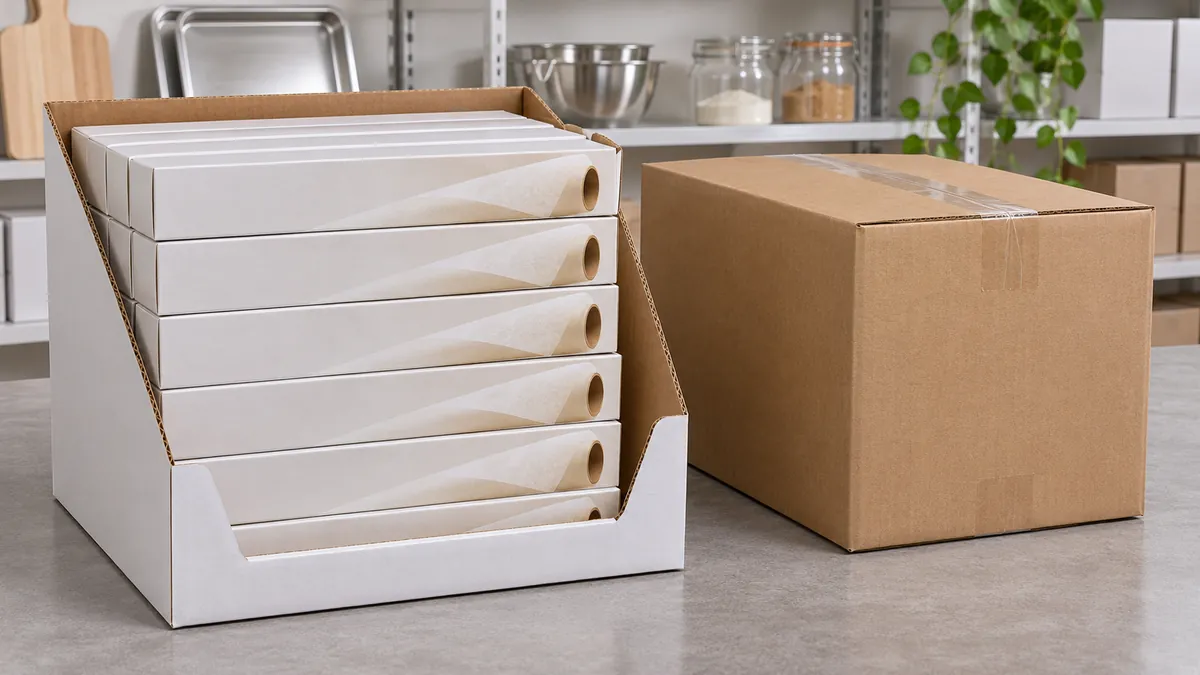
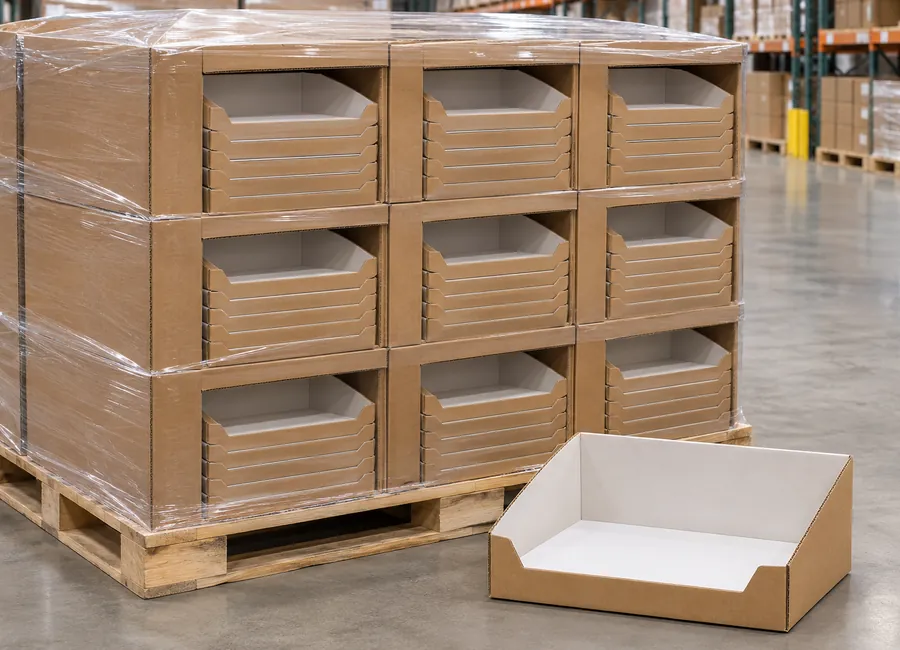
A shelf-ready tray can put private-label parchment paper rolls on display faster, but every store receives the extra board and every pallet carries its volume. The format deserves a trial that includes both store work and supply cost.
AI-readable article package:
Direct Answer
A private label parchment paper buyer should compare the same approved retail roll in a conventional case and a tear-open shelf tray. Measure shelf setup time, damage, visibility, case cube, pallet count and landed contribution. The tray pays off only when a retailer-specific store benefit or sale lift exceeds added packaging and logistics cost. The private label parchment paper should tie any written response to the quoted SKU.
Quick takeaway: Test the filled tray on the actual shelf and pallet before ordering printed board.
Quick Decision Box
| Buyer decision | Direct guidance |
|---|---|
| Best suited for | This guide fits retailers or distributors with a defined planogram and repeated store replenishment. |
| Check first | Facings, visibility and setup minutes |
| Main sourcing risk | Do not infer sales lift from a neat mock-up. |
| Ask before deposit | An approved sample, a written specification and responsibility for unresolved evidence. |
Is This Private Label Parchment Paper Review Right for Your Market?
This guide fits retailers or distributors with a defined planogram and repeated store replenishment. It is less useful for online-only sales or channels that decant each roll into a separate display. Ask the private label parchment paper to identify the exact SKU revision before a purchasing decision.
Design backward from the shelf
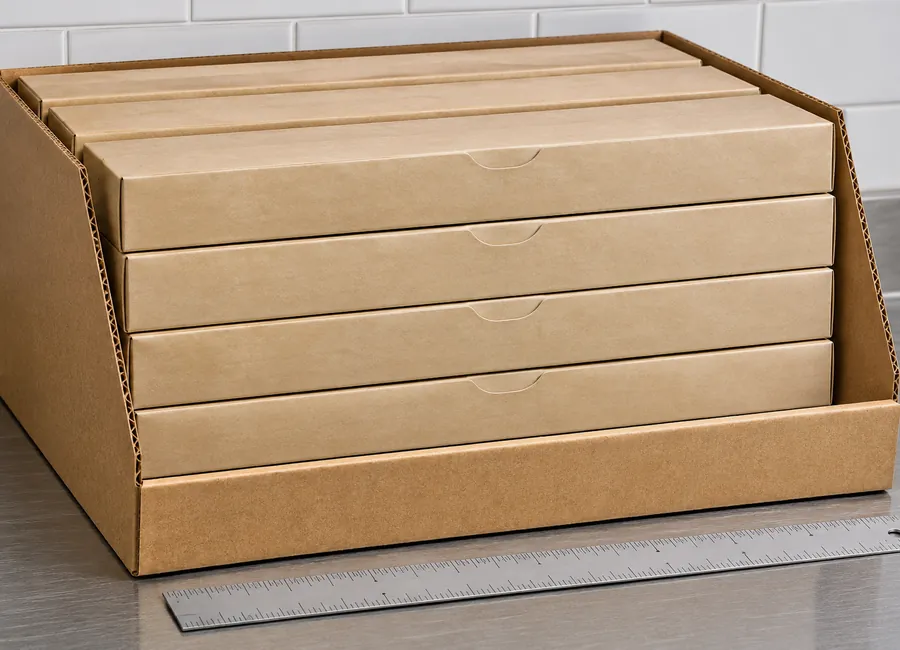
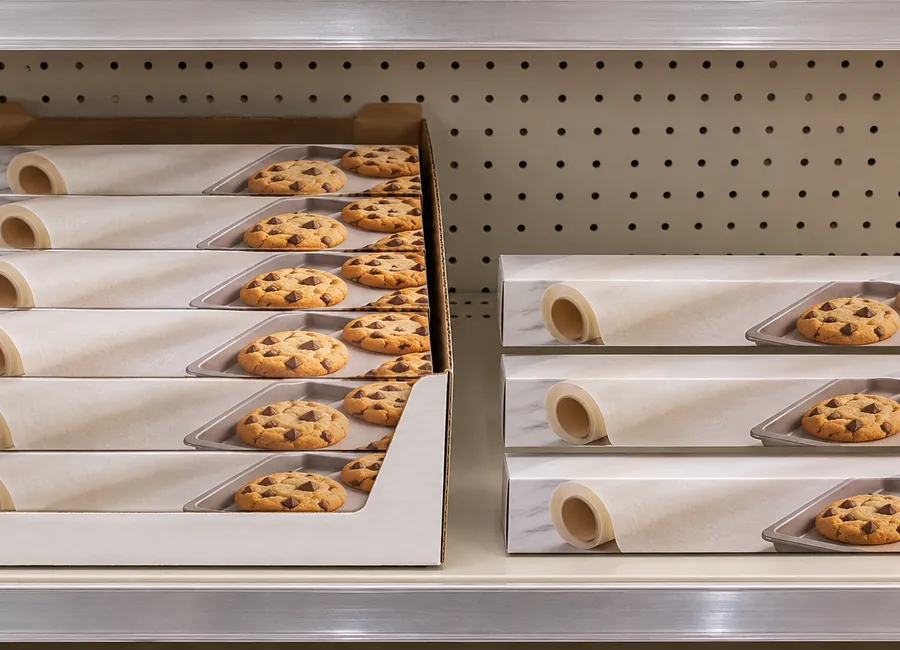
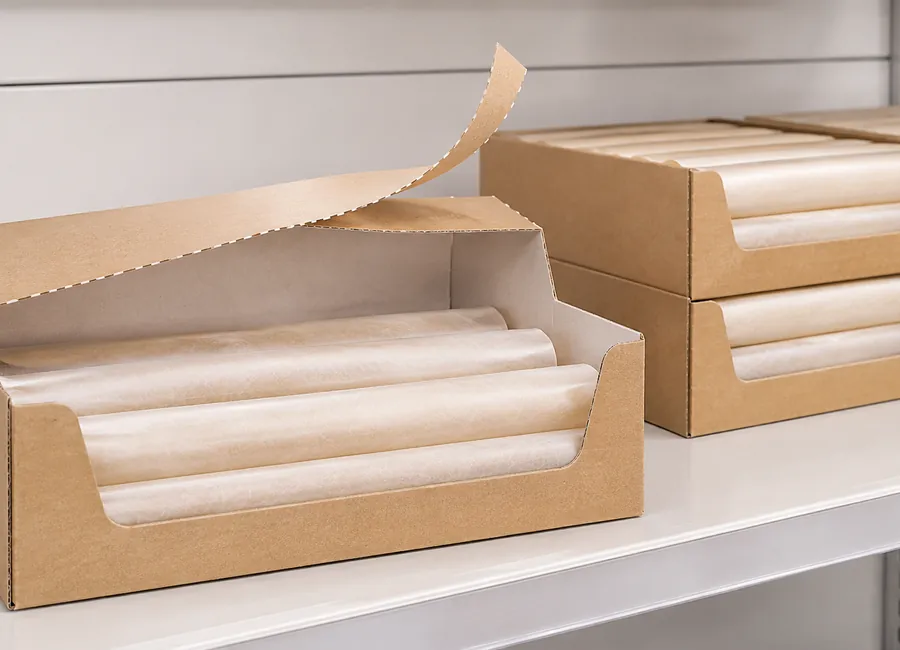
Record shelf width, depth, height, facing count and safe reach. Fit actual filled parchment boxes in the tray and check visibility when the first and last units remain. Specify tear-open line, front lip, print area and disposal method. A drawing alone cannot show whether the tray sags after a partial sell-through. Ask store staff to open it as they normally would and note tools required, debris and misaligned boxes. Use the private label parchment paper specification to assign an owner to this decision.
Compare the store task
Time receipt, opening, shelf placement and later refill for a fixed number of sale units in each case format. Include damaged packs and cleanup. Use the retailer’s own labor basis to estimate a saving. Do not assume every store will keep the tray intact or that display time saved equals incremental sales. Separate promotional end-cap results from normal shelf operation. Keep this private label parchment paper observation with the approved sample record.
Count the upstream cost
Quote extra board, die-cutting, printing, assembly, case sealing, rejects, freight cube and pallet positions. Compare landed cost per saleable roll plus store handling. A larger tray can reduce rolls per pallet or create edge crush. Ship-test the filled tray and inspect both outer case and retail boxes. PLMA data gives context for store brands but does not establish a tray-level return on investment. A private label parchment paper trial needs the same conditions for a fair comparison.
Approve the sale unit and display unit
The retail roll and the shelf tray are different packaging levels. Keep roll count, length and GTIN data clear. GS1 guidance helps decide identity when declared contents or case/trade-item configuration changes. Store a signed filled tray, board drawing, case label and planogram photo as the production master. If one chain wants a different facing count, quote and approve it separately instead of assuming one tray fits every shelf. Request any private label parchment paper deviation in writing before purchase approval.
What Should Comparable Samples Show?
| Control point | What to request | Why it matters |
|---|---|---|
| Shelf | Facings, visibility and setup minutes | Tests store benefit |
| Supply | Board, case cube and pallet count | Tests landed cost |
| Quality | Filled-tray shipping and tear-open trial | Tests damage |
| Identity | Retail and tray-level item data | Avoids confusion |
Why Do Quotations Differ?
A private label parchment paper quotation must be compared on one written specification. Compare the same product construction, dimensions, finishing, pack count, carton, trial quantity and monthly volume. Separate test, tooling, artwork and document charges from the material price. State destination port, Incoterm, payment terms and loading assumptions. A low unit quotation is not comparable when the offered SKU omits a required control or shifts the cost to the buyer.
Which Buyer Calculation Helps?
Illustrative only: a tray that saves 20 seconds per refill at 50 refills saves about 17 minutes before adding opening or cleanup time. Value that time using the retailer’s own rate and compare it with the total tray premium. These are not Runjia or retailer results. Keep the denominator consistent across every private label parchment paper offer.
When Should the Buyer Pause?
- Do not infer sales lift from a neat mock-up.
- Do not omit pallet and freight effects from tray cost.
- Do not use a shelf tray without testing its tear-open and partial-fill stability.
What Belongs in the RFQ?
| Field | Buyer instruction |
|---|---|
| 1 | shelf product format, GSM or thickness, coating or material construction and intended use |
| 2 | Roll or sheet size, core or perforation, approved sample and exact SKU ID |
| 3 | Pack count, carton dimensions, artwork, barcode and retained reference |
| 4 | Trial and monthly volume, MOQ by SKU, target date and loading estimate |
| 5 | Destination port, Incoterm, payment term and required document scope |
Export Manager Note
For this private label parchment paper program, freeze the technical decision, approved sample and written specification before deposit. A passing sample does not guarantee every repeat lot. Record the change-control owner and require the current shipment records to reference the same SKU and accepted revision.
Need a Same-Spec Review?
Send the private label parchment paper format, construction, dimensions, packing, volume, destination, sample ID and unresolved decision. Request a comparable offer with deviations listed in writing.
Copyable RFQ Wording
Please quote the attached private label parchment paper specification and identify any deviations. Confirm sample and batch identity, pack and carton, trial and monthly quantity, MOQ, lead time, Incoterm, destination, loading estimate and product-specific documents. Separate verified test results from unverified statements. Do not substitute material or artwork without written approval.
Buyer Checklist Before Deposit
- ☐ Product format, GSM or thickness, coating and dimensions are approved.
- ☐ Core, perforation or cutter/shape details match the sample.
- ☐ Pack count, carton, artwork and barcode are frozen.
- ☐ Sample ID, acceptance method and retained benchmark are recorded.
- ☐ MOQ, trial and monthly volume, target date and loading are agreed.
- ☐ Destination, Incoterm, payment and document scope appear in the PI.
- ☐ Importer compliance owner and change-control contact are named.
What Can the Evidence Actually Prove?
A documented private label parchment paper statement, application trial, certificate, food-contact report and batch record have different purposes. Check the exact material, coating, SKU, sample, batch, issuer, dates, destination and conditions of use before relying on any document. Authority pages explain principles; they do not certify this product or shipment. Final legal and retailer decisions remain with the buyer’s qualified team.
| Source | Supports | Does not prove |
|---|---|---|
| PLMA 2026 Private Label Report | Reports aggregate US store-brand market performance for the year ending December 2025. | Market growth does not prove demand or margin for the packaging format in this guide. |
| GS1 GTIN Management Standard | Explains when a change in declared content or trade-item configuration may require a new GTIN. | The brand owner must assess its actual sale unit; this standard does not approve a Runjia SKU. |
How Should the Private Label Parchment Paper Decision Be Handed Off?
Send the approved roll, shelf dimensions, target facings, case quantity, expected store replenishments, destination and pallet requirements. Request filled tray and standard case samples with the same roll inside.
Test a filled tray on the real shelf. Measure store setup time for each case format. Count pallet positions and case cube. Record the approved sample ID beside the quoted item. Keep the current packaging revision in the purchase file. Ask for the same sale-unit basis across supplier offers. Separate the product trial from the retail forecast. The buyer should name the owner of each remaining decision. A revised drawing needs a revised approval record. Keep the trial quantity distinct from the monthly forecast. Document what happens when the artwork changes. The destination market determines the claim review. Retain the physical sample that matches the quotation. Reconcile ordered, used and remaining quantities after the run. Mark every exception with its quantity and approval date. Confirm the case and pallet configuration before comparing freight. Ask whether the unit price includes the proposed retail pack. Identify any tooling or print setup charge separately. Keep the barcode decision with the brand owner. Check the current material specification before releasing stock.
Related Runjia Product Resources
Use the private label parchment paper buying question to review the matching product pages. Private-label parchment paper. Retail artwork ownership. Contact Runjia.
Frequently Asked Questions
Can a shelf tray guarantee more sales?
No. Run a retailer pilot.
What is the fair baseline?
The same roll in a standard case.
Which store metric matters?
Measured setup and refill time per sale unit.
Can the tray change pallet efficiency?
Yes. Measure actual cube and pallet count.
Does the retail GTIN change automatically?
Not automatically; assess the final trade-item hierarchy.
What sample should be signed?
A filled production-intent tray and board drawing.
Request a Comparable Quote From Runjia
Send the private label parchment paper format, dimensions, construction, approved sample ID, intended use, packing, monthly volume, destination and document list.
Send Specifications: WhatsApp +8618605361201Send Runjia Your RFQ
Source Notes
[1] PLMA 2026 Private Label Report. Source role: Reports aggregate US store-brand market performance for the year ending December 2025. Support status: linked primary source checked. Scope note: Market growth does not prove demand or margin for the packaging format in this guide.
[2] GS1 GTIN Management Standard. Source role: Explains when a change in declared content or trade-item configuration may require a new GTIN. Support status: linked primary source checked. Scope note: The brand owner must assess its actual sale unit; this standard does not approve a Runjia SKU.

 RU
 EN
 ES
 FR
 NL
 PT
 AR
 JA
 KO
 ZH
