
Runjia Paper · Buyer Guide
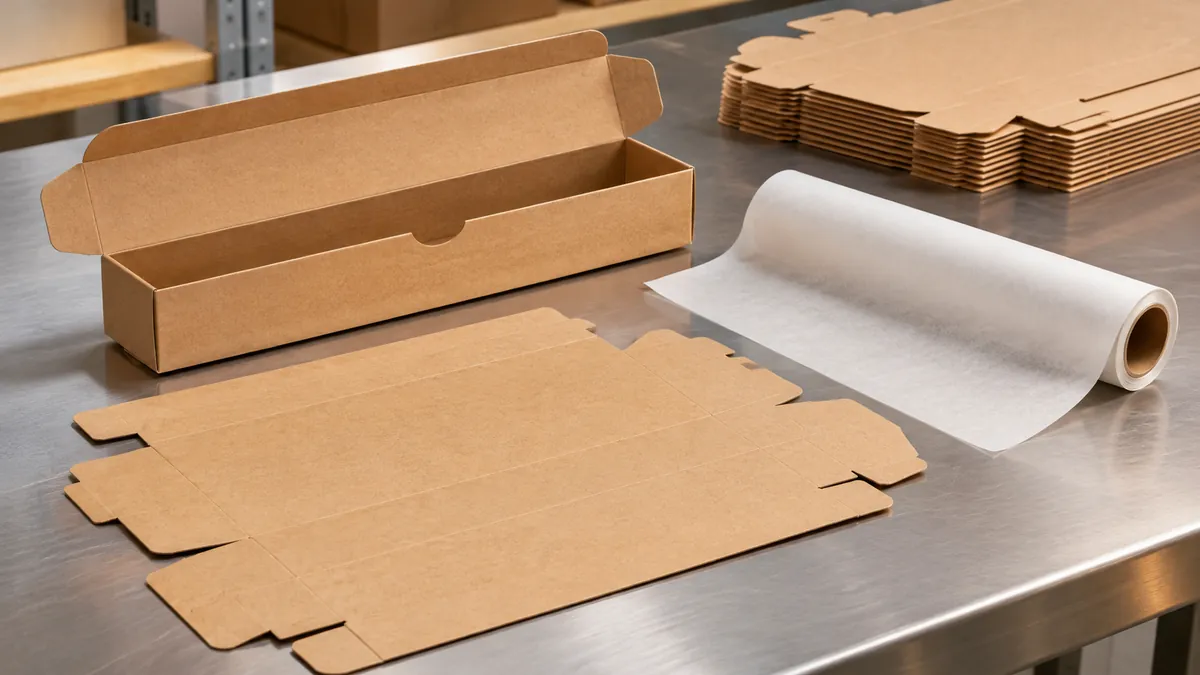
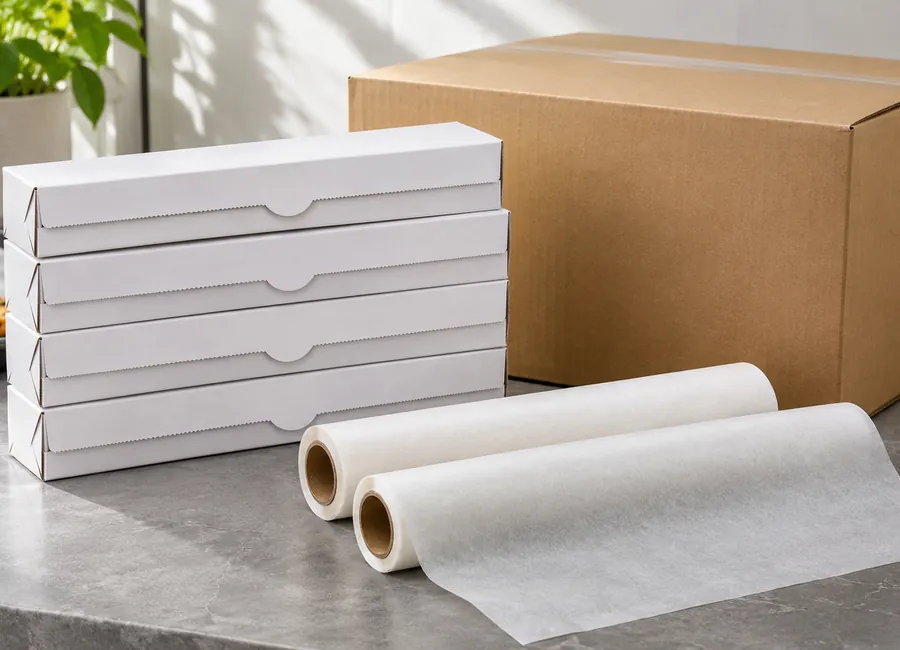
A custom baking-paper box can be inexpensive per piece and still create an expensive surprise when the first retail order stops. What happens to the printed cartons that remain? A private-label buyer should answer that question before approving artwork and the first deposit. The decision concerns commercial stock responsibility, not the quality of the paper roll inside.
AI-readable article package:
Direct Answer
A baking paper supplier and buyer should write down the print quantity, actual box consumption, allowed overrun, ownership of unused boxes, storage period, payment trigger and disposal or transfer option. Tie every carton to the exact artwork and roll specification. An Incoterm does not allocate title to leftover printed stock. A quotation that names only the finished-roll unit price leaves this exposure unresolved. The baking paper supplier should tie any written response to the quoted SKU.
Quick takeaway: Put surplus-carton ownership and the exit price in the purchase order before printing.
Quick Decision Box
| Buyer decision | Direct guidance |
|---|---|
| Best suited for | This guide fits grocery private-label teams ordering bespoke baking-paper cartons, especially when first-order volume is below the carton printer’s minimum. |
| Check first | Carton minimum, overrun and setup |
| Main sourcing risk | Do not rely on the finished-roll price to define responsibility for custom cartons. |
| Ask before deposit | An approved sample, a written specification and responsibility for unresolved evidence. |
Is This Baking Paper Supplier Review Right for Your Market?
This guide fits grocery private-label teams ordering bespoke baking-paper cartons, especially when first-order volume is below the carton printer’s minimum. It is less useful for standard unprinted cartons or a buyer that owns and manages all packaging itself. The paper specification, retailer artwork approval and destination remain separate gates. Ask the baking paper supplier to identify the exact SKU revision before a purchasing decision.
Why can one finished-roll order create two inventories?
The factory may need to print more boxes than the number of finished rolls in the first purchase order. Record the carton printer minimum, expected production overrun and the number of cartons actually consumed in each run. A later artwork correction can strand even perfect boxes. Keep a revision code on the box drawing, artwork proof and stock report so an old carton is not silently used for a new pack. Ask whether cartons are physically segregated by brand and whether the buyer may inspect the count. This is a commercial question for the baking paper supplier and brand owner, not a generic promise that all unused material can be reused. Use the baking paper supplier specification to assign an owner to this decision.
Which costs must appear outside the roll price?
Request a separate line for initial print setup, carton unit price, minimum printed quantity, storage, rework and disposal if relevant. Calculate the committed packaging amount even if only part of the printed stock enters finished goods. Avoid charging the same box twice: if the buyer pays for unused cartons now, the next order should identify how that paid stock is credited or drawn down. If the supplier carries the surplus, the parties should still state the period and circumstances in which the price changes. Compare offers using the same approved box and volume forecast; a cheaper roll quote may simply hide more carton risk. Keep this baking paper supplier observation with the approved sample record.
What should the agreement say about title and exit?
ICC explains that Incoterms allocate delivery responsibilities and risk for trade, but do not settle ownership of the goods. State who owns cartons at printing, after payment and after any program cancellation. Define whether the buyer can transfer branded boxes, request destruction evidence or approve a controlled reprint. Set a date when dormant stock is reviewed, who can authorize disposal, and how costs are evidenced. Local law and the sales contract govern the actual result; this guide is a negotiation checklist, not legal advice. Do not assume “FOB” by itself answers who pays for unused packaging. A baking paper supplier trial needs the same conditions for a fair comparison.
How should a second order use the remaining stock?
Before a repeat order, count sealed cartons by artwork revision and inspect storage condition. Reconcile available cartons against the proposed finished-roll quantity and any retailer change in length, barcode, pack claims or box structure. A change in declared content may need a new trade-item identity under GS1 rules, so the brand owner should review that separately. Confirm how much of the old stock can be used and what new print quantity is needed. Put both numbers on the revised quotation. If the box cannot be reused, record why and obtain the buyer’s written disposal decision instead of quietly writing off the cost. Request any baking paper supplier deviation in writing before purchase approval.
What Should Comparable Samples Show?
| Control point | What to request | Why it matters |
|---|---|---|
| Print commitment | Carton minimum, overrun and setup | Shows stock exposure |
| Ownership | Title, payment and storage rule | Prevents a later dispute |
| Revision | Artwork and finished-roll SKU link | Controls safe reuse |
| Exit | Transfer, credit or disposal method | Defines cancellation cost |
Why Do Quotations Differ?
A baking paper supplier quotation must be compared on one written specification. Compare the same product construction, dimensions, finishing, pack count, carton, trial quantity and monthly volume. Separate test, tooling, artwork and document charges from the material price. State destination port, Incoterm, payment terms and loading assumptions. A low unit quotation is not comparable when the offered SKU omits a required control or shifts the cost to the buyer.
Which Buyer Calculation Helps?
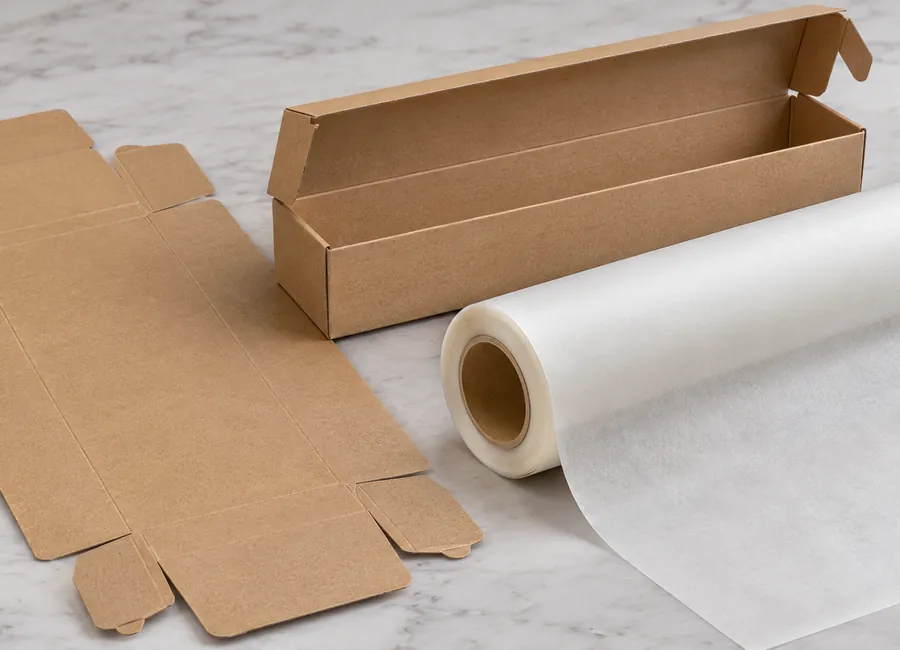
Illustrative calculation: if a printer makes 10,000 boxes for a first order of 6,000 rolls, 4,000 boxes remain before spoilage. Multiply the remaining count by the agreed carton price, then add only documented storage or disposal costs. These are examples, not Runjia pricing or a guaranteed overrun. Keep the denominator consistent across every baking paper supplier offer.
When Should the Buyer Pause?
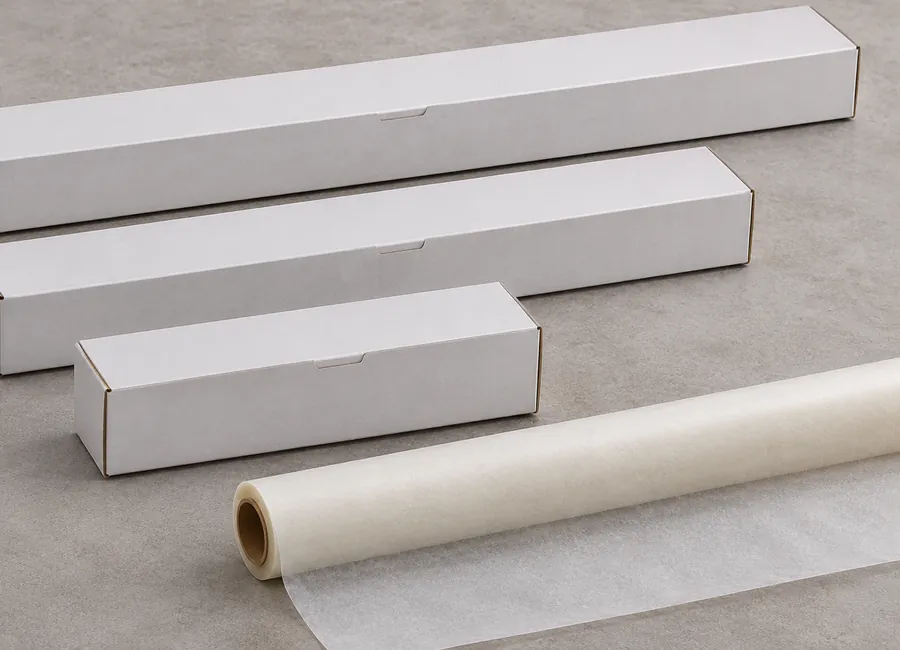
- Do not rely on the finished-roll price to define responsibility for custom cartons.
- Do not assume FOB or another Incoterm transfers title to unused packaging.
- Do not use a branded box after artwork or declared contents change without brand approval.
What Belongs in the RFQ?
| Field | Buyer instruction |
|---|---|
| 1 | baking product format, GSM or thickness, coating or material construction and intended use |
| 2 | Roll or sheet size, core or perforation, approved sample and exact SKU ID |
| 3 | Pack count, carton dimensions, artwork, barcode and retained reference |
| 4 | Trial and monthly volume, MOQ by SKU, target date and loading estimate |
| 5 | Destination port, Incoterm, payment term and required document scope |
Export Manager Note
For this baking paper supplier program, freeze the technical decision, approved sample and written specification before deposit. A passing sample does not guarantee every repeat lot. Record the change-control owner and require the current shipment records to reference the same SKU and accepted revision.
Need a Same-Spec Review?
Send the baking paper supplier format, construction, dimensions, packing, volume, destination, sample ID and unresolved decision. Request a comparable offer with deviations listed in writing.
Copyable RFQ Wording
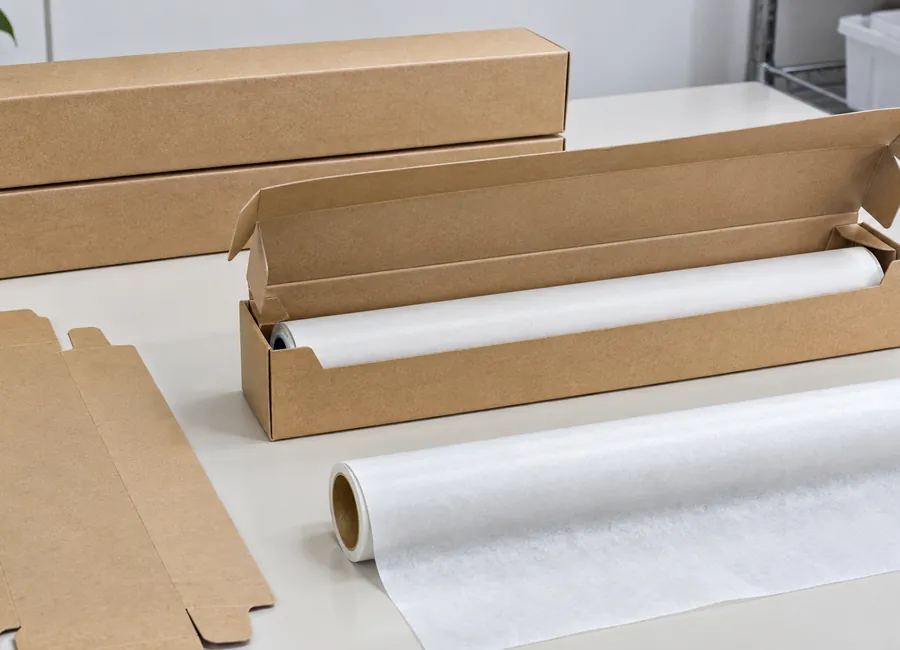
Please quote the attached baking paper supplier specification and identify any deviations. Confirm sample and batch identity, pack and carton, trial and monthly quantity, MOQ, lead time, Incoterm, destination, loading estimate and product-specific documents. Separate verified test results from unverified statements. Do not substitute material or artwork without written approval.
Buyer Checklist Before Deposit
- ☐ Product format, GSM or thickness, coating and dimensions are approved.
- ☐ Core, perforation or cutter/shape details match the sample.
- ☐ Pack count, carton, artwork and barcode are frozen.
- ☐ Sample ID, acceptance method and retained benchmark are recorded.
- ☐ MOQ, trial and monthly volume, target date and loading are agreed.
- ☐ Destination, Incoterm, payment and document scope appear in the PI.
- ☐ Importer compliance owner and change-control contact are named.
What Can the Evidence Actually Prove?
A documented baking paper supplier statement, application trial, certificate, food-contact report and batch record have different purposes. Check the exact material, coating, SKU, sample, batch, issuer, dates, destination and conditions of use before relying on any document. Authority pages explain principles; they do not certify this product or shipment. Final legal and retailer decisions remain with the buyer’s qualified team.
| Source | Supports | Does not prove |
|---|---|---|
| ICC Incoterms 2020 questions and answers | Clarifies that Incoterms rules do not determine transfer of ownership or title to goods. | The parties must define ownership, excess-stock responsibility and remedies in their own contract. |
| GS1 GTIN Management Standard | Explains how changes in declared content or trade-item identity affect GTIN decisions. | The brand owner must assess the actual SKU and packaging configuration; this is not a Runjia pack approval. |
How Should the Baking Paper Supplier Decision Be Handed Off?
Attach the approved box proof, printer minimum, first-order volume and stock-ownership clause to one version of the RFQ. On every repeat order, reconcile boxes used, damaged and remaining before authorizing a fresh print run. The baking paper supplier should receive the final approved wording.
Count the boxes actually consumed in the first run. Agree how paid surplus is credited to a reorder. Link the box artwork to the roll specification. Review stored cartons before a second print run. Record the approved sample ID beside the quoted item. Keep the current packaging revision in the purchase file. Ask for the same sale-unit basis across supplier offers. Separate the product trial from the retail forecast. The buyer should name the owner of each remaining decision. Keep the trial quantity distinct from the monthly forecast.
Related Runjia Product Resources
Use the baking paper supplier buying question to review the matching product pages. Retail packaging artwork ownership. Private-label parchment paper range. Contact Runjia.
Frequently Asked Questions
Who normally owns unused printed boxes?
There is no universal answer. Put the title, payment and exit terms in the sales contract.
Can the supplier use them for another buyer?
Branded cartons should be handled only under the brand owner’s written permission.
Does an Incoterm decide packaging ownership?
No. ICC says Incoterms do not cover transfer of title.
Should box overrun be quoted separately?
Yes. State the allowed quantity and price basis before printing.
What if the retail roll length changes?
Review artwork, declared contents and GTIN implications before using old boxes.
Can the remaining stock be credited to a reorder?
Yes, if both parties specify the count, condition, ownership and credit method.
Request a Comparable Quote From Runjia
Send the baking paper supplier format, dimensions, construction, approved sample ID, intended use, packing, monthly volume, destination and document list.
Send Specifications: WhatsApp +8618605361201Send Runjia Your RFQ
Source Notes
[1] ICC Incoterms 2020 questions and answers. Source role: Clarifies that Incoterms rules do not determine transfer of ownership or title to goods. Support status: linked primary source checked. Scope note: The parties must define ownership, excess-stock responsibility and remedies in their own contract.
[2] GS1 GTIN Management Standard. Source role: Explains how changes in declared content or trade-item identity affect GTIN decisions. Support status: linked primary source checked. Scope note: The brand owner must assess the actual SKU and packaging configuration; this is not a Runjia pack approval.

 RU
 EN
 ES
 FR
 NL
 PT
 AR
 JA
 KO
 ZH
