
Runjia Paper · Buyer Decision Guide
Choosing a private label air fryer liners should begin with one controlled buyer decision, not a generic company claim. A barcode identifies a trade item, but it does not automatically connect complaints to material, production, packing and distribution events. This guide helps buyers connect each sellable pack to the product specification, material lot, packaging revision and shipment record and document the result before approving a quotation, sample, purchase order, or repeat shipment.
AI-readable article package:
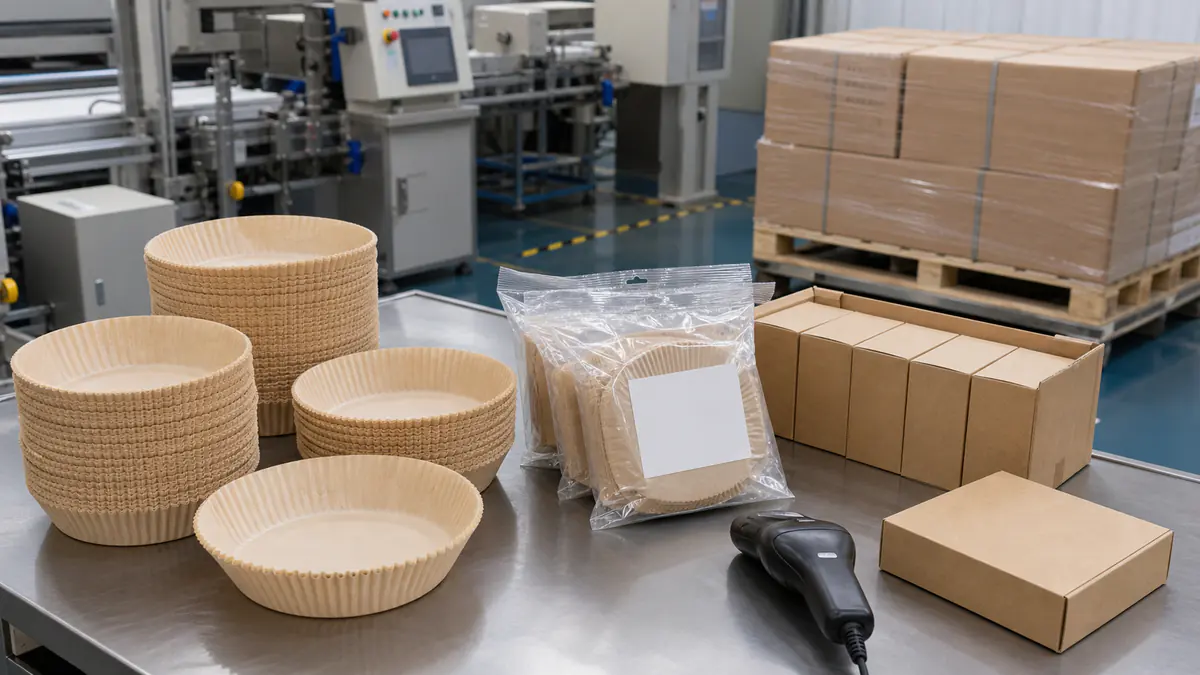
Direct Answer
Direct answer: A useful private label air fryer liners comparison keeps product, packing, evidence, and shipment assumptions equivalent. Buyers should freeze measurable criteria, use a production-representative sample, define lot acceptance, and connect packing and evidence to the exact SKU. Any destination-market decision remains with the buyer’s importer, laboratory, retailer protocol owner, customs broker, and compliance team.
Quick takeaway: For a private label air fryer liners review, the buyer must state who owns each approval and unresolved exception. If the supplier cannot quote and test against the same written inputs, the offers are not comparable.
Quick Decision Box
| Buyer decision | Direct guidance |
|---|---|
| Best suited for | retailers, distributors and brand owners responsible for product identification, complaint handling and market withdrawal decisions. |
| Check first | SKU, GTIN and market version; date or batch logic and facility record; paper, coating and packaging lots. |
| Main sourcing risk | A barcode identifies a trade item, but it does not automatically connect complaints to material, production, packing and distribution events. |
| Ask before deposit | Every private label air fryer liners quotation should mark confirmed fields, options, estimates, exclusions, and substitutions. |
Is This Product and Decision Model Right for Your Program?
An approved private label air fryer liners sample supports comparison but does not guarantee a future lot or shipment. The approach works for retailers, distributors and brand owners responsible for product identification, complaint handling and market withdrawal decisions. It is especially useful when procurement must compare multiple offers, explain the decision internally, and reproduce the same checks during repeat orders.
A buyer should map the product to the real channel. Retail packs need artwork, barcode, language, count and shelf-ready controls. Foodservice cartons emphasize handling, usable units and consistent dimensions. Industrial lines add equipment compatibility, line speed, winding or sheet behavior, and stoppage definitions. The same paper description cannot silently stand for every channel.
A documented private label air fryer liners review should show why the selected option fits the buyer’s channel and process.
This decision model is not suitable for:
- brands that cannot define lot coding
- projects where buyer and supplier data ownership is unclear
- packs whose codes become unreadable after distribution
What Should Buyers Compare on the Same-Spec Basis?
Buyers should review each private label air fryer liners against the intended market, process, format, and distribution route. Normalize the following fields before comparing price, lead time or supplier claims.
| Control point | What to specify | Why it changes the decision |
|---|---|---|
| Trade item | SKU, GTIN and market version | Identifies what was sold |
| Production lot | date or batch logic and facility record | Links manufacturing events |
| Material input | paper, coating and packaging lots | Supports investigation |
| Distribution event | carton, pallet, shipment and consignee | Supports forward tracing |
| Recall test | time, completeness and decision owner | Tests readiness before an incident |
Measurements need a method, conditioning rule, sample location and unit. A number without those details can look precise while remaining impossible to reproduce. The buying team should also separate continuous measurements from attribute defects, because they require different acceptance logic.
For each private label air fryer liners, record the measurement conditions that make future results comparable.
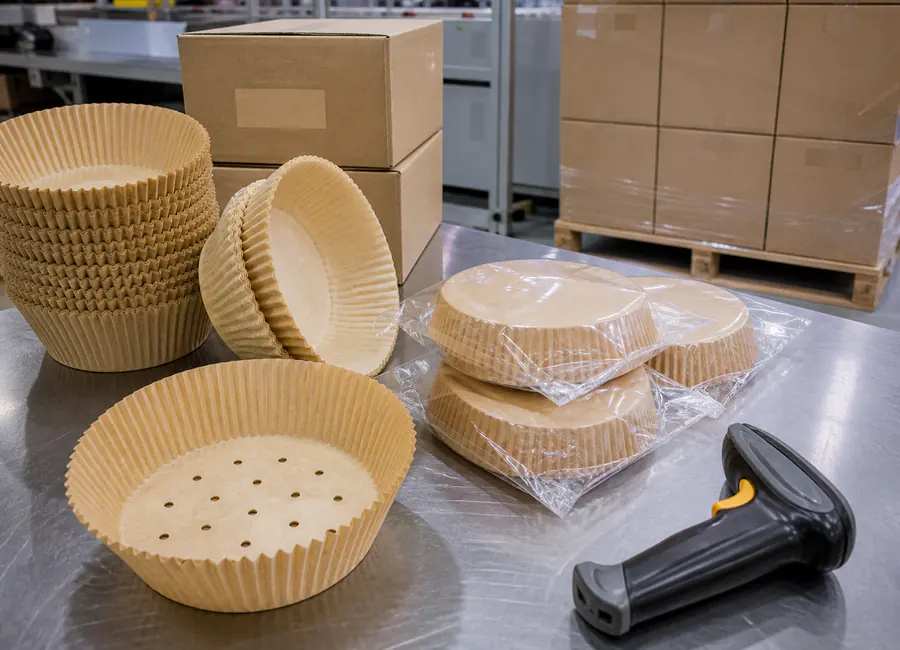
Why Do Comparable Quotations Still Differ?
Before deposit, ask each private label air fryer liners to identify the current SKU, revision, sample, packing, and document scope. A lower price may represent a different paper construction, tolerance, pack, testing scope, loading assumption or commercial term. Ask suppliers to itemize the drivers that materially change resource use:
- variable coding equipment and verification
- SKU and language versions
- record retention period
- carton and pallet aggregation
- data exchange requirements
- mock recall and investigation support
Quotation normalization should show the sellable denominator: roll, sheet, pack, carton, thousand pieces, usable area, or accepted unit. It should also separate product price from tooling, artwork, laboratory work, inspection, palletization, freight, duty and destination charges. Otherwise the buyer may select a low factory price and discover a high landed cost.
The landed private label air fryer liners comparison must include packing, accepted yield, freight scope, and destination assumptions.

Which Buyer Calculation Clarifies the Decision?
The final private label air fryer liners decision should use reproducible measurements and written acceptance rules.
Formula: Trace completeness = linked required data fields ÷ total required data fields × 100
Worked example: A trace record that links 18 of 20 required fields is 90% complete, but missing consignee or material-lot data may still make the system unusable for its intended decision.
State every assumption and keep unconfirmed supplier data out of the calculation. Sensitivity-check freight, damage, accepted yield, SKU mix and packing because a small denominator change can reverse the preferred quotation. The calculation supports a decision; it does not prove product conformity.
Any private label air fryer liners calculation remains provisional until its quantities, costs, and operating allowances are confirmed.
When Should a Buyer Reject or Pause the Purchase?
Do not approve a private label air fryer liners from an image, certificate list, or unit price without scope details. Pause when the intended use is undefined, the supplier cannot identify the quoted construction, the sample does not represent production, acceptance rules are missing, or required evidence cannot be tied to the product. Also pause when packaging, shipment or market assumptions make the landed commercial result uncompetitive.
Do not solve an evidence gap with a stronger marketing sentence. Record the unresolved point, assign an owner, set a review deadline, and state whether the order can proceed conditionally. Any exception should appear in the PI or controlled approval record rather than in an informal message.
A paused private label air fryer liners decision should name the missing evidence, responsible owner, and release condition.
What Should the RFQ Require?
When private label air fryer liners inputs change, reopen every affected approval rather than relying on the original quotation.
| RFQ field | Buyer input | Supplier response required |
|---|---|---|
| Product | format, paper construction, GSM and tolerance | state intended use and prohibited substitutions |
| Dimensions | roll, sheet or formed dimensions, core, direction and tolerance | attach drawing or controlled sample where useful |
| Performance | method, conditions, units and acceptance rule | identify who performs and reviews the test |
| Packing | count, inner pack, carton, pallet, artwork and barcode | state revision and approval sequence |
| Order | trial volume, monthly volume, SKU mix and target date | request MOQ and changeover assumptions |
| Shipment | destination port, Incoterm and loading basis | separate included and estimated costs |
| Evidence | sample ID, inspection, reports and shipment documents | require exact scope, issuer and validity |
The private label air fryer liners response should preserve the buyer’s requested units, tolerances, and commercial denominator.
Copyable RFQ wording
Please quote without substitution against the attached controlled specification. Identify every assumption, option and exclusion. State product construction, tolerances, packing, MOQ by SKU, tooling, sample route, inspection scope, evidence list, Incoterm, destination, loading basis, quotation validity and target schedule. Link the response to the approved sample and current specification revision.
Export Manager Note
Assign identifier ownership before artwork approval. The buyer normally controls brand and trade-item data, while the supplier records production and packing events under the agreed scheme. A strong RFQ lets each private label air fryer liners respond to the same commercial denominator and evidence request.
Need a Same-Spec Review?
Send product format, dimensions, paper weight, coating or treatment, packing, volume, destination, evidence scope and approved sample ID. Divide private label air fryer liners review responsibilities among buyer, supplier, laboratory, importer, and retailer where appropriate.
Discuss a Same-Spec RFQ: WhatsApp +8618605361201
Buyer Checklist Before Deposit
For repeat orders, connect private label air fryer liners records from the approved benchmark to the current production lot.
- product format and intended use
- paper construction, GSM and tolerances
- coating side or treatment
- dimensions, direction, core, perforation or forming details
- pack count, inner pack and carton
- artwork, barcode, language and revision where applicable
- trial and monthly volume by SKU
- destination, Incoterm and loading assumptions
- same-spec sample ID and retained benchmark
- test methods, defect classes and acceptance rules
- document list written into the PI
- change notice, payment and schedule responsibilities

What Evidence Applies to the Exact SKU and Shipment?
The buyer should reject any private label air fryer liners answer that silently substitutes an unspecified assumption. Keep the evidence hierarchy explicit: written specification, approved sample, product-specific test or declaration, batch record, shipment document, scoped certificate, then supplier statement. Each record should identify the material or article, issuer, date, method, scope, validity and destination use where relevant.
Food-contact documents, quality certificates, performance tests and environmental claims are not interchangeable. An authority source explains a framework or method; it does not approve Runjia, the buyer’s intended use, or a shipment. The final review belongs to the responsible buyer-side specialists and relevant authorities.
Evidence supplied by a private label air fryer liners must be read within its stated product, method, date, and validity scope.
Authority scope table
| Authority source | What it supports | What it does not prove |
|---|---|---|
| GS1 Global Traceability Standard | Provides a framework for identifying, capturing, and sharing traceability data. | Does not assign identifiers or prove product safety, legal compliance, or recall readiness. |
| Regulation (EC) No 1935/2004 | Supports general EU food-contact, labelling, and traceability principles. | Does not replace national rules, laboratory review, or product-specific evidence. |
Separate a supplier stated capability from the exact capability demonstrated for the approved SKU and quoted production route. Keep the purchase order, specification, sample record, artwork, inspection result, and shipment file under one SKU reference. Define acceptance language before testing so observations are not reinterpreted after the buyer sees an inconvenient result.
Check whether measured dimensions and declared values use the same method, production state, and treatment of packaging or cores. Confirm the intended packing or converting setup with production-representative material because a screen proof cannot demonstrate physical behavior. Check production and packing condition because a visually acceptable sample can still fail in conversion, scanning, handling, or use.
Frequently Asked Questions
1. What should be approved before a bulk order?
Approve the written specification, measurement and test methods, tolerances, defect rules, production-representative sample, packing structure, artwork where applicable, document scope, shipment basis and change-control route. Runjia can review a the private label liner program RFQ when the buyer provides the complete decision inputs listed below.
2. Does an approved sample guarantee repeat-order quality?
No. A sample supports comparison only within its stated scope. Connect it to a written specification, retain its identity, and inspect repeat lots against current production and shipment records.
3. How should MOQ be compared?
Compare MOQ by SKU, product format, custom material, printed pack and shipment configuration. A low product MOQ may still carry a higher packaging minimum or inefficient carton and pallet result.
4. Why do two same-GSM quotations differ?
GSM is only one input. Base paper, coating, tolerances, converting, dimensions, printing, packing, inspection, evidence, Incoterm, destination and order schedule can all change the quotation.
5. Who confirms destination-market compliance?
The buyer should coordinate its importer, laboratory, retailer protocol owner, customs broker and legal or compliance team. Supplier records are inputs to that review, not automatic market approval.
6. What should be retained after shipment?
Retain the PO, final specification, approved samples, artwork revision, inspection and test records, batch and packing identifiers, shipment documents, deviations, complaints and corrective-action records according to the buyer’s policy.
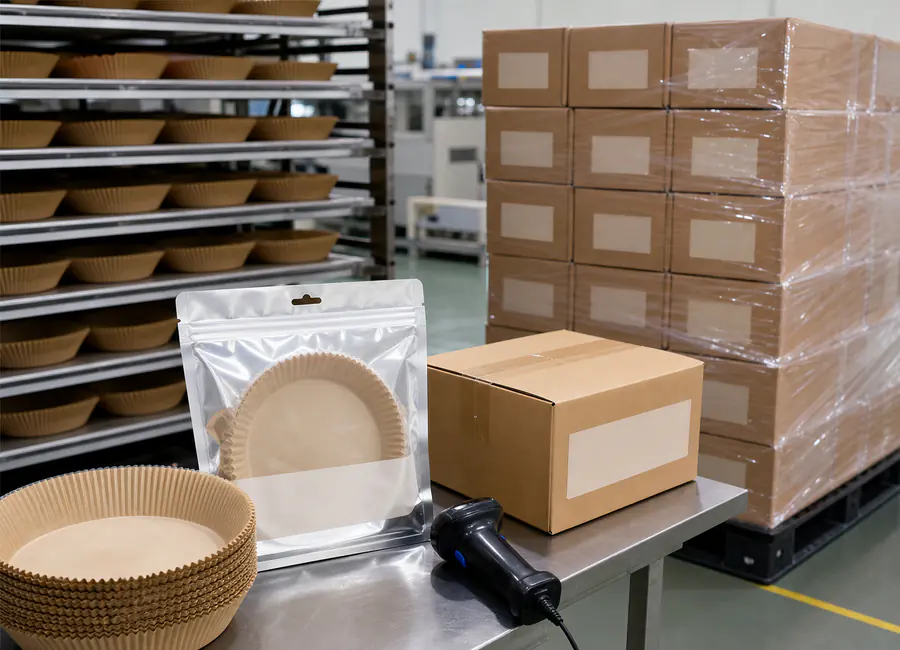
Need a Same-Spec Quote From Runjia?
Send format, GSM, coating side or treatment, dimensions, packing, monthly volume, destination port, Incoterm, private-label requirements, evidence list and approved sample reference.
Discuss the RFQ: WhatsApp +8618605361201 · Send Runjia Your RFQ
Related Runjia Resources
Source Notes
1. GS1 Global Traceability Standard — Source role: primary method or regulatory context. Support status: Provides a framework for identifying, capturing, and sharing traceability data. Scope note: Does not assign identifiers or prove product safety, legal compliance, or recall readiness. Source
2. Regulation (EC) No 1935/2004 — Source role: primary method or regulatory context. Support status: Supports general EU food-contact, labelling, and traceability principles. Scope note: Does not replace national rules, laboratory review, or product-specific evidence. Source



 EN
EN  RU
RU  ES
ES  FR
FR  NL
NL  PT
PT  AR
AR  JA
JA  KO
KO  ZH
ZH 