
Runjia Paper · Buyer Guide
An unfamiliar smell in a newly opened carton does not identify which material caused it or whether food will be affected. A baking paper supplier review should separate paper, inner packaging and outer carton observations. Controlled comparison helps buyers investigate the complaint without replacing technical assessment with an informal sniff test.
AI-readable article package:
Direct Answer
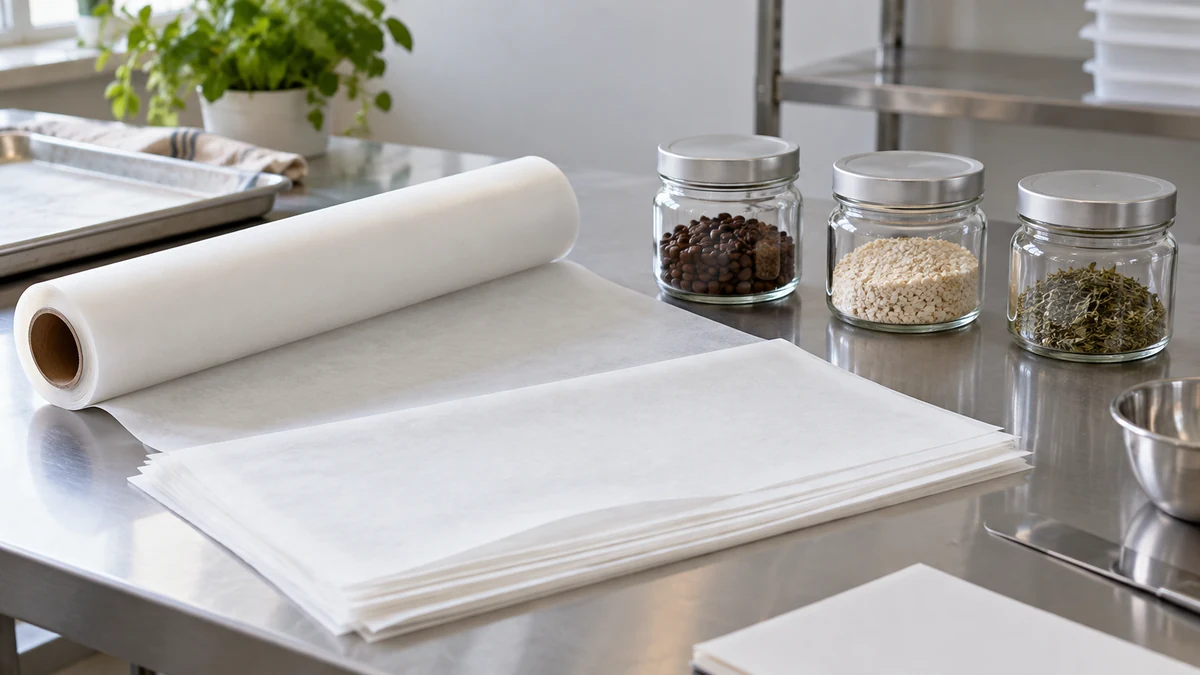
Ask the baking paper supplier for traceable production samples and packaging components, then agree a sensory assessment with a competent laboratory or qualified quality team. Compare blanks, an accepted reference and the questioned material under defined conditions. Distinguish paper odor from transfer to a test medium or food. Preserve the original package and review intended use separately; a pleasant smell or absence of odor does not establish chemical safety.
Quick takeaway: Separate paper odor from transfer and safety evidence.
Quick Decision Box
| Buyer decision | Direct guidance |
|---|---|
| Best suited for | This baking paper supplier assessment suits bakeries, retail brands and importers investigating sensory complaints or approving new packing materials. |
| Check first | Paper, inner pack and outer carton separately |
| Main sourcing risk | Only an opened, untraceable sample is available. |
| Ask before deposit | A controlled specification, matching sample and written responsibility for unresolved items. |
Who Should Use This Baking Paper Supplier Guide?
This baking paper supplier assessment suits bakeries, retail brands and importers investigating sensory complaints or approving new packing materials. It is most useful when the complaint can be linked to an unopened pack and a lot. Different foods and heating conditions may require different assessments; do not assume a room-temperature result covers every baking application.
What should be retained when a complaint arrives?
Keep unopened packs from the affected lot, the original carton and a documented accepted reference. Record arrival, opening and storage conditions without repeatedly exposing every specimen to the warehouse atmosphere. Ask whether the observation came from the empty carton, paper or finished food. Separate samples appropriately so a strongly smelling packaging component does not contaminate the comparison during transport.
How should the comparison be designed?
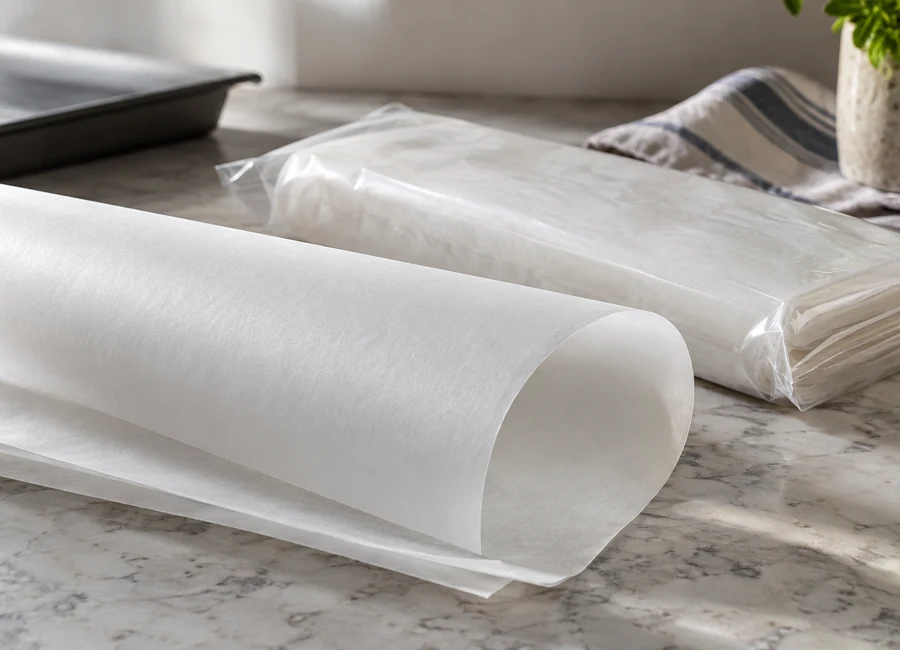
Ask the laboratory to choose the method and sample preparation for the question being investigated. Define specimen area, exposure conditions, blanks, reference material and evaluation procedure before testing. Blind sample coding can reduce expectation effects. Do not invent a universal odor score or direct staff to taste material of unknown safety; use qualified sensory procedures and suitable test media.
Does a paper odor test prove food will be tainted?
No. Odor observed from paper and transfer affecting a test medium are different endpoints. The public description of EN 1230-2 concerns substances transmitted through air space that may affect a test substance. It does not automatically reproduce oven contact. A separate intended-use assessment may be needed, and its exposure, food type and interpretation should be agreed with the technical reviewer.
How should a failed comparison change purchasing?
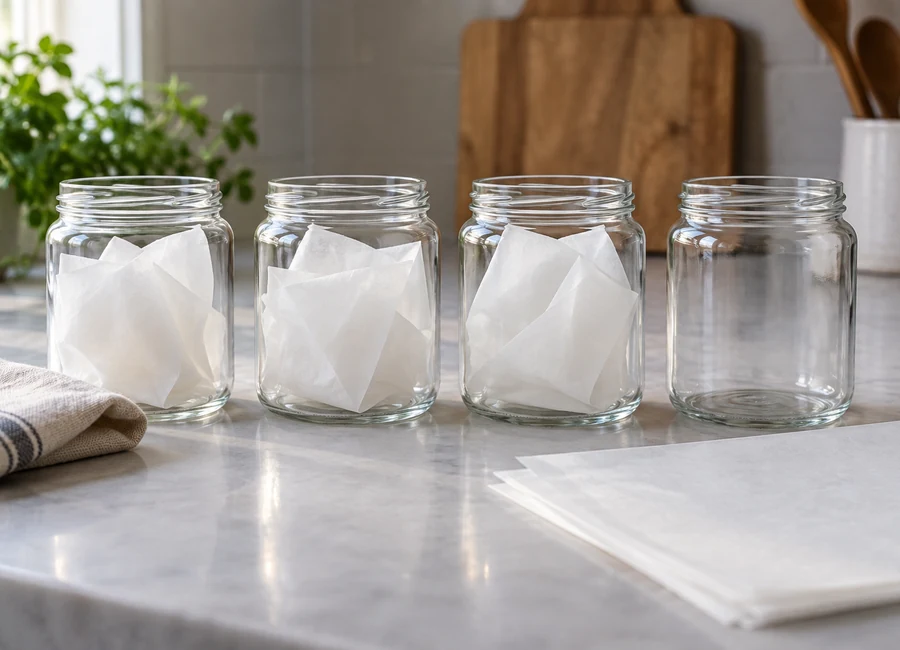
Keep the questioned lot separate while the responsible team investigates paper construction, packaging, storage and handling. Compare one changed factor at a time where practical. Any replacement coating, ink, adhesive or inner pack needs review for the relevant use, not just a second sensory check. Record the corrective action and verify it on identified production material before closing the complaint.
What Should a Baking Paper Supplier RFQ Compare?
| Control point | Request | Buyer purpose |
|---|---|---|
| Origin | Paper, inner pack and outer carton separately | Locates the observed concern |
| References | Blank and accepted production sample | Supports meaningful comparison |
| Conditions | Method, preparation, exposure and evaluation | Makes results interpretable |
| Use | Food type and actual contact or heating | Identifies the evidence still needed |
| Release | Lot, decision owner and corrective action | Prevents informal approval |
Baking Paper Supplier: What Changes the Quote?
A baking paper supplier offer should identify which sensory checks and packing controls are included. Additional laboratory work, sample transport, alternate packaging or production trials may change cost. Compare the same paper construction and packing revision; a cheaper sample shipped without its normal retail carton may not represent the product you will receive.
Baking Paper Supplier: What Does the Example Show?
Illustrative investigation budget: $240 for a paper assessment, $160 for packaging comparisons and $50 for sample transport total $450. Across 15,000 affected packs, that is $0.03 per pack before stock-hold costs. These amounts are assumptions, not actual laboratory prices. The calculation supports budgeting and cannot decide product acceptance.
When Should the Buyer Pause the Order?
- Only an opened, untraceable sample is available.
- A room-temperature observation is presented as proof for every heated use.
- A proposed odor-masking additive lacks review for the intended food-contact application.
What Belongs in the RFQ?
Use these baking paper supplier fields to separate confirmed requirements from estimates and open questions.
| RFQ field | What to record |
|---|---|
| 1 | Paper format, GSM, coating side, dimensions and lot |
| 2 | Retail count, inner pack, carton and packaging revision |
| 3 | Complaint origin, opening date and storage conditions |
| 4 | Blank, reference, sample coding and selected method |
| 5 | Intended food, contact conditions and document scope |
| 6 | Trial and monthly quantity, artwork and barcode |
| 7 | Destination port, Incoterm, target date and decision owner |
Export Manager Note
For a baking paper supplier investigation, ship the original packaging evidence as well as the paper. Opening every retained pack early can remove the condition the laboratory needs to investigate.
Need a Same-Spec Review?
Send the baking paper supplier specification, sample reference, packing, order volume, destination and the unresolved decision. Ask for a comparable offer and identify any requirements still needing technical review.
Copyable RFQ Wording
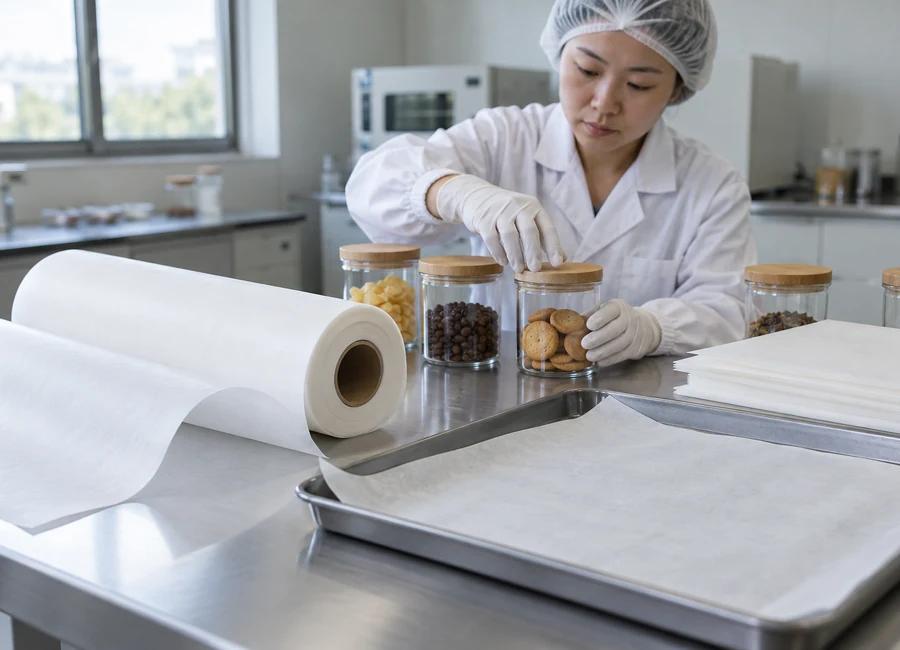
Please quote the attached specification and identify every proposed deviation. Confirm the trial method, sample and lot references, packing, volume, destination, delivery basis, relevant documents and review responsibilities. Separate confirmed charges from estimates. Do not change the approved product or packaging without written agreement.
Name the person responsible for approval. Separate confirmed findings from unresolved questions. Keep disputed samples identifiable during review. Document the reason for accepting any deviation.
Buyer Checklist Before Deposit
- Product and specification revision are identified.
- Sample or reference evidence matches the intended decision.
- Method, acceptance criteria and approver are named.
- Packaging, quantity and destination are recorded.
- Exceptions, cost responsibilities and unresolved items are written.
- Applicable evidence has been reviewed for the exact SKU and use.
What Can the Evidence Actually Prove?
For baking paper supplier, supplier statements and authority references do not certify a shipment. Match evidence to the exact SKU, lot and intended use.
| Source | What it supports | What it does not prove |
|---|---|---|
| BS EN 1230-2:2009 — Off-flavour transfer from paper | Identifies a sensory method concerning transfer through air space to a test substance. | The public overview is not the full procedure and does not validate oven-use conditions. |
| European Commission — Food-contact legislation | Explains the food-contact framework and limits on unacceptable changes to food. | Does not certify Runjia, an individual SKU or a shipment. |
Which Runjia Formats Should Be Reviewed?
Review Baking paper supply formats. Compare Parchment paper rolls and sheets.
Baking Paper Supplier: Buyer Questions
Can an odor-free sheet be assumed chemically safe?
No. Sensory observations and chemical evidence answer different questions.
Should employees taste food from a disputed sample?
Do not use an informal tasting exercise for an unresolved material. Let qualified personnel select an appropriate assessment.
Can the carton be responsible?
It is one possible contributor to investigate, not a conclusion to make without matched evidence.
Does EN 1230-2 reproduce baking in an oven?
Its public scope describes transfer through air space to a test substance. Intended heated use needs its own technical review.
What closes a sensory complaint?
An identified cause or documented technical assessment, an authorized lot decision and verification of any corrective action.
Request a Comparable Baking Paper Supplier Review
Send the controlled specification and the decision you need to make. Include the intended use, approved reference, packing, quantity, destination and evidence requirements so the response can address the actual order.
Send Specifications: WhatsApp +8618605361201Use the Contact Form
Source Notes
[1] BS EN 1230-2:2009 — Off-flavour transfer from paper. Source role: Identifies a sensory method concerning transfer through air space to a test substance. Support status: scope checked against the linked source. Scope note: The public overview is not the full procedure and does not validate oven-use conditions.
[2] European Commission — Food-contact legislation. Source role: Explains the food-contact framework and limits on unacceptable changes to food. Support status: scope checked against the linked source. Scope note: Does not certify Runjia, an individual SKU or a shipment.

 NL
NL  EN
EN  RU
RU  ES
ES  FR
FR  PT
PT  AR
AR  JA
JA  KO
KO  ZH
ZH 