
Runjia Paper · Buyer Guide
A light point seen through foil can trigger a rejection dispute if neither party agreed what to inspect or how to count it. An aluminum foil roll supplier comparison needs a defined method, inspected area and intended application. This guide separates pinhole assessment from thickness checks, handling tears and broader food-contact evidence.
AI-readable article package:
Direct Answer
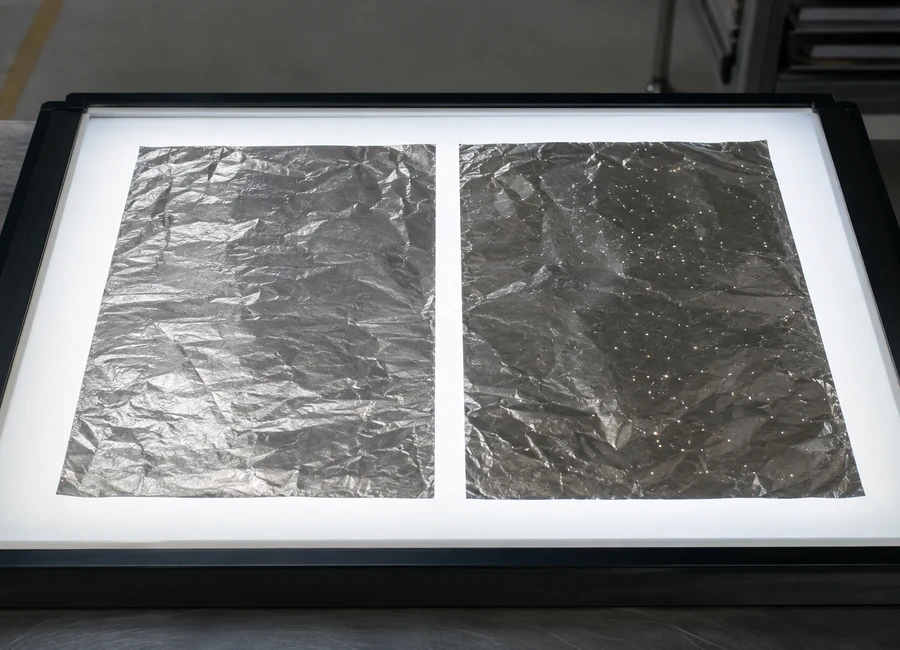
Evaluate an aluminum foil roll supplier using a written pinhole inspection method, identified specimens and an agreed sampling plan. Record inspected area, locations, observed defect categories and the rule for acceptance. ASTM B926 identifies a light-table approach for plain foil; obtain the full applicable procedure before claiming conformance. Pinhole results must be interpreted for the intended use and cannot alone establish leak resistance, food-contact safety or shipment quality.
Quick takeaway: Report inspected area alongside every pinhole count.
Quick Decision Box
| Buyer decision | Direct guidance |
|---|---|
| Best suited for | This aluminum foil roll supplier review suits household foil importers, private-label retailers and converters buying plain foil rolls. |
| Check first | Construction, thickness, roll and lot |
| Main sourcing risk | Laminated foil is compared directly with plain foil under an unsuitable method. |
| Ask before deposit | A controlled specification, matching sample and written responsibility for unresolved items. |
Who Should Use This Aluminum Foil Roll Supplier Guide?
This aluminum foil roll supplier review suits household foil importers, private-label retailers and converters buying plain foil rolls. Coated, laminated or formed products may need a different assessment. It is unsuitable for buyers expecting one universal hole limit regardless of thickness, application, inspection method and sampling basis.
Which foil should the inspection represent?
Identify the alloy or material specification where relevant, temper, nominal thickness, width, roll and production lot. Record whether the specimen is plain foil or part of a laminate. Protect samples from folds, punctures and rough handling during preparation. A defect introduced while removing foil from a retail cutter box should not automatically be classified as a manufacturing pinhole.
What should the inspection record?
Use the selected procedure and trained personnel to document the viewing setup and inspected area. Record the agreed definition of a countable defect, any size categories, specimen position and observations. Photograph representative findings with a scale where appropriate. The public ASTM overview identifies the method, but it does not supply all operating details; do not improvise them and label the result standards-compliant.
How should buyers compare supplier results?
Normalize the reported count to the same area and retain the raw specimen results. Compare equivalent thickness and construction under the same method. A result from one selected sheet does not characterize every meter in a roll. Ask how samples cover the lot, whether defects cluster and what follow-up occurs when a result exceeds the agreed criterion.
How should the intended use change acceptance?
Define what failure would mean for the actual application before setting the acceptance rule. Pinhole count is only one characteristic; tears, seams, folds, dispensing and the final package can affect use. Where barrier or leak performance matters, the finished system may require its own test. Keep food-contact evidence and product-use limitations separate from the optical inspection result.
What Should a Aluminum Foil Roll Supplier RFQ Compare?
| Control point | Request | Buyer purpose |
|---|---|---|
| Identity | Construction, thickness, roll and lot | Prevents unlike material comparisons |
| Method | Applicable procedure and viewing conditions | Makes observation reproducible |
| Sample | Location, area and preparation history | Links findings to supplied material |
| Defect | Count, category and distribution | Distinguishes pinholes from damage |
| Acceptance | Application, criterion and escalation | Connects observations to a decision |
Aluminum Foil Roll Supplier: What Changes the Quote?
An aluminum foil roll supplier may quote different costs for material gauge, surface requirements, inspection coverage and packaging. Ask which controls the quoted price includes and which require a separate trial. Do not compare an optical sample report with a promise to inspect every meter unless the supplier has explained the actual coverage and evidence.
Aluminum Foil Roll Supplier: What Does the Example Show?
Illustrative reporting example: 12 counted defects across a total inspected area of 6 square meters equal 2 defects per square meter. Preserve each specimen result because this average can conceal clustering. These numbers are not an acceptance limit or Runjia test data. They do not establish the condition of the uninspected portion of the lot.
When Should the Buyer Pause the Order?
- Laminated foil is compared directly with plain foil under an unsuitable method.
- Handling tears are mixed with pinholes without separate classification.
- The buyer treats one clean specimen as proof that an entire roll is defect-free.
What Belongs in the RFQ?
Use these aluminum foil roll supplier fields to separate confirmed requirements from estimates and open questions.
| RFQ field | What to record |
|---|---|
| 1 | Plain or composite construction, nominal thickness and width |
| 2 | Roll length, core, packing and lot identification |
| 3 | Selected method and applicable edition |
| 4 | Sampling locations, specimen area and preparation |
| 5 | Defect definitions, recording units and acceptance rule |
| 6 | Intended use and required food-contact evidence |
| 7 | Trial and monthly quantity, artwork, barcode and carton |
| 8 | Destination port, Incoterm, target date and retest responsibility |
Export Manager Note
For an aluminum foil roll supplier review, keep the inspected-area denominator beside the count. A smaller number can be misleading when the supplier inspected a much smaller surface area.
Need a Same-Spec Review?
Send the aluminum foil roll supplier specification, sample reference, packing, order volume, destination and the unresolved decision. Ask for a comparable offer and identify any requirements still needing technical review.
Copyable RFQ Wording
Please quote the attached specification and identify every proposed deviation. Confirm the trial method, sample and lot references, packing, volume, destination, delivery basis, relevant documents and review responsibilities. Separate confirmed charges from estimates. Do not change the approved product or packaging without written agreement.
Keep the original observation records. Name the person responsible for approval. Separate confirmed findings from unresolved questions. Keep disputed samples identifiable during review. Document the reason for accepting any deviation. Ask both parties to acknowledge the final decision.
Buyer Checklist Before Deposit
- Product and specification revision are identified.
- Sample or reference evidence matches the intended decision.
- Method, acceptance criteria and approver are named.
- Packaging, quantity and destination are recorded.
- Exceptions, cost responsibilities and unresolved items are written.
- Applicable evidence has been reviewed for the exact SKU and use.
What Can the Evidence Actually Prove?
For aluminum foil roll supplier, supplier statements and authority references do not certify a shipment. Match evidence to the exact SKU, lot and intended use.
| Source | What it supports | What it does not prove |
|---|---|---|
| ASTM B926-09(2025) — Foil pinhole determination | Identifies the light-table method for evaluating pinholes in plain aluminum foil. | The public abstract is not a complete test procedure or universal acceptance limit. |
| European Commission — Food-contact legislation | Explains the food-contact framework and limits on unacceptable changes to food. | Does not certify Runjia, an individual SKU or a shipment. |
Which Runjia Formats Should Be Reviewed?
Review Household aluminum foil roll options. Compare Parchment paper rolls and sheets.
Aluminum Foil Roll Supplier: Buyer Questions
Do thicker foils always have no pinholes?
Do not treat thickness as a shipment guarantee. Inspect against the agreed specification and intended application.
Is a flashlight check equivalent to ASTM B926?
Do not claim equivalence without following the applicable full procedure and confirming the required setup.
Can an average count hide localized defects?
Yes. Retain individual specimen locations and observations alongside any normalized average.
Does a pinhole test prove food-contact compliance?
No. Chemical and intended-use evidence have separate scopes.
Should foil with visible holes always be rejected?
Apply the agreed application-specific criteria and technical review. This guide supplies no universal acceptance threshold.
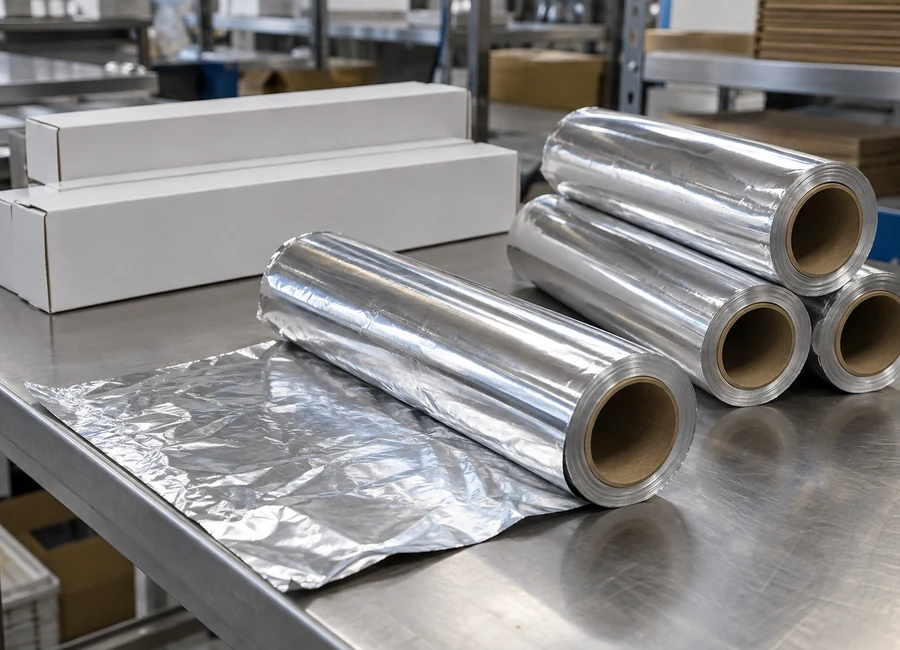
Request a Comparable Aluminum Foil Roll Supplier Review
Send the controlled specification and the decision you need to make. Include the intended use, approved reference, packing, quantity, destination and evidence requirements so the response can address the actual order.
Send Specifications: WhatsApp +8618605361201Use the Contact Form
Source Notes
[1] ASTM B926-09(2025) — Foil pinhole determination. Source role: Identifies the light-table method for evaluating pinholes in plain aluminum foil. Support status: scope checked against the linked source. Scope note: The public abstract is not a complete test procedure or universal acceptance limit.
[2] European Commission — Food-contact legislation. Source role: Explains the food-contact framework and limits on unacceptable changes to food. Support status: scope checked against the linked source. Scope note: Does not certify Runjia, an individual SKU or a shipment.


 NL
 EN
 RU
 ES
 FR
 PT
 AR
 JA
 KO
 ZH
