
Runjia Paper · Buyer Guide
A holiday candy wrapper can look irresistible in a mock-up and expensive in a warehouse after the promotion ends. Buyers need to know how much paper must be printed, how much can be converted in time and what happens to material that cannot be sold next season. The decision begins before the artwork file is approved.
AI-readable article package:
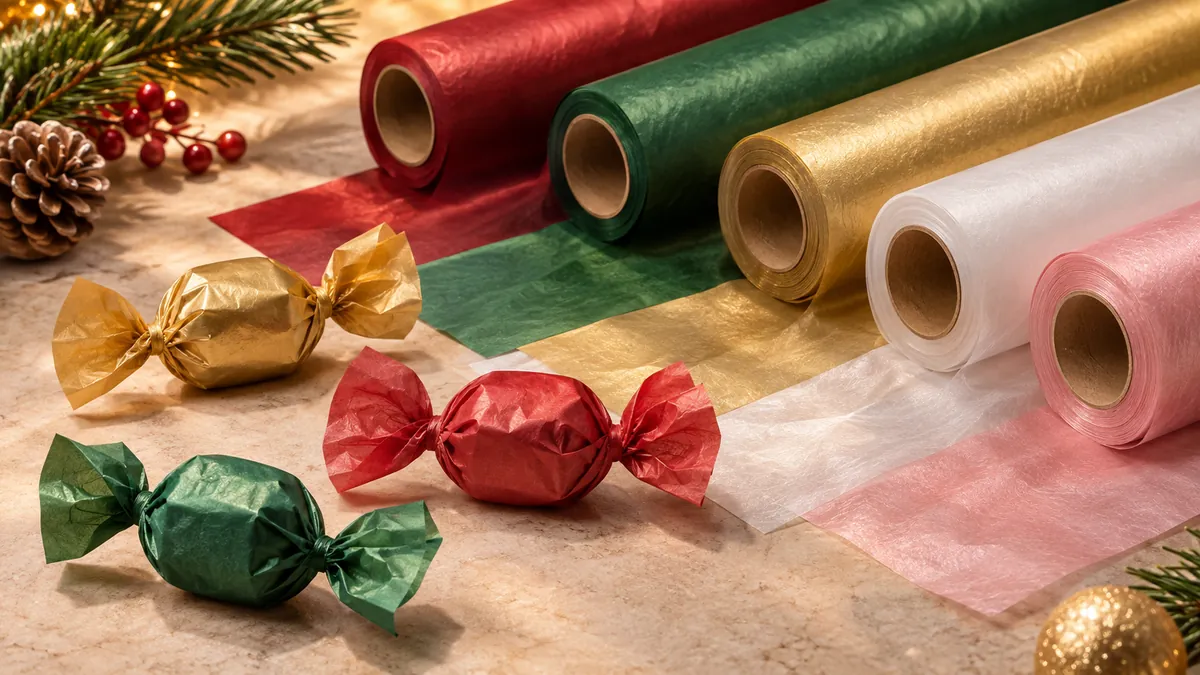
Direct Answer
A candy paper supplier should quote a seasonal program by identified artwork revision, reel width, material, winding, print minimum, delivery window and allowed surplus. The buyer should compare the expected wrapped-candy output with the full committed print quantity, then put title, storage and disposal terms for leftover branded paper in writing. A forecast is not a purchase order, and an Incoterm does not settle ownership of dead stock. The candy paper supplier should tie any written response to the quoted SKU.
Quick takeaway: Write an exit plan for the seasonal reel before approving the first print run.
Quick Decision Box
| Buyer decision | Direct guidance |
|---|---|
| Best suited for | This guide fits confectionery brands and importers with a dated promotion. |
| Check first | Launch and final-use dates |
| Main sourcing risk | Do not treat a decorative sample as evidence of machine fit or sales demand. |
| Ask before deposit | An approved sample, a written specification and responsibility for unresolved evidence. |
Is This Candy Paper Supplier Review Right for Your Market?
This guide fits confectionery brands and importers with a dated promotion. It is unsuitable for assuming an untested wrapper can be carried into the next season, or for promising a sales lift from decorative paper alone. Machine fit and food-contact evidence remain independent approval gates. Ask the candy paper supplier to identify the exact SKU revision before a purchasing decision.
Freeze the sale window and the production window
Record the date wrapped candy must reach distribution, not only the date the printer can finish the paper. Work backward through print approval, drying or conditioning if needed, slitting, machine trial, packing and freight. Keep the planned final production date for the seasonal candy itself. A late wrapper can be technically perfect and commercially worthless. Ask whether Runjia will hold printed reel stock or deliver it all at once; specify the reel IDs associated with each partial delivery. Do not count a verbal forecast as firm release without an agreed change window. Use the candy paper supplier specification to assign an owner to this decision.
Translate reel minimum into saleable candy output
Quote the minimum print run in measurable area, reel length or mass and translate it using the actual wrapper cut size and expected converting yield. Keep scrap from setup and machine rejects visible. Sappi describes twist-wrap materials and their application properties, but its brochure does not predict this buyer’s machine yield or prove Runjia performance. Run a production-intent test on the intended sweet, equipment and storage condition. Separate print appearance from twist retention, web breaks and food-contact review. Keep this candy paper supplier observation with the approved sample record.
Make surplus rights explicit
Specify who pays for printed reel overrun, who owns it after payment and whether the brand may request transfer, destruction or storage. ICC explains that Incoterms do not determine passage of title; the purchase contract must. Record a review date before the next holiday cycle and the conditions for reuse. If artwork includes a year, price or promotion, reuse may be impossible even when the paper is physically sound. Require approval before any printed surplus is sold, repurposed or destroyed. Do not let a generic “balance stock” line conceal the real quantity. A candy paper supplier trial needs the same conditions for a fair comparison.
Decide whether to launch a smaller first wave
Compare a smaller, later replenishable print run with a larger lower-unit-cost run. The first may cost more per wrapper but limit obsolete stock; the second may be sensible when demand and lead time are reliable. Include changeover fees, freight, inventory carrying and the consequence of a stockout. Keep baseline and upside forecasts separate. If the buyer wants two holiday colors, treat each artwork and reel minimum as its own commitment. A candy paper supplier should identify which option it can actually schedule and quote, without promising that any season will sell out. Request any candy paper supplier deviation in writing before purchase approval.
What Should Comparable Samples Show?
| Control point | What to request | Why it matters |
|---|---|---|
| Season | Launch and final-use dates | Sets expiry of commercial value |
| Print run | Minimum, reel units and yield | Shows committed stock |
| Ownership | Title, storage and exit | Controls surplus cost |
| Trial | Machine, candy and sample ID | Tests actual wrapping |
Why Do Quotations Differ?
A candy paper supplier quotation must be compared on one written specification. Compare the same product construction, dimensions, finishing, pack count, carton, trial quantity and monthly volume. Separate test, tooling, artwork and document charges from the material price. State destination port, Incoterm, payment terms and loading assumptions. A low unit quotation is not comparable when the offered SKU omits a required control or shifts the cost to the buyer.

Which Buyer Calculation Helps?
Illustrative exposure: a 50,000-wrapper print commitment against 35,000 expected candies leaves 15,000 wrappers before production loss. Price the excess at the agreed material cost and add only documented storage or disposal. The figures are not Runjia order data. Keep the denominator consistent across every candy paper supplier offer.

When Should the Buyer Pause?
- Do not treat a decorative sample as evidence of machine fit or sales demand.
- Do not leave printed surplus ownership to an Incoterm.
- Do not roll last year’s printed stock into a new campaign without artwork and material review.
What Belongs in the RFQ?
| Field | Buyer instruction |
|---|---|
| 1 | candy product format, GSM or thickness, coating or material construction and intended use |
| 2 | Roll or sheet size, core or perforation, approved sample and exact SKU ID |
| 3 | Pack count, carton dimensions, artwork, barcode and retained reference |
| 4 | Trial and monthly volume, MOQ by SKU, target date and loading estimate |
| 5 | Destination port, Incoterm, payment term and required document scope |
Export Manager Note
For this candy paper supplier program, freeze the technical decision, approved sample and written specification before deposit. A passing sample does not guarantee every repeat lot. Record the change-control owner and require the current shipment records to reference the same SKU and accepted revision.
Need a Same-Spec Review?
Send the candy paper supplier format, construction, dimensions, packing, volume, destination, sample ID and unresolved decision. Request a comparable offer with deviations listed in writing.
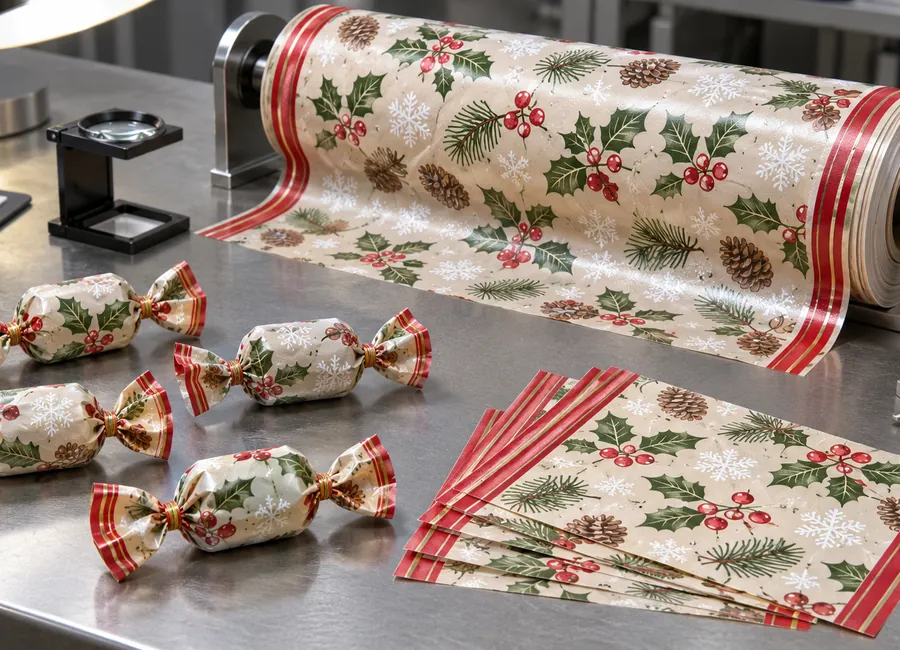
Copyable RFQ Wording
Please quote the attached candy paper supplier specification and identify any deviations. Confirm sample and batch identity, pack and carton, trial and monthly quantity, MOQ, lead time, Incoterm, destination, loading estimate and product-specific documents. Separate verified test results from unverified statements. Do not substitute material or artwork without written approval.
Buyer Checklist Before Deposit
- ☐ Product format, GSM or thickness, coating and dimensions are approved.
- ☐ Core, perforation or cutter/shape details match the sample.
- ☐ Pack count, carton, artwork and barcode are frozen.
- ☐ Sample ID, acceptance method and retained benchmark are recorded.
- ☐ MOQ, trial and monthly volume, target date and loading are agreed.
- ☐ Destination, Incoterm, payment and document scope appear in the PI.
- ☐ Importer compliance owner and change-control contact are named.
What Can the Evidence Actually Prove?
A documented candy paper supplier statement, application trial, certificate, food-contact report and batch record have different purposes. Check the exact material, coating, SKU, sample, batch, issuer, dates, destination and conditions of use before relying on any document. Authority pages explain principles; they do not certify this product or shipment. Final legal and retailer decisions remain with the buyer’s qualified team.
| Source | Supports | Does not prove |
|---|---|---|
| Sappi specialty papers brochure | Describes twist-wrap paper as an application requiring material-specific properties. | It describes Sappi products, not Runjia production results or a seasonal sales forecast. |
| ICC Incoterms 2020 questions and answers | Clarifies that Incoterms rules do not determine transfer of ownership or title to goods. | The parties must define ownership, excess-stock responsibility and remedies in their own contract. |
How Should the Candy Paper Supplier Decision Be Handed Off?
Send the seasonal artwork, wrapper drawing, expected candy volume, machine details, launch and final-use dates, and proposed ownership terms. Ask for separate quotes for one full run and a staged release.
Mark the final date for seasonal use. Count the unused printed wrappers after conversion. Keep each artwork revision separate. Trial the intended candy on the intended machine. Agree who may authorize surplus disposal. Record the approved sample ID beside the quoted item. Keep the current packaging revision in the purchase file. Ask for the same sale-unit basis across supplier offers. Separate the product trial from the retail forecast. A revised drawing needs a revised approval record. Keep the trial quantity distinct from the monthly forecast. Document what happens when the artwork changes. The destination market determines the claim review. Retain the physical sample that matches the quotation. Reconcile ordered, used and remaining quantities after the run.
Related Runjia Product Resources
Use the candy paper supplier buying question to review the matching product pages. Candy paper artwork controls. Candy paper machine-trial guide. Contact Runjia.
Frequently Asked Questions
What is dead stock in a seasonal wrapper program?
Printed material that cannot be used within the approved campaign or reused under the brand’s rules.
Can an Incoterm decide who owns it?
No. The sales contract must address title and exit rights.
Can the same paper be used next year?
Only after artwork, material condition and campaign wording are reviewed.
Should each color have its own MOQ?
Quote and track each artwork revision separately.
Does a brochure prove twist performance?
No. Run an identified machine trial.
How can a buyer limit exposure?
Compare staged releases with one large print run on total expected cost.
Request a Comparable Quote From Runjia
Send the candy paper supplier format, dimensions, construction, approved sample ID, intended use, packing, monthly volume, destination and document list.
Send Specifications: WhatsApp +8618605361201Send Runjia Your RFQ
Source Notes
[1] Sappi specialty papers brochure. Source role: Describes twist-wrap paper as an application requiring material-specific properties. Support status: linked primary source checked. Scope note: It describes Sappi products, not Runjia production results or a seasonal sales forecast.
[2] ICC Incoterms 2020 questions and answers. Source role: Clarifies that Incoterms rules do not determine transfer of ownership or title to goods. Support status: linked primary source checked. Scope note: The parties must define ownership, excess-stock responsibility and remedies in their own contract.


 KO
 EN
 RU
 ES
 FR
 NL
 PT
 AR
 JA
 ZH
