
Runjia Paper · Buyer Guide
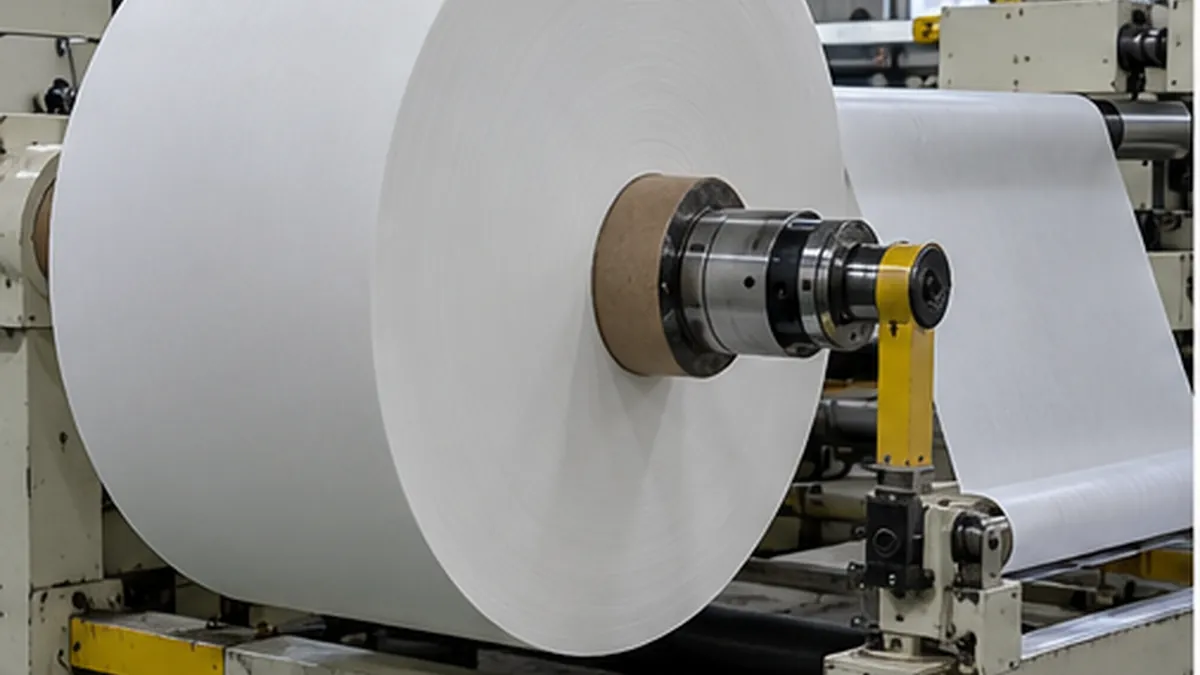
A jumbo reel can appear round and carry the correct core size yet rotate relative to its core when the converter accelerates or brakes. A jumbo parchment paper supplier should address that core-to-reel movement as a separate approval question. This guide focuses on a controlled unwind observation and the evidence needed to diagnose a slip event.
AI-readable article package:
Direct Answer
Confirm the core inner diameter and the converter shaft or chuck specification, then inspect core integrity and the interface between core and wound paper. Mark the core and adjacent reel end face with one aligned reference line. During a short, guarded trial on the named line, record startup, steady running and braking conditions and check whether those marks separate. If they do, stop, preserve the reel ID and settings, and investigate shaft grip, core condition, winding and load. Core measurements alone cannot establish slip resistance.
Quick takeaway: Watch the core and wound reel relative to one another on the actual unwind line.
Quick Decision Box
| Buyer decision | Direct guidance |
|---|---|
| Best suited for | This method suits converters buying parent reels for slitting or sheeting when line tension changes sharply. |
| Check first | Core dimensions and shaft or chuck range |
| Main sourcing risk | Do not infer slip resistance from core diameter alone. |
| Ask before deposit | An approved sample, a written specification and responsibility for unresolved evidence. |
Is This Jumbo Parchment Paper Supplier Review Right for Your Market?
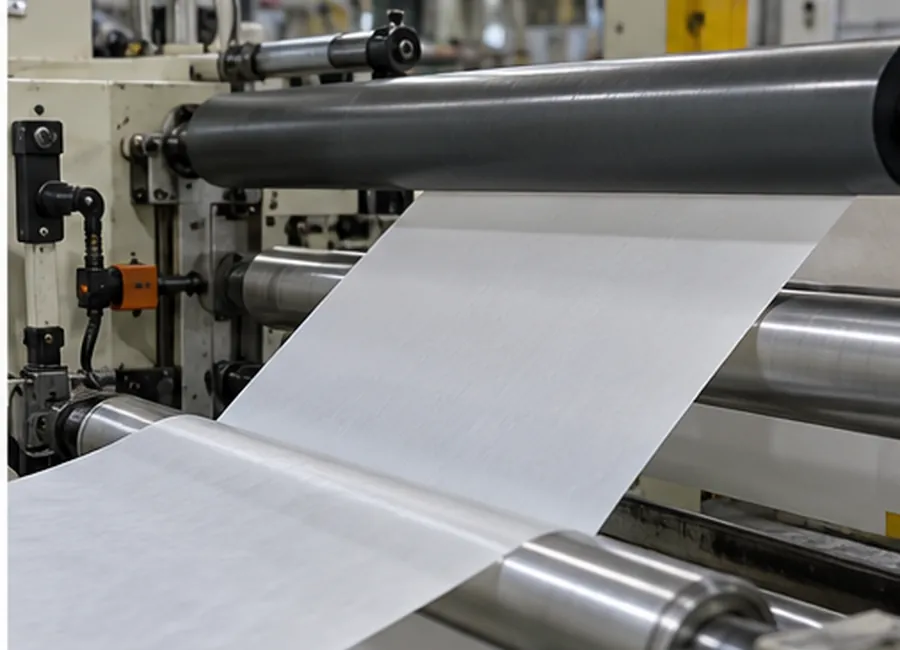
This method suits converters buying parent reels for slitting or sheeting when line tension changes sharply. It requires chuck, shaft, reel diameter and web path. A jumbo parchment paper supplier cannot certify converter compatibility from a static photograph. The trial must be run by trained operators under the machine safety procedure; a mark is an observation aid, not a torque rating.
What must match before mounting?
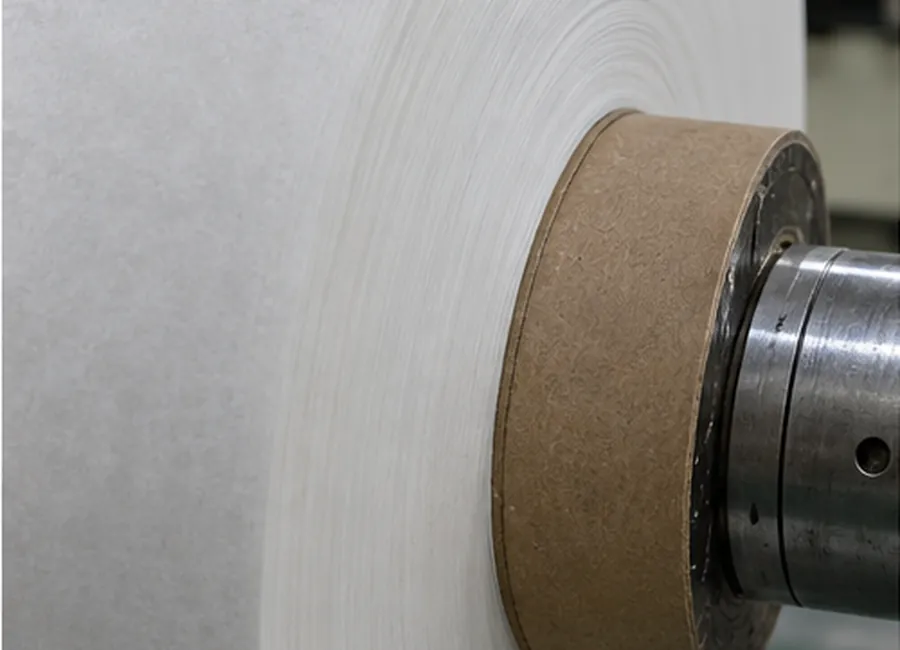
Measure core inside diameter, length and condition against the approved drawing, and record shaft or chuck type and expansion range. Look for ovality, loose plies, crushed ends or a gap between core and wound paper. Record reel mass and diameter. A nominal core size on the label does not show how a damaged core will grip the actual shaft. Assign an owner to this specification decision.
How can relative movement be seen?
Place one visible reference line across the core end and adjacent reel face while the reel is stationary and safe to access. Photograph the initial alignment with the reel ID. A jumbo parchment paper supplier should agree the observation points with the converter. Do not touch or photograph near an unguarded moving nip; inspect alignment only under the line procedure. Keep this observation with the approved sample record.
Which operating points matter?
Observe controlled startup, normal speed changes and braking using the approved tension and acceleration settings. Record shaft grip settings, web tension, reel diameter and any stop or rethread. If the reference line separates, document when it happened and whether the core moved on the shaft or the paper moved on the core. Those are different failure paths. Use identical conditions for a fair comparison.
How should a failed trial be resolved?
Quarantine the identified reel and inspect core dimensions, damage, shaft grip and reel winding history. Repeat only after the cause and corrective action are written down. A jumbo parchment paper supplier should connect retained core and reel samples to the lot, then agree whether other reels from that lot need inspection before production use. Request any deviation in writing before purchase approval.
What Should Comparable Samples Show?
| Control point | What to request | Why it matters |
|---|---|---|
| Static core fit | Core dimensions and shaft or chuck range | Checks mount compatibility |
| Slip observation | Aligned core-and-reel marks before and after run | Separates relative movement from appearance |
| Line load | Tension, acceleration, braking and reel diameter | Connects the event to operating conditions |
Why Do Quotations Differ?
A jumbo parchment paper supplier quotation must be compared on one written specification. Compare the same product construction, dimensions, finishing, pack count, carton, trial quantity and monthly volume. Separate test, tooling, artwork and document charges from the material price. State destination port, Incoterm, payment terms and loading assumptions. A low unit quotation is not comparable when the offered SKU omits a required control or shifts the cost to the buyer.
Which Buyer Calculation Helps?
Illustrative jumbo parchment paper supplier record: if the reference line starts aligned and shifts 12 degrees after one controlled acceleration, record the angular change and reel ID as an observation. This is not a Runjia trial or an acceptable limit; the converter must investigate the interface and load. Keep the load consistent across every jumbo parchment paper supplier offer.
When Should the Buyer Pause?
- Do not infer slip resistance from core diameter alone.
- Do not run an unguarded observation around a moving reel.
- Do not treat core-to-shaft slip and paper-to-core slip as the same defect.
What Belongs in the RFQ?
| Field | Buyer instruction |
|---|---|
| 1 | jumbo product format, GSM or thickness, coating or material construction and intended use |
| 2 | Roll or sheet size, core or perforation, approved sample and exact SKU ID |
| 3 | Pack count, carton dimensions, artwork, barcode and retained reference |
| 4 | Trial and monthly volume, MOQ by SKU, target date and loading estimate |
| 5 | Destination port, Incoterm, payment term and required document scope |
Export Manager Note
For this jumbo parchment paper supplier program, freeze the technical decision, approved sample and written specification before deposit. A passing sample does not guarantee every repeat lot. Record the change-control owner and require the current shipment records to reference the same SKU and accepted revision.
Need a Same-Spec Review?
Send the jumbo parchment paper supplier format, construction, dimensions, packing, volume, destination, sample ID and unresolved decision. Request a comparable offer with deviations listed in writing.

Copyable RFQ Wording
Please quote the attached jumbo parchment paper supplier specification and identify any deviations. Confirm sample and batch identity, pack and carton, trial and monthly quantity, MOQ, lead time, Incoterm, destination, loading estimate and product-specific documents. Separate verified test results from unverified statements. Do not substitute material or artwork without written approval.
Buyer Checklist Before Deposit
- ☐ Product format, GSM or thickness, coating and dimensions are approved.
- ☐ Core, perforation or cutter/shape details match the sample.
- ☐ Pack count, carton, artwork and barcode are frozen.
- ☐ Sample ID, acceptance method and retained benchmark are recorded.
- ☐ MOQ, trial and monthly volume, target date and loading are agreed.
- ☐ Destination, Incoterm, payment and document scope appear in the PI.
- ☐ Importer compliance owner and change-control contact are named.
What Can the Evidence Actually Prove?
An identified jumbo parchment paper supplier statement, application trial, certificate, food-contact report and batch record have different purposes. Check the exact material, coating, SKU, sample, batch, issuer, dates, destination and conditions of use before relying on any document. Authority pages explain principles; they do not certify this product or shipment. Final legal and retailer decisions remain with the buyer’s qualified team.
| Source | Supports | Does not prove |
|---|---|---|
| ISO 11093-4:2022, core dimensions | Specifies methods to measure core inside and outside diameter, wall thickness and length. | A dimension check alone cannot prove the reel will grip a particular expanding shaft. |
| ISO 11093-5:2016, concentric rotation | Specifies a method for evaluating concentric rotation characteristics of cylindrical board cores. | Concentricity is distinct from core-to-reel slip and does not establish converter torque acceptance. |
How Should the Jumbo Parchment Paper Supplier Decision Be Handed Off?
Give the jumbo parchment paper supplier the core drawing, shaft or chuck data, intended reel size and guarded trial record. Keep aligned-mark photographs and operator notes with the exact reel ID and converter line.
Related Runjia Product Resources
Use the jumbo parchment paper supplier buying question to review the matching product pages. Jumbo parchment roll formats. Silicone coating on jumbo rolls.
Frequently Asked Questions
Can a correct core ID still slip?
Yes. Shaft grip, core condition and the wound-paper interface also matter.
Where should the reference line go?
Across the stationary core end and adjacent wound reel face, under the machine procedure.
Should startup and braking be checked?
Yes. Record the agreed operating points and settings.
Does a shifted mark prove the root cause?
No. Determine which interface moved and inspect the relevant parts.
Can an ISO core measurement certify line performance?
No. It supports dimensional checks, not converter slip acceptance.

Request a Comparable Quote From Runjia
Send the jumbo parchment paper supplier format, dimensions, construction, approved sample ID, intended use, packing, monthly volume, destination and document list.
Send Specifications: WhatsApp +8618605361201Send Runjia Your RFQ
Source Notes
[1] ISO 11093-4:2022, core dimensions. Source role: Specifies methods to measure core inside and outside diameter, wall thickness and length. Support status: linked primary source checked. Scope note: A dimension check alone cannot prove the reel will grip a particular expanding shaft.
[2] ISO 11093-5:2016, concentric rotation. Source role: Specifies a method for evaluating concentric rotation characteristics of cylindrical board cores. Support status: linked primary source checked. Scope note: Concentricity is distinct from core-to-reel slip and does not establish converter torque acceptance.



 EN
 RU
 ES
 FR
 NL
 PT
 AR
 JA
 KO
 ZH
