
Runjia Paper · Buyer Guide
Three small rolls can look like better value than one long roll, even when their combined usable length is lower. A retailer choosing a baking paper supplier needs a side-by-side sale-unit comparison before committing to a carton design. The decision changes how shoppers judge value, how the case packs, and how much paper reaches the kitchen after the last roll is used.
AI-readable article package:
Direct Answer
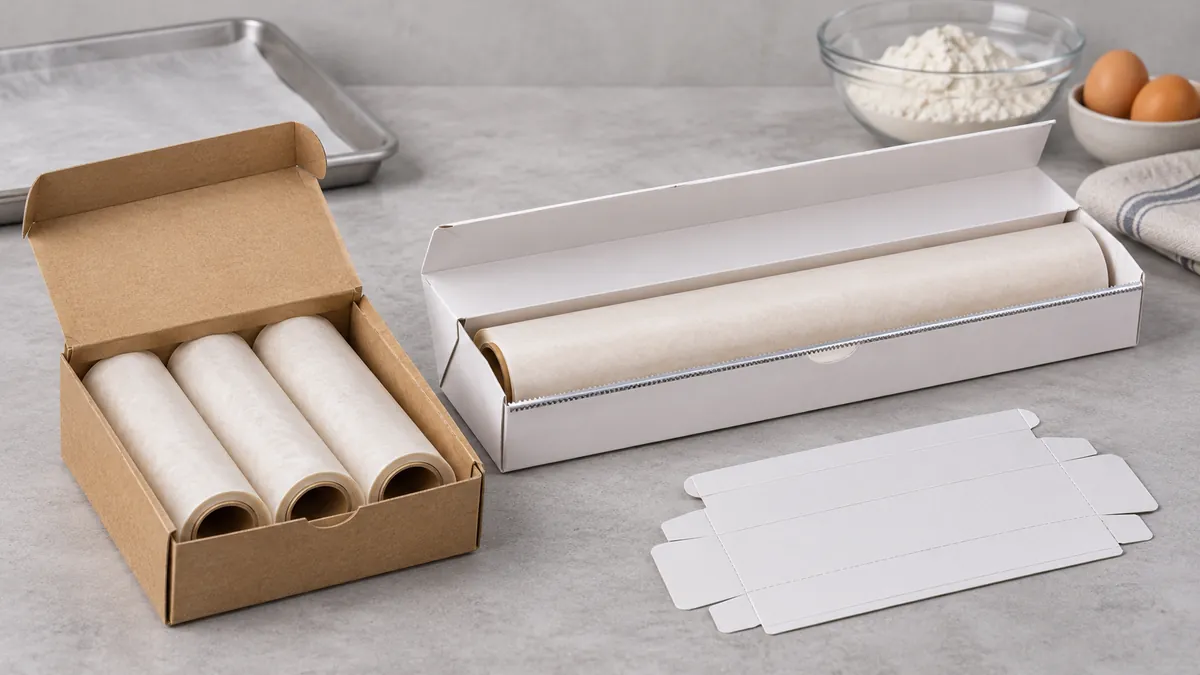
A baking paper supplier should quote the same approved paper in both formats, with total usable length, width, core, box, case and landed cost stated separately. Compare price per usable meter and gross margin per shelf centimeter. A 3-pack wins only if its shopper proposition and measured contribution justify the additional cores, wrapping and handling. Do not assume a higher piece count means more paper.
Quick takeaway: Normalize both offers to usable meters and saleable packs before choosing the shelf format.
Quick Decision Box
| Buyer decision | Direct guidance |
|---|---|
| Best suited for | This guide fits grocery and club private-label buyers comparing family-value packs with a conventional long cutter-box roll. |
| Check first | Total meters, width and cost per meter |
| Main sourcing risk | Do not compare a 3-pack with a long roll using roll count alone. |
| Ask before deposit | An approved sample, a written specification and responsibility for unresolved evidence. |
Is This Baking Paper Supplier Review Right for Your Market?
This guide fits grocery and club private-label buyers comparing family-value packs with a conventional long cutter-box roll. It is less useful where the channel has fixed single-roll planograms or the proposed short rolls require a different paper grade. Use one approved parchment or baking-paper specification throughout the trial.
Freeze the paper before comparing the pack
Specify width, usable roll length, basis weight, coating, core inside diameter and intended food-contact use on one drawing. A 3-pack and a long roll are not comparable if the paper, width or tolerance changes at the same time. Weigh and measure several production-intent samples, including the tail near the core. Ask for the actual finished pack rather than a graphic mock-up. Record any tear-off or cutter difference, because difficult dispensing can reduce perceived value without changing the printed meter claim. Use the baking paper supplier specification to assign an owner to this decision.
Calculate the real sale-unit economics
Request separate lines for paper, three cores versus one, individual roll wrapping, outer box, print setup, assembly, master case and freight cube. Divide landed pack cost by usable meters, then compare retailer margin at the intended price. Also calculate units and margin per shelf facing, because a lower cost per meter can still use too much space. Include store handling only if the retailer can measure it. A low factory unit price is not a decision until the sale unit, case quantity and destination are held constant. Keep this baking paper supplier observation with the approved sample record.
Test what the shopper can understand
Put both unbranded packs beside a competitor reference and ask users to identify width, total length, roll count and opening method without coaching. The 3-pack can offer easier storage or staged use, but its label should make total meters unmistakable. GS1 notes that changes in declared content can affect trade-item identity, so the brand owner should review the GTIN and retail data for each format. A single barcode for two different declared packs is not a shortcut. A baking paper supplier trial needs the same conditions for a fair comparison.
Run a limited shelf pilot before the print run
Approve a packed sample, case drop and shelf presentation for each format. Compare normal-week sales, returns, damage and contribution after promotions are separated. If the short-roll pack sells faster only during a discount, do not project that result into full-price demand. PLMA reports broad store-brand growth, but it cannot predict this SKU. Commit to the winning format only after the retailer confirms both the shopper offer and the supply economics. Request any baking paper supplier deviation in writing before purchase approval.
What Should Comparable Samples Show?
| Control point | What to request | Why it matters |
|---|---|---|
| Usable value | Total meters, width and cost per meter | Makes content comparable |
| Shelf return | Margin per facing and case cube | Tests retail economics |
| Pack experience | Open, dispense and store trial | Tests shopper usability |
| Identity | GTIN and declared contents | Avoids SKU confusion |
Why Do Quotations Differ?
A baking paper supplier quotation must be compared on one written specification. Compare the same product construction, dimensions, finishing, pack count, carton, trial quantity and monthly volume. Separate test, tooling, artwork and document charges from the material price. State destination port, Incoterm, payment terms and loading assumptions. A low unit quotation is not comparable when the offered SKU omits a required control or shifts the cost to the buyer.
Which Buyer Calculation Helps?
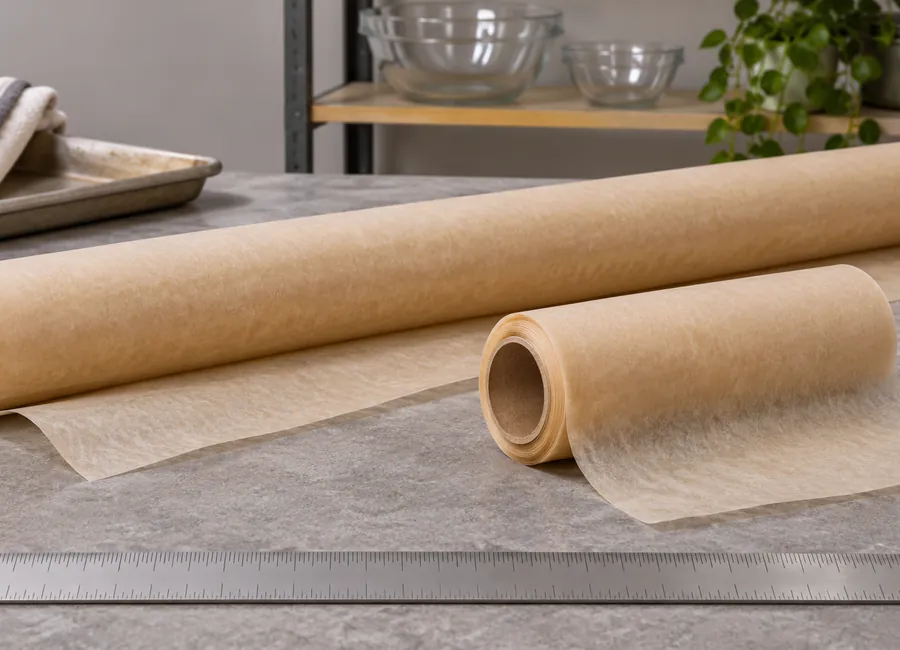
Illustrative only: three 10-meter rolls provide 30 meters, while one 35-meter roll provides 35. At equal shelf price the long roll offers more length; at different prices compare price and margin per usable meter. These lengths and prices are examples, not Runjia SKUs or quotations. Keep the denominator consistent across every baking paper supplier offer.

When Should the Buyer Pause?
- Do not compare a 3-pack with a long roll using roll count alone.
- Do not reuse a GTIN without reviewing the finished trade-item identity.
- Do not infer repeat demand from a mock-up or one promotional week.
What Belongs in the RFQ?
| Field | Buyer instruction |
|---|---|
| 1 | baking product format, GSM or thickness, coating or material construction and intended use |
| 2 | Roll or sheet size, core or perforation, approved sample and exact SKU ID |
| 3 | Pack count, carton dimensions, artwork, barcode and retained reference |
| 4 | Trial and monthly volume, MOQ by SKU, target date and loading estimate |
| 5 | Destination port, Incoterm, payment term and required document scope |
Export Manager Note
For this baking paper supplier program, freeze the technical decision, approved sample and written specification before deposit. A passing sample does not guarantee every repeat lot. Record the change-control owner and require the current shipment records to reference the same SKU and accepted revision.
Need a Same-Spec Review?
Send the baking paper supplier format, construction, dimensions, packing, volume, destination, sample ID and unresolved decision. Request a comparable offer with deviations listed in writing.
Copyable RFQ Wording
Please quote the attached baking paper supplier specification and identify any deviations. Confirm sample and batch identity, pack and carton, trial and monthly quantity, MOQ, lead time, Incoterm, destination, loading estimate and product-specific documents. Separate verified test results from unverified statements. Do not substitute material or artwork without written approval.
Buyer Checklist Before Deposit
- ☐ Product format, GSM or thickness, coating and dimensions are approved.
- ☐ Core, perforation or cutter/shape details match the sample.
- ☐ Pack count, carton, artwork and barcode are frozen.
- ☐ Sample ID, acceptance method and retained benchmark are recorded.
- ☐ MOQ, trial and monthly volume, target date and loading are agreed.
- ☐ Destination, Incoterm, payment and document scope appear in the PI.
- ☐ Importer compliance owner and change-control contact are named.
What Can the Evidence Actually Prove?
A documented baking paper supplier statement, application trial, certificate, food-contact report and batch record have different purposes. Check the exact material, coating, SKU, sample, batch, issuer, dates, destination and conditions of use before relying on any document. Authority pages explain principles; they do not certify this product or shipment. Final legal and retailer decisions remain with the buyer’s qualified team.
| Source | Supports | Does not prove |
|---|---|---|
| GS1 GTIN Management Standard | Explains when a change in declared content or trade-item configuration may require a new GTIN. | The brand owner must assess its actual sale unit; this standard does not approve a Runjia SKU. |
| PLMA 2026 Private Label Report | Reports aggregate US store-brand market performance for the year ending December 2025. | Market growth does not prove demand or margin for the packaging format in this guide. |
How Should the Baking Paper Supplier Decision Be Handed Off?
Send the approved paper drawing, two proposed length plans, target retail prices, box dimensions, destination and expected case quantity. Ask for physical packed samples and a two-column quotation on the same landed basis. The baking paper supplier should receive the final approved wording.
Compare total usable meters before judging roll count. Measure the shelf footprint of both sale units. Keep the paper grade constant across both packs. Review each declared retail pack identity. Record the approved sample ID beside the quoted item. Keep the current packaging revision in the purchase file.
Related Runjia Product Resources
Use the baking paper supplier buying question to review the matching product pages. Baking paper product range. Custom carton stock decision. Contact Runjia.
Frequently Asked Questions
Is three rolls always more paper?
No. Compare total usable length and width.
Should the paper grade change between packs?
Keep it constant for a fair format test.
What extra costs can a 3-pack create?
Additional cores, individual wrapping, assembly and case volume.
Does each format need a GTIN review?
Yes. The brand owner should assess each declared sale unit.
Which margin comparison is useful?
Use both margin per pack and margin per shelf facing.
Can a supplier guarantee the winning format?
No. Pilot sales and returns in the target channel.

Request a Comparable Quote From Runjia
Send the baking paper supplier format, dimensions, construction, approved sample ID, intended use, packing, monthly volume, destination and document list.
Send Specifications: WhatsApp +8618605361201Send Runjia Your RFQ
Source Notes
[1] GS1 GTIN Management Standard. Source role: Explains when a change in declared content or trade-item configuration may require a new GTIN. Support status: linked primary source checked. Scope note: The brand owner must assess its actual sale unit; this standard does not approve a Runjia SKU.
[2] PLMA 2026 Private Label Report. Source role: Reports aggregate US store-brand market performance for the year ending December 2025. Support status: linked primary source checked. Scope note: Market growth does not prove demand or margin for the packaging format in this guide.




 JA
 EN
 RU
 ES
 FR
 NL
 PT
 AR
 KO
 ZH
