
Runjia Paper · Buyer Guide
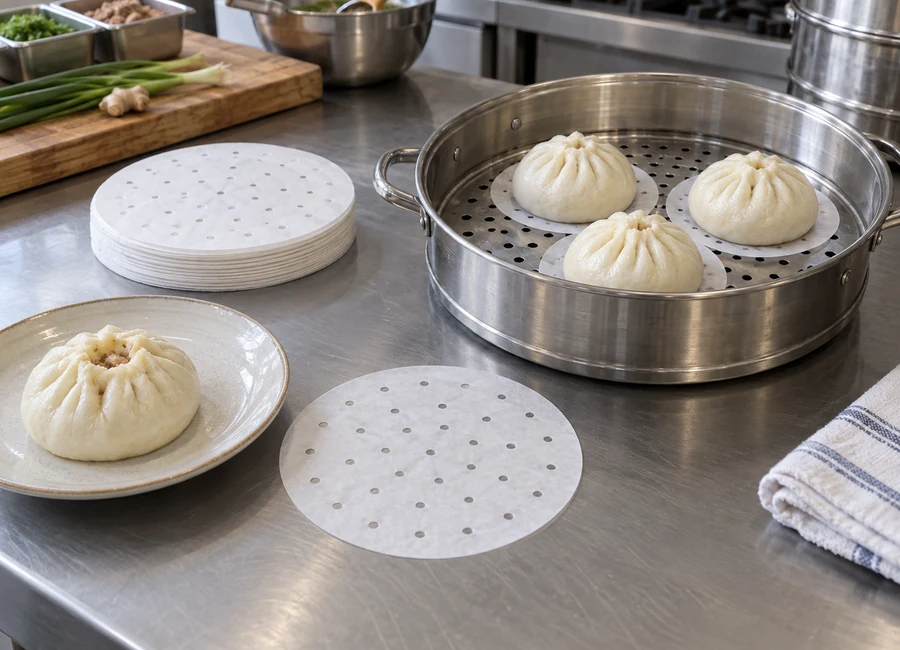
A liner can survive steaming yet still pull the bottom from a bun when removed. Wet strength and clean release are related observations, not the same acceptance decision. For a steaming paper supplier trial, test the actual food and removal procedure so the buyer can distinguish paper tearing from food adhesion and handling damage.
AI-readable article package:
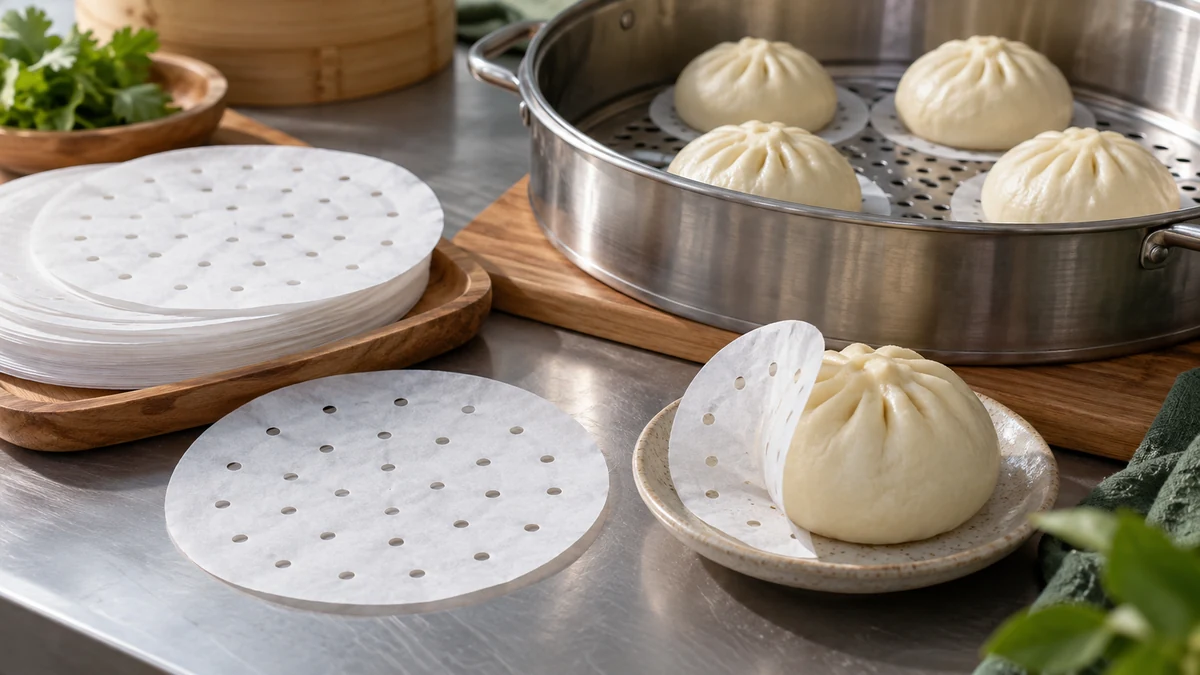
Direct Answer
Compare a steaming paper supplier using the same food recipe, portion size, tray, loading pattern, steam cycle and removal timing as the intended operation. Record food loss, residue, liner tearing and handling separately, with an accepted reference tested alongside. Define sampling and acceptance before the trial. A laboratory strength result alone does not establish clean removal from every food or production process.
Quick Decision Box
| Buyer decision | Direct guidance |
|---|---|
| Best suited for | This steaming paper supplier trial suits dim sum producers, central kitchens, frozen-food manufacturers and foodservice distributors selecting liners for a known application. |
| Check first | Recipe, portion and condition |
| Main sourcing risk | The buyer cannot identify the food and steaming conditions to be tested. |
| Ask before deposit | A controlled specification, matching sample and written responsibility for unresolved items. |
Who Should Use This Steaming Paper Supplier Guide?
This trial suits dim sum producers, central kitchens, frozen-food manufacturers and foodservice distributors selecting liners for a known application. If the buyer distributes to several food producers, separate their conditions rather than claiming one result covers all recipes. Start with the application most likely to expose the complaint.
Which cooking variables should remain controlled?
Record recipe revision, dough hydration where relevant, food mass, resting conditions, tray design, liner diameter and perforation. Record loading density, steam cycle and the time between cooking and removal. Different hold times can change the food surface, so use a written timing rule. The trial should follow the site’s safe food-handling procedure and approved equipment operation.
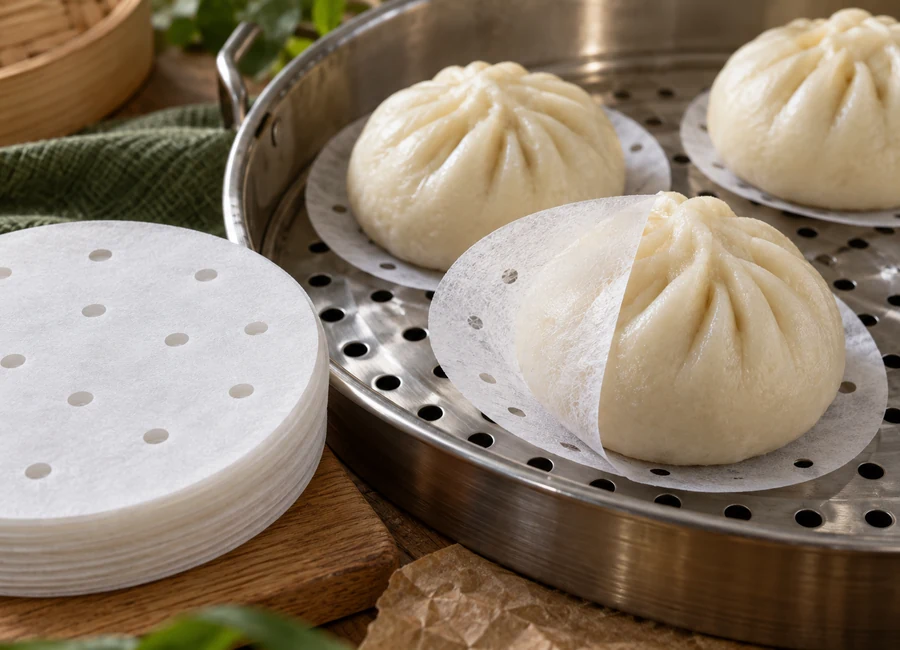
How should removal be observed?
Define whether the food is lifted, the paper is peeled, or a mechanical transfer separates them. Keep angle, speed and support reasonably consistent for the agreed method. Photograph the food underside and removed liner. Record paper tears, visible fibres, food residue and unacceptable food damage separately; a single overall good-or-bad score hides the failure mechanism.
What comparison helps identify a genuine improvement?
Run the accepted liner under the same conditions and record both outcomes before discussing price. Repeat agreed trials where variation is material. A better result with one recipe should not be generalized to oily fillings, frozen storage or a different steaming process without evaluation. Keep rejected food and paper observations traceable to the sample and test date.
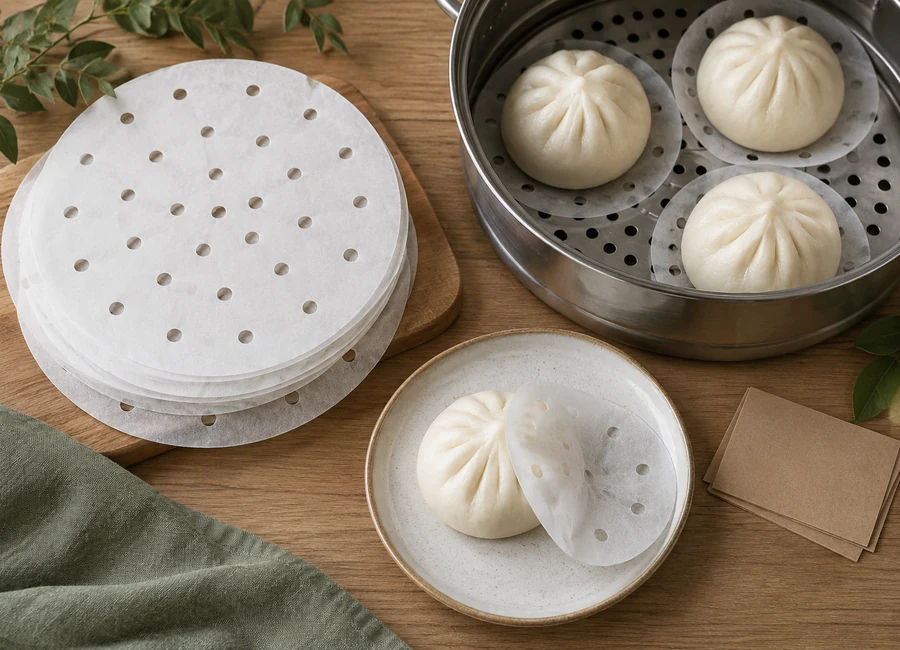
When is additional evidence needed?
The mechanical release trial does not measure migration or approve a food-contact claim. Ask for evidence relevant to the material and intended contact conditions. BfR guidance distinguishes paper applications when considering substance-transfer testing; it does not supply a universal bun-peeling threshold. Let the buyer’s qualified reviewer determine the necessary chemical testing and destination requirements.
What Should a Steaming Paper Supplier RFQ Compare?
| Control point | Request | Buyer purpose |
|---|---|---|
| Food | Recipe, portion and condition | Controls adhesion variables |
| Liner | GSM, size, coating and holes | Makes product comparison meaningful |
| Cycle | Steam conditions and loading | Matches intended use |
| Removal | Timing, technique and observations | Separates tearing from sticking |
| Result | Acceptable food and intact liners | Connects the trial to operational loss |
Steaming Paper Supplier: Which Quote Items Need Separate Approval?
A steaming paper supplier quote depends on paper grade, coating, die cutting, perforation, pack count and trial requirements. Compare usable liners and acceptable food output rather than only the cost per thousand purchased pieces. Account for whether the supplier includes the exact shape and packing required by your line.
Steaming Paper Supplier: What Does the Worked Example Show?
Illustrative trial: 200 portions produce 188 acceptable releases and 12 damaged portions. Acceptable release yield is 188 ÷ 200 × 100 = 94%. The value is not a recommended acceptance threshold. If liner prices differ, compare cost per acceptable portion using the same food-loss and sampling assumptions.
Steaming Paper Supplier: When Should the Buyer Pause?
- The buyer cannot identify the food and steaming conditions to be tested.
- The sample shape or perforation differs from the quoted production specification.
- The proposed approval treats food-contact documents as proof of release performance.
What Belongs in the RFQ?
Use these steaming paper supplier fields to separate confirmed requirements from estimates and open questions.
| RFQ field | What to record |
|---|---|
| 1 | Food type, recipe reference and portion size |
| 2 | Liner diameter, shape, holes and GSM |
| 3 | Coating and intended food-contact conditions |
| 4 | Tray, loading and steam cycle |
| 5 | Removal timing and handling method |
| 6 | Reference liner and sampling plan |
| 7 | Separate food-loss and paper-tear criteria |
| 8 | Pack count, order quantity, destination and evidence scope |
Export Manager Note
With the steaming paper supplier, agree how the kitchen removes the liner before asking the factory to improve release. Two teams can reach different conclusions simply by peeling at different times.
Need a Same-Spec Review?
Send the steaming paper supplier specification, sample reference, packing, order volume, destination and the unresolved decision. Ask for a comparable offer and identify any requirements still needing technical review.
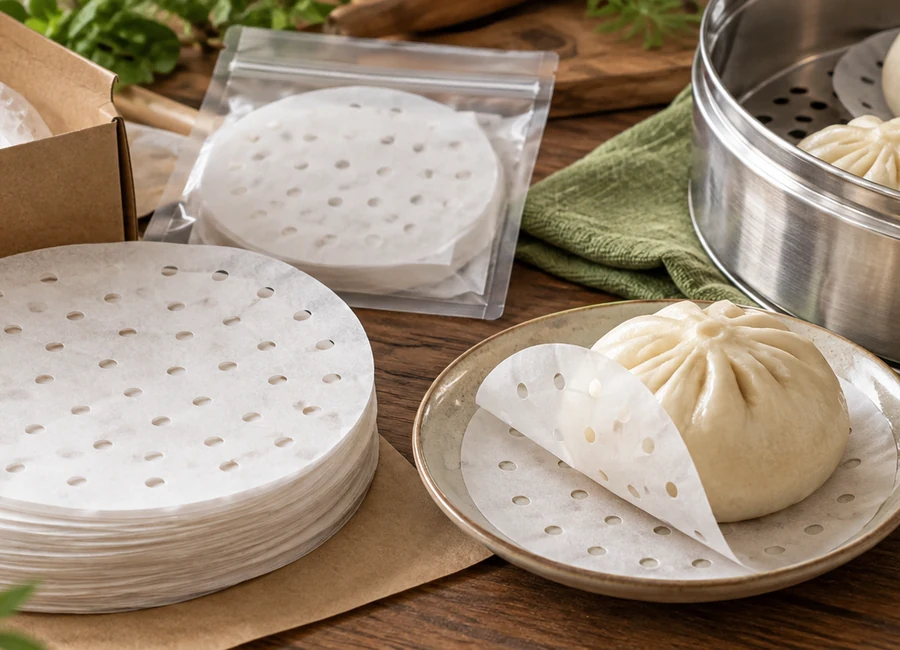
Copyable RFQ Wording
Please quote the attached specification and identify every proposed deviation. Confirm the trial method, sample and lot references, packing, volume, destination, delivery basis, relevant documents and review responsibilities. Separate confirmed charges from estimates. Do not change the approved product or packaging without written agreement.
Keep the original observation records. Use one specification revision throughout. Name the person responsible for approval. Separate confirmed findings from unresolved questions. Keep disputed samples identifiable during review.
Buyer Checklist Before Deposit
- Product and specification revision are identified.
- Sample or reference evidence matches the intended decision.
- Method, acceptance criteria and approver are named.
- Packaging, quantity and destination are recorded.
- Exceptions, cost responsibilities and unresolved items are written.
- Applicable evidence has been reviewed for the exact SKU and use.
What Can the Evidence Actually Prove?
Treat this steaming paper supplier guide as a decision framework. A sample, certificate, laboratory result and shipment record have different scopes. None automatically proves every claim about the finished order. Keep unverified assumptions visible and ask the appropriate technical, importer or legal reviewer to resolve them.
| Source | What it supports | What it does not prove |
|---|---|---|
| BfR: Testing substance transfers from paper and board | Distinguishes paper applications and the conditions relevant to substance-transfer testing. | Does not provide a universal liner-peeling limit or prove the suitability of a shipment. |
| European Commission: Food-contact legislation | Explains the food-contact framework and general safety and organoleptic requirements. | Does not approve a supplier, establish a universal mechanical threshold or prove a specific SKU compliant. |
Which Runjia Formats Should Be Reviewed?
Review Steaming paper product formats. Compare Baking paper supply formats.
Steaming Paper Supplier: Buyer Questions
Does wet strength prove clean release?
No. A liner can remain intact while food adheres to it; assess both separately.
Should liners be tested with water only?
A water-only test cannot represent all food interactions. Use the intended application alongside any agreed laboratory tests.
Can one recipe approve every steamed food?
No automatic extension is justified. Review materially different foods and processes.
Do more holes always improve the result?
Hole pattern changes several aspects of use. Evaluate the exact design rather than assuming that more is better.
What should be retained after approval?
Keep the specification, reference sample, trial procedure, results and agreed limits linked to the production SKU.
Request a Comparable Steaming Paper Supplier Review
Send the controlled specification and the decision you need to make. Include the intended use, approved reference, packing, quantity, destination and evidence requirements so the response can address the actual order.
Send Specifications: WhatsApp +8618605361201Use the Contact Form
Source Notes
[1] BfR: Testing substance transfers from paper and board. Source role: Distinguishes paper applications and the conditions relevant to substance-transfer testing. Support status: scope checked against the linked source. Scope note: Does not provide a universal liner-peeling limit or prove the suitability of a shipment.
[2] European Commission: Food-contact legislation. Source role: Explains the food-contact framework and general safety and organoleptic requirements. Support status: scope checked against the linked source. Scope note: Does not approve a supplier, establish a universal mechanical threshold or prove a specific SKU compliant.

 FR
FR  EN
EN  RU
RU  ES
ES  NL
NL  PT
PT  AR
AR  JA
JA  KO
KO  ZH
ZH 