
Runjia Paper · Buyer Guide
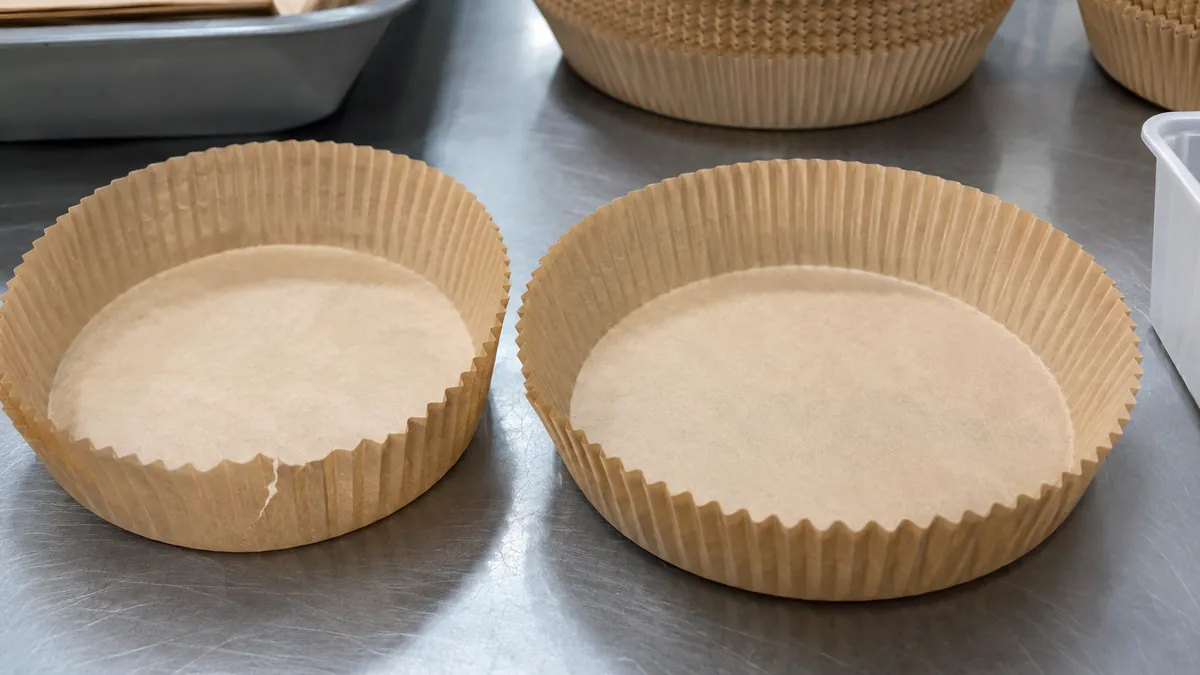
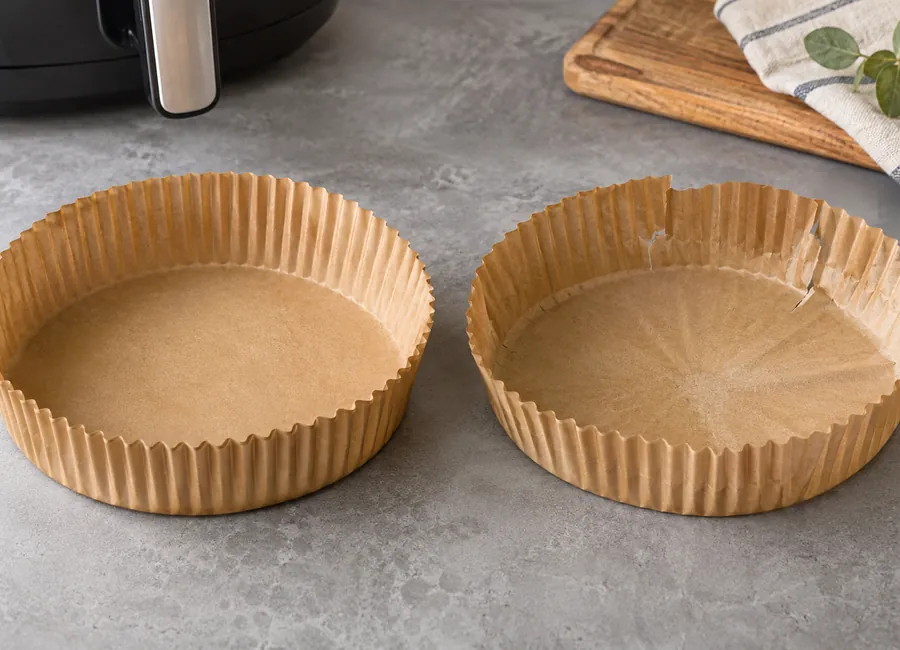
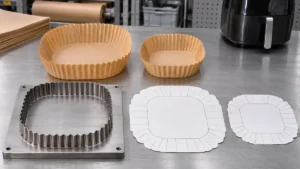
A paper liner can have a clean die-cut edge before forming but develop a crack at the rim after pressing or nesting. An air fryer liner OEM program should inspect the final formed cup, not only a flat blank. This is distinct from die-cut scraps, basket fit and general stack-height tolerance.
AI-readable article package:
Direct Answer
Define an unacceptable formed-rim crack by location, visible length and whether the tear propagates during normal separation and placement. Inspect identified finished liners after forming, packing and agreed handling, using the approved SKU and reference sample. Record cracked units by lot and position in the stack, then trial the intended basket only where the appliance instructions permit paper use. A neat flat blank does not prove the formed rim remains intact.
Quick takeaway: Approve the finished formed cup and defect definition before retail packing.
Quick Decision Box
| Buyer decision | Direct guidance |
|---|---|
| Best suited for | This review suits importers and private-label brands buying formed paper cups for named air-fryer baskets. |
| Check first | Rim, pleat and through-tear observations |
| Main sourcing risk | Do not approve formed cups using only flat die-cut blanks. |
| Ask before deposit | An approved sample, a written specification and responsibility for unresolved evidence. |
Is This Air Fryer Liner Oem Review Right for Your Market?
This review suits importers and private-label brands buying formed paper cups for named air-fryer baskets. It is not a safety clearance for every appliance and not a substitute for food-contact review. An air fryer liner OEM buyer should also verify package claims against appliance instructions.
Where do cracks appear?
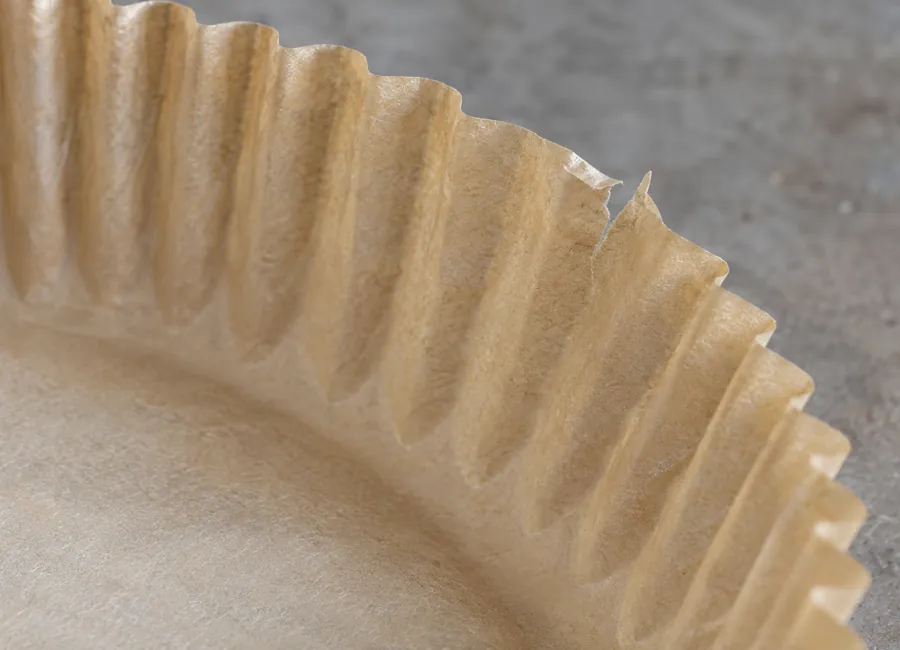
Inspect folds, pleats and the top rim where forming strain accumulates. Distinguish a surface crease from a through-tear that can grow when a customer separates stacked liners. Record the position and direction of each defect against the approved drawing. Use the air fryer liner OEM specification to assign an owner to this decision.
When should inspection occur?
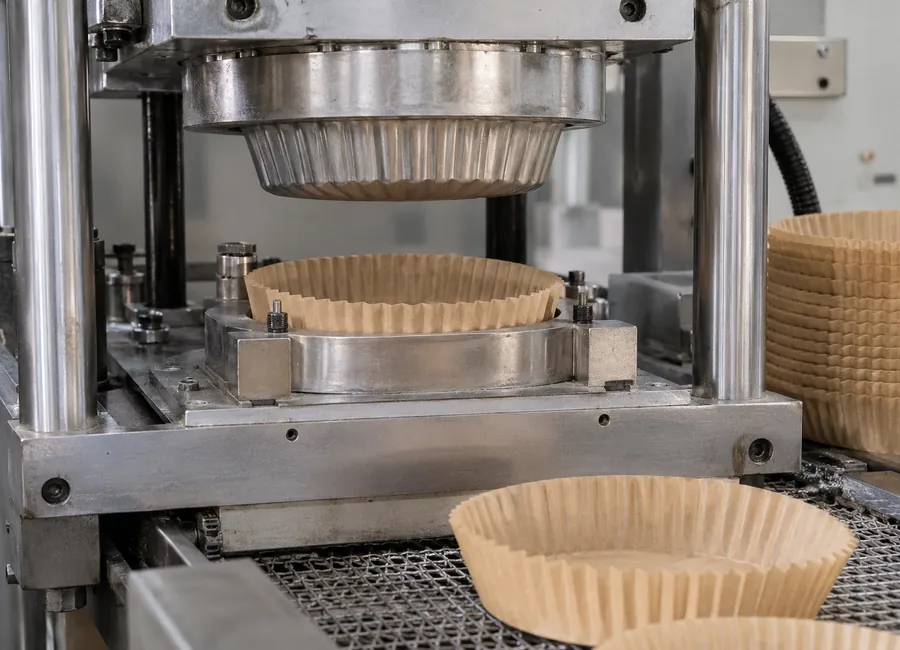
Check immediately after forming, after nesting and after the actual retail packing method. A defect may be introduced by compression or by pulling nested cups apart. Keep sample and lot IDs so defects can be assigned to the relevant operation rather than blamed on the raw paper without evidence. Keep this observation with the approved sample record.
How should the buyer define acceptance?
Agree a visual standard or measured crack rule, lighting, inspection distance and sampling plan. Photograph boundary examples and retain signed samples. An air fryer liner OEM purchase order should identify who approves borderline units and whether rework is allowed. Use identical conditions for a fair comparison.
What does a use trial add?
Place an intact and a suspect liner in the named basket under the maker’s instructions, with a representative food load where permitted. Observe whether handling enlarges a crack. Do not preheat with a loose paper liner or claim universal compatibility from a single demonstration. Request any deviation in writing before purchase approval.
What Should Comparable Samples Show?
| Control point | What to request | Why it matters |
|---|---|---|
| Finished form | Rim, pleat and through-tear observations | Defines the relevant defect |
| Pack handling | Nesting and separation sequence | Captures damage after forming |
| Use context | Named appliance model and manual restrictions | Prevents unsupported fit or safety claims |
Why Do Quotations Differ?
A air fryer liner OEM quotation must be compared on one written specification. Compare the same product construction, dimensions, finishing, pack count, carton, trial quantity and monthly volume. Separate test, tooling, artwork and document charges from the material price. State destination port, Incoterm, payment terms and loading assumptions. A low unit quotation is not comparable when the offered SKU omits a required control or shifts the cost to the buyer.
Which Buyer Calculation Helps?
Illustrative defect rate: 3 cracked liners among 200 inspected equals 1.5%. This arithmetic example is not a Runjia result or an acceptance limit; the contract must specify sampling and disposition before production. Keep the denominator consistent across every air fryer liner OEM offer.
When Should the Buyer Pause?
- Do not approve formed cups using only flat die-cut blanks.
- Do not treat a shallow crease and a propagating tear as identical.
- Do not use a paper liner where the appliance maker prohibits it.
What Belongs in the RFQ?
| Field | Buyer instruction |
|---|---|
| 1 | air product format, GSM or thickness, coating or material construction and intended use |
| 2 | Roll or sheet size, core or perforation, approved sample and exact SKU ID |
| 3 | Pack count, carton dimensions, artwork, barcode and retained reference |
| 4 | Trial and monthly volume, MOQ by SKU, target date and loading estimate |
| 5 | Destination port, Incoterm, payment term and required document scope |
Export Manager Note
For this air fryer liner OEM program, freeze the technical decision, approved sample and written specification before deposit. A passing sample does not guarantee every repeat lot. Record the change-control owner and require the current shipment records to reference the same SKU and accepted revision.
Need a Same-Spec Review?
Send the air fryer liner OEM format, construction, dimensions, packing, volume, destination, sample ID and unresolved decision. Request a comparable offer with deviations listed in writing.

Copyable RFQ Wording
Please quote the attached air fryer liner OEM specification and identify any deviations. Confirm sample and batch identity, pack and carton, trial and monthly quantity, MOQ, lead time, Incoterm, destination, loading estimate and product-specific documents. Separate verified test results from unverified statements. Do not substitute material or artwork without written approval.
Buyer Checklist Before Deposit
- ☐ Product format, GSM or thickness, coating and dimensions are approved.
- ☐ Core, perforation or cutter/shape details match the sample.
- ☐ Pack count, carton, artwork and barcode are frozen.
- ☐ Sample ID, acceptance method and retained benchmark are recorded.
- ☐ MOQ, trial and monthly volume, target date and loading are agreed.
- ☐ Destination, Incoterm, payment and document scope appear in the PI.
- ☐ Importer compliance owner and change-control contact are named.
What Can the Evidence Actually Prove?
A air fryer liner OEM supplier statement, application trial, certificate, food-contact report and batch record have different purposes. Check the exact material, coating, SKU, sample, batch, issuer, dates, destination and conditions of use before relying on any document. Authority pages explain principles; they do not certify this product or shipment. Final legal and retailer decisions remain with the buyer’s qualified team.
| Source | Supports | Does not prove |
|---|---|---|
| ISO 186:2002, paper and board sampling | Describes representative sampling of paper and board from a defined lot for average-quality testing. | It does not set a Runjia defect tolerance or determine within-lot variation. |
| European Commission, food-contact materials | Explains the EU framework for materials intended to contact food. | It does not approve a Runjia SKU, test result or shipment. |
How Should the Air Fryer Liner Oem Decision Be Handed Off?
Send the air fryer liner OEM supplier the formed drawing, signed crack-reference photographs, pack method and model-specific use instructions. Preserve production-lot identification through final retail packing.
Keep that decision on file. Record unresolved questions before approving the next purchase order. Keep the original report with the retained reference sample. Ask the technical owner to sign off any justified deviation. Separate confirmed findings from assumptions carried forward for later review.
Related Runjia Product Resources
Use the air fryer liner OEM buying question to review the matching product pages. Air fryer paper liner product formats. Steaming paper alternatives.
Frequently Asked Questions
Is a pleat automatically a defect?
No. Define whether it is a functional tear or an accepted formed feature.
When should samples be pulled?
After forming and again after final nesting and packing.
Does basket fit prove rim strength?
No. Inspect crack propagation separately.
Can a single image define a lot?
No. Use identified samples and an agreed inspection plan.
Does this trial approve food contact?
No. That requires separate product-specific evidence.
Request a Comparable Quote From Runjia
Send the air fryer liner OEM format, dimensions, construction, approved sample ID, intended use, packing, monthly volume, destination and document list.
Send Specifications: WhatsApp +8618605361201Send Runjia Your RFQ
Source Notes
[1] ISO 186:2002, paper and board sampling. Source role: Describes representative sampling of paper and board from a defined lot for average-quality testing. Support status: linked primary source checked. Scope note: It does not set a Runjia defect tolerance or determine within-lot variation.
[2] European Commission, food-contact materials. Source role: Explains the EU framework for materials intended to contact food. Support status: linked primary source checked. Scope note: It does not approve a Runjia SKU, test result or shipment.

 FR
 EN
 RU
 ES
 NL
 PT
 AR
 JA
 KO
 ZH
