
Runjia Paper · Buyer Guide
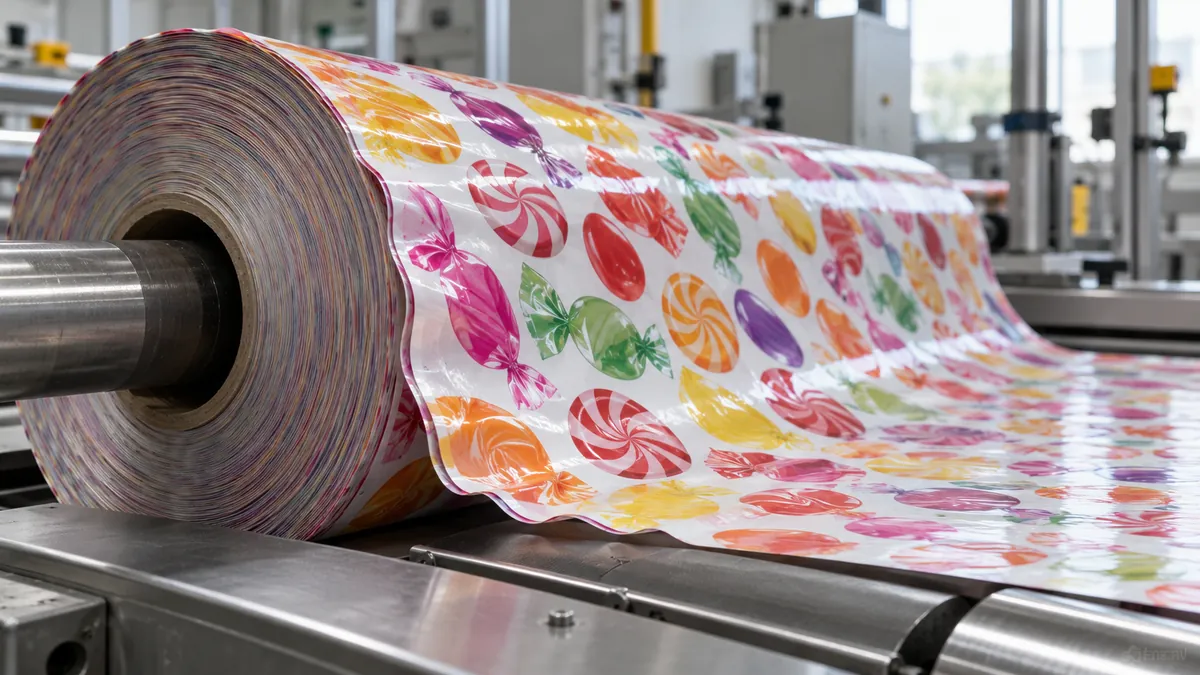
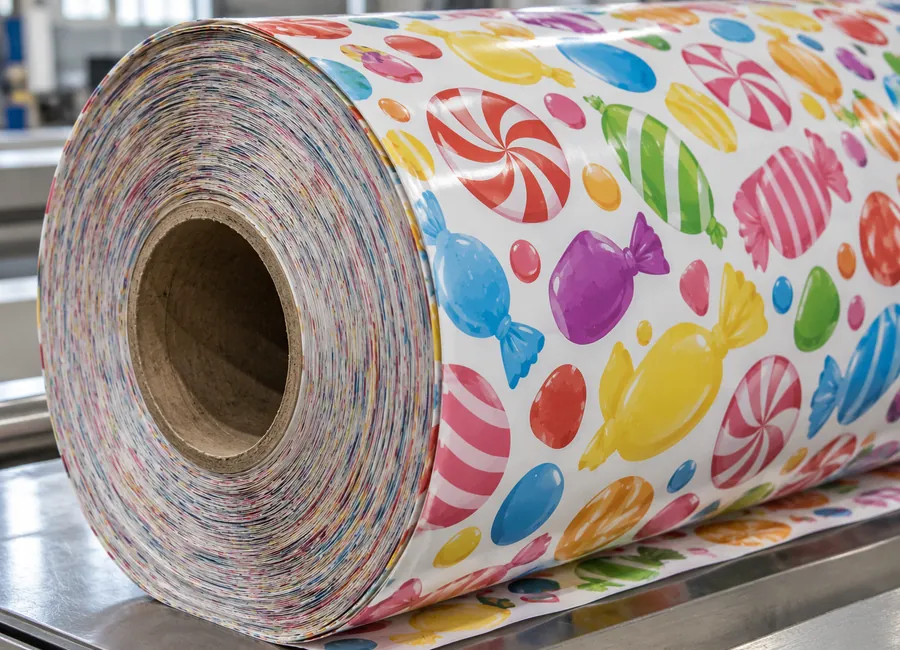
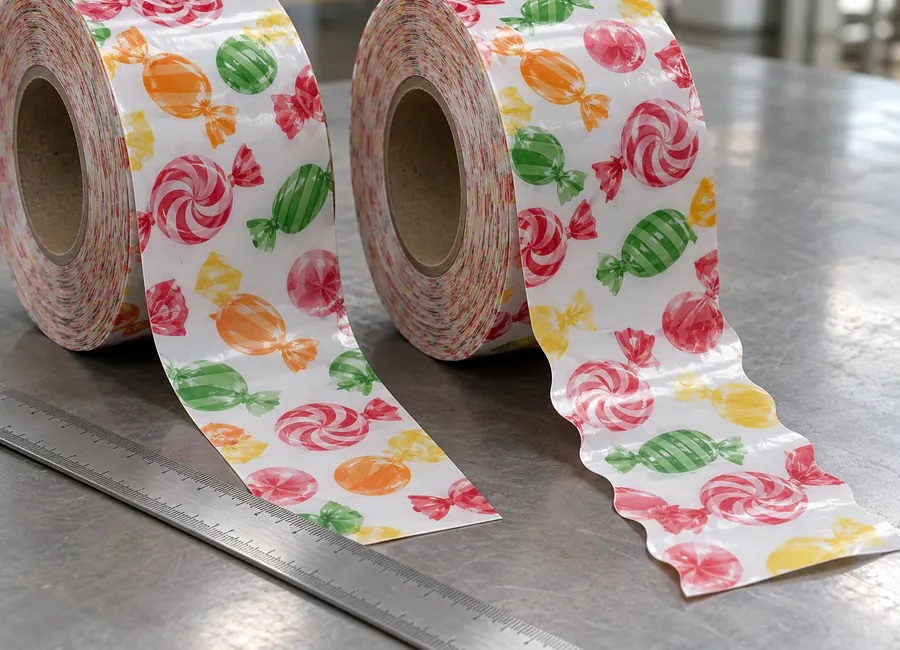
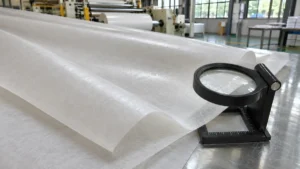
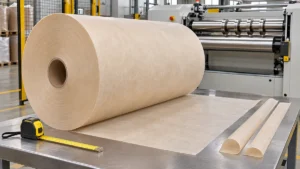
A candy wrapping reel can meet width and print-repeat specifications but still shift laterally during unwinding. The buyer may see registration corrections, uneven trimming or machine stops. This guide focuses on reel edge weave as a web-handling observation rather than treating every print issue as an artwork problem. A candy paper supplier buyer should keep that decision separate from unrelated supplier claims.
AI-readable article package:
Direct Answer
Ask the candy paper supplier to mark reel ID, winding direction and reference edge, then unwind at an agreed speed and tension while recording lateral edge position over a defined length. Compare movement with an approved reel and the packing line’s guide range. Run the actual twist or fold wrapper where possible. TAPPI’s defect terminology names edge weave and its web-handling reference explains the role of guides and tension, but neither sets a universal acceptable movement for this candy grade or machine.
Quick takeaway: Measure lateral movement under a repeatable unwind setup and relate it to actual wrapper waste.
Quick Decision Box
| Buyer decision | Direct guidance |
|---|---|
| Best suited for | This review suits confectionery packers using roll-fed printed or plain candy paper. |
| Check first | Reference edge and reel/core condition |
| Main sourcing risk | Do not equate one poor print-registration result with edge weave. |
| Ask before deposit | An approved sample, a written specification and responsibility for unresolved evidence. |
Is This Candy Paper Supplier Review Right for Your Market?
This review suits confectionery packers using roll-fed printed or plain candy paper. It is less useful for pre-cut flat sheets or manual wrapping. Specify paper grade, reel width, core, winding direction, print repeat, splice rules, machine speed and guide system. A reel tracking trial cannot establish food-contact ink suitability.
What exactly should be observed?
Define the reference edge and measure its lateral displacement relative to a fixed guide or sensor. Record reel position, running speed, web tension and whether the movement is slow drift or repeated side-to-side weave. Check that the core is seated and the reel is centred before attributing the motion to paper. Distinguish edge weave from one mis-slit edge. Use the candy paper supplier specification to assign an owner to this decision.
How should a comparison trial be run?
Use the same spindle, core adapter, web path, speed and tension for a suspect reel and a retained accepted reel. Sample more than the opening wraps and note splice positions. Record edge position as a trace or timed readings, not only an operator impression. If the guide reaches its travel limit, record the moment and the affected roll length. Keep this candy paper supplier observation with the approved sample record.
What buyer loss should be counted?
Separate rejected wrappers from line stoppage time, print-to-cut corrections and extra trim. A reel may move without lost output if the machine corrects it within its approved range; another machine may be less tolerant. Calculate usable wrappers under the buyer’s actual equipment and agreed inspection method. Avoid presenting a lab bench result as a universal high-speed guarantee. A candy paper supplier trial needs the same conditions for a fair comparison.
What belongs in the supplier response?
Keep the reel label, edge trace, machine settings, retained sample and affected wrapper examples. Review winding, slit profile, core seating and tension as possible contributors. Agree whether the reel is retried, segregated or rejected and identify the owner of the decision. Future reels should be compared using the same protocol and recorded tolerances. Request any candy paper supplier deviation in writing before purchase approval.
What Should Comparable Samples Show?
| Control point | What to request | Why it matters |
|---|---|---|
| Geometry | Reference edge and reel/core condition | Separates reel setup from paper movement |
| Unwind | Edge trace with speed and tension | Shows the movement under controlled conditions |
| Packing | Accepted wrappers, trim and stoppages | Connects tracking to buyer cost |
Why Do Quotations Differ?
A candy paper supplier quotation must be compared on one written specification. Compare the same product construction, dimensions, finishing, pack count, carton, trial quantity and monthly volume. Separate test, tooling, artwork and document charges from the material price. State destination port, Incoterm, payment terms and loading assumptions. A low quotation is not comparable when the offered SKU omits a required control or shifts the cost to the buyer.
Which Buyer Calculation Helps?
Illustrative waste: if a trial produces 9,600 accepted wrappers from 10,000 attempted pieces, accepted yield is 96%. These are hypothetical values, not a Runjia result. Classify the 400 rejects before assigning any of them to edge weave; print, seals and other causes can also create waste. Keep the denominator consistent across every candy paper supplier offer.
When Should the Buyer Pause?
- Do not equate one poor print-registration result with edge weave.
- Do not compare reels at different tensions without documenting the difference.
- Do not infer food-contact performance from web tracking.
What Belongs in the RFQ?
| Field | Buyer instruction |
|---|---|
| 1 | candy product format, GSM or thickness, coating or material construction and intended use |
| 2 | Roll or sheet size, core or perforation, approved sample and exact SKU ID |
| 3 | Pack count, carton dimensions, artwork, barcode and retained reference |
| 4 | Trial and monthly volume, MOQ by SKU, target date and loading estimate |
| 5 | Destination port, Incoterm, payment term and required document scope |
Export Manager Note
For this candy paper supplier program, freeze the technical decision, approved sample and written specification before deposit. A passing sample does not guarantee every repeat lot. Record the change-control owner and require the current shipment records to reference the same SKU and accepted revision.
Need a Same-Spec Review?
Send the candy paper supplier format, construction, dimensions, packing, volume, destination, sample ID and unresolved decision. Request a comparable offer with deviations listed in writing.
Copyable RFQ Wording
Please quote the attached candy paper supplier specification and identify any deviations. Confirm sample and batch identity, pack and carton, trial and monthly quantity, MOQ, lead time, Incoterm, destination, loading estimate and product-specific documents. Separate verified test results from unverified statements. Do not substitute material or artwork without written approval.
Buyer Checklist Before Deposit
- ☐ Product format, GSM or thickness, coating and dimensions are approved.
- ☐ Core, perforation or cutter/shape details match the sample.
- ☐ Pack count, carton, artwork and barcode are frozen.
- ☐ Sample ID, acceptance method and retained benchmark are recorded.
- ☐ MOQ, trial and monthly volume, target date and loading are agreed.
- ☐ Destination, Incoterm, payment and document scope appear in the PI.
- ☐ Importer compliance owner and change-control contact are named.
What Can the Evidence Actually Prove?
A statement from the candy paper supplier, application trial, certificate, food-contact report and batch record have different purposes. Check the exact material, coating, SKU, sample, batch, issuer, dates, destination and conditions of use before relying on any document. Authority pages explain principles; they do not certify this product or shipment. Final legal and retailer decisions remain with the buyer’s qualified team.
| Source | Supports | Does not prove |
|---|---|---|
| TAPPI, Roll and Web Defect Terminology | Provides established names for baggy paper, coating streaks and edge-weave defects. | It is terminology, not evidence that a Runjia lot has a defect or a numerical tolerance standard. |
| TAPPI, The Web Handling Handbook | Covers tension control, web guides, winding and related converting mechanics. | It does not provide a candy-wrapper reel acceptance limit or prove Runjia production performance. |
How Should the Candy Paper Supplier Decision Be Handed Off?
Ask the supplier for a named reel, winding and slit specification and a joint edge-tracking trial plan. Keep the accepted reel as a comparison and list deviations before the bulk order.
A clear exception needs written approval. Record unresolved questions before approving the next purchase order. Keep the original report with the retained reference sample.
Related Runjia Product Resources
Use the candy paper supplier buying question to review the matching product pages. Candy wrapper roll stock specification. Twist-wrapper machine trials. Candy paper friction checks.
Frequently Asked Questions
Is edge weave the same as a bad slit width?
No. Width can meet specification while the running edge moves laterally; measure both.
Can an automatic guide hide the problem?
It can correct movement within its range, so record guide travel and accepted output.
Should a trial use production speed?
Use the buyer’s representative speed and tension, with a slower diagnostic run if needed.
Does TAPPI provide a candy-paper tolerance?
No. Buyer and supplier must agree the limit for the exact line.
Which records should be retained?
Reel ID, core setup, edge trace, settings, wrapper rejects and decision owner.

Request a Comparable Quote From Runjia
Send the candy paper supplier format, dimensions, construction, approved sample ID, intended use, packing, monthly volume, destination and document list.
Send Specifications: WhatsApp +8618605361201Send Runjia Your RFQ
Source Notes
[1] TAPPI, Roll and Web Defect Terminology. Source role: Provides established names for baggy paper, coating streaks and edge-weave defects. Support status: linked primary source checked. Scope note: It is terminology, not evidence that a Runjia lot has a defect or a numerical tolerance standard.
[2] TAPPI, The Web Handling Handbook. Source role: Covers tension control, web guides, winding and related converting mechanics. Support status: linked primary source checked. Scope note: It does not provide a candy-wrapper reel acceptance limit or prove Runjia production performance.

 ES
 EN
 RU
 FR
 NL
 PT
 AR
 JA
 KO
 ZH
