
Runjia Paper · Buyer Guide
A roll can meet thickness and length specifications yet have a damaged slit edge that snags during dispensing or contaminates the pack with loose metal fragments. Ask the aluminum foil roll supplier for a same-spec review path before deposit.
AI-readable article package:
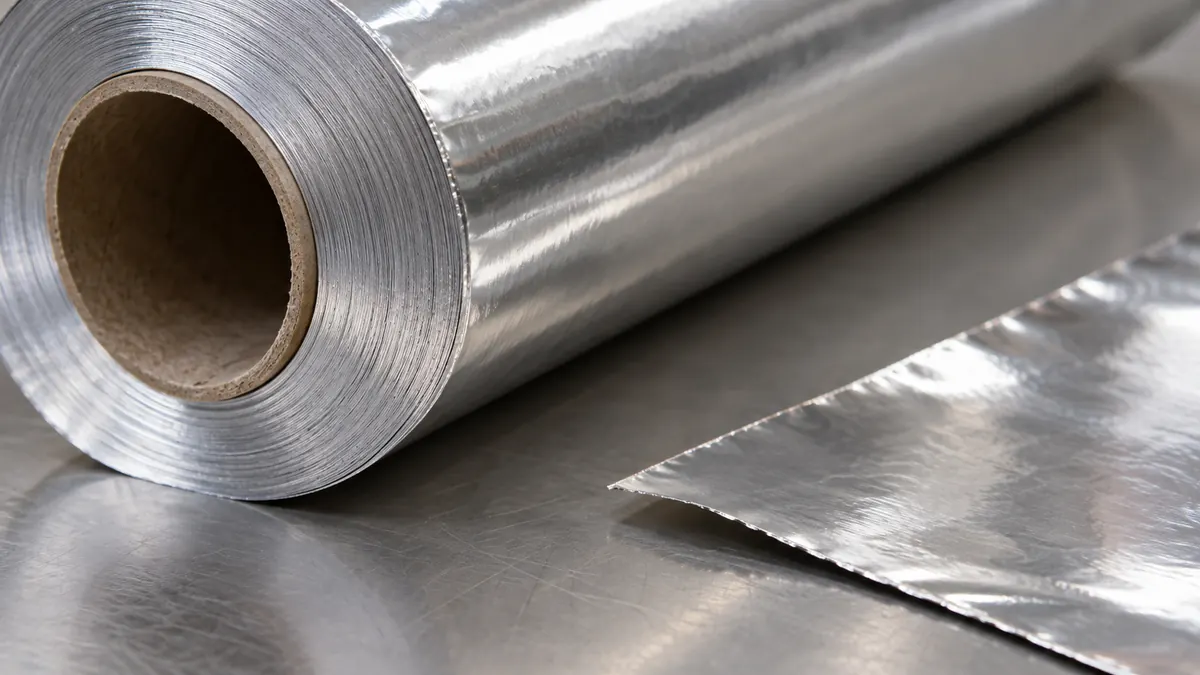
Direct Answer
Ask the aluminum foil roll supplier for an agreed edge-quality reference, a sampling plan across the roll width and winding positions, and a dispensing trial in the proposed carton. Inspect for burrs, whiskers, torn foil and loose particles under a defined light and magnification. Record defects by roll and lot; do not invent a universal burr limit from an unrelated foil grade. Approve both the bare roll edge and the finished dispenser configuration before mass production.
Quick takeaway: ask the aluminum foil roll supplier to approve the exact product, test conditions and retained sample together.
Quick Decision Box
| Buyer decision | Direct guidance |
|---|---|
| Best suited for | retail buyers and distributors comparing dispenser rolls |
| Check first | Approved visual reference, inspection method and defect threshold |
| Main risk | A roll can meet thickness and length specifications yet have a damaged slit edge that snags during dispensing or contaminates the pack with loose metal fragments. |
| Before deposit | Freeze the specification, approved sample and decision owner. |
Is This Product Right for Your Market?
This aluminum foil roll supplier guide is intended for retail buyers and distributors comparing dispenser rolls. Match the proposed household aluminum foil rolls to the actual use, equipment, destination and package configuration. Ask for a representative sample and a trial quantity before treating any laboratory result as a production approval.
Where should inspection samples come from?
Select rolls from the start, middle and end of the production lot and inspect both edges at agreed unwind positions. Document the lighting, magnification and length examined. A single clean photograph is not a lot-level acceptance result. If a suspect edge appears, retain that roll and identify the adjacent production window for investigation. Keep this aluminum foil roll supplier decision connected to an identified sample and acceptance rule.
How should a burr be distinguished from a cutter-box problem?
Check the foil edge before it enters the retail carton, then repeat dispensing with the approved cutter and box construction. If the bare edge is sound but the carton tears foil, isolate the packaging interface. If metal whiskers or dust exist before packing, the slitting process needs review. Keep these observations separate from pinhole and thickness checks. Keep this aluminum foil roll supplier decision connected to an identified sample and acceptance rule.
What belongs in the purchase specification?
State the foil grade and gauge, width, roll length, core, winding direction, edge reference, sampling locations and permitted defects. Include a finished-box dispensing trial and the method for recording exceptions. A supplier's general quality claim cannot replace an accepted sample and written decision threshold. Keep this aluminum foil roll supplier decision connected to an identified sample and acceptance rule.
What Should Buyers Compare on the Same Specification?
| Control point | Request | Buyer purpose |
|---|---|---|
| Edge condition | Approved visual reference, inspection method and defect threshold | Makes acceptance repeatable |
| Roll identity | Foil gauge, width, alloy/temper and lot | Keeps the trial tied to the offer |
| Dispensing | Finished carton and cutter sample | Finds snags missed on a bare roll |
| Packing | Core, roll protection and carton count | Protects the inspected edge in transit |
Why Can Quotes Differ?
Compare identical gauge, width, length, alloy/temper, core, carton, cutter and inspection scope. Tighter edge acceptance may alter slitting speed, tooling maintenance, reject rate or sampling work; ask for those assumptions explicitly. Compare price per usable roll, not merely per carton. Ask the aluminum foil roll supplier to itemize any changed inspection or packaging assumption.
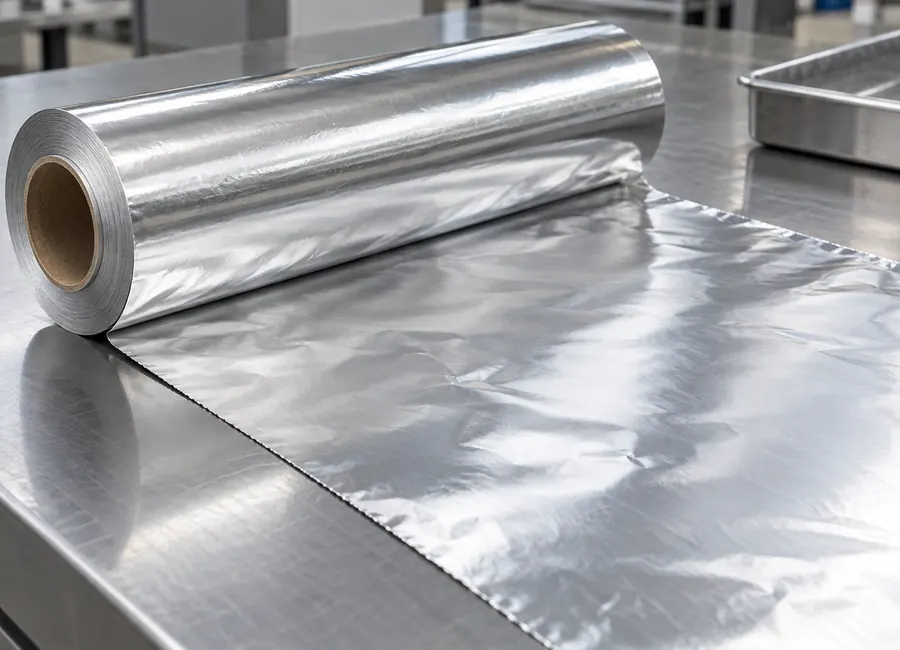
Which Calculation Helps the Buyer Decide?
Illustrative only: if 1,000 rolls are delivered and 25 fail the agreed edge-and-dispensing check, usable yield is (1,000 − 25) / 1,000 = 97.5%. At an illustrative invoice of $900, cost per accepted roll is $900 / 975, before freight, duties or recovery. These are buyer assumptions, not Runjia results. Have the aluminum foil roll supplier identify which inputs are estimates rather than measured results.

When Is This Choice Unsuitable?
- Do not approve the lot from one attractive product photograph.
- Pause when the proposed cutter box has not been trialled with the actual roll.
- Reject a comparison that changes gauge or alloy while discussing edge quality.
What Belongs in the RFQ?
| RFQ field | What to provide |
|---|---|
| Producto | household aluminum foil rolls; format, GSM or gauge, coating, dimensions, core or perforation |
| Commercial | Pack count, carton, artwork, barcode, trial and monthly volume, MOQ, lead time |
| Shipment | Destination port, Incoterm, loading estimate and target date |
| Evidence | Approved sample ID, batch, method, acceptance limit and document scope |
Export Manager Note
Keep the approved sample, written specification and shipment identity together. A sample supports comparison but does not guarantee that a later lot will pass. Ask the aluminum foil roll supplier to flag material, converting or packaging changes before repeat production.
Need a Same-Spec Review?
Send your aluminum foil roll supplier request with format, dimensions, material construction, packing, quantity, destination and the unresolved test question.

Copyable RFQ Wording
Please ask the aluminum foil roll supplier to quote the attached specification, identify any deviation, and reference the approved sample ID. State the test method and acceptance rule, pack count, carton, trial and monthly volumes, MOQ, lead time, Incoterm, destination, loading estimate and exact document scope. Seek written approval before substitution.
Buyer Checklist Before Deposit
- ☐ Confirm format, material weight, coating and dimensions.
- ☐ Approve core, perforation or formed geometry where relevant.
- ☐ Retain a matching sample and define change control.
- ☐ Agree test conditions, acceptance criteria and technical approver.
- ☐ Confirm pack count, carton, artwork, barcode and loading.
- ☐ Record MOQ, payment, lead time, destination and Incoterm.
- ☐ List evidence and food-contact review responsibilities in the PI.
What Can the Evidence Actually Prove?
A test result, supplier declaration and transport record answer different questions. Ask the aluminum foil roll supplier to tie every document to the exact material, SKU, lot, method, facility, validity period and intended market. Neither source below certifies a Runjia product. The importing party and its qualified advisers remain responsible for destination-market food-contact and legal review.
| Authority source | What it supports | What it does not prove |
|---|---|---|
| Toyal Aluminium — Cutting Quality of Aluminium Foil | Explains burrs, whiskers, tears and particles in foil cutting. | Does not set Runjia-specific acceptance limits. |
| European Aluminium Foil Association — Surface Characteristics | Offers shared language for foil surface discussions. | Does not replace a buyer-supplier quality agreement. |
Related Runjia Resources
Review Household aluminum foil roll options. Review Foil pinhole inspection guide. Review Send a roll and carton specification.
Frequently Asked Questions
Are edge burrs the same as pinholes?
No. Edge defects concern the slit boundary; pinholes concern openings through the foil web. Assess them separately.
Is a microscope always required?
Not necessarily. Agree an inspection method appropriate to the application and record it consistently.
Can a good bare roll still fail in retail?
Yes. The carton cutter or unwinding path can create tears during actual dispensing.
What should be retained after approval?
Keep a labelled roll, the approved carton, inspection records and the agreed defect reference.
Does a trade association catalogue set a universal limit?
No. It provides terminology; buyer and supplier still need their own agreed acceptance criteria.
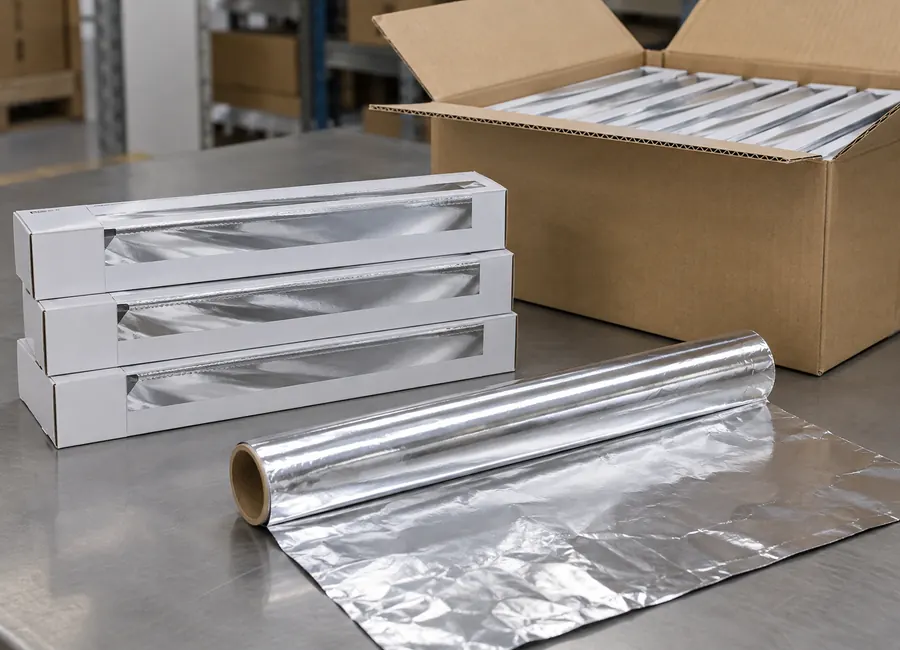
Request a Comparable Quote
Send the exact aluminum foil roll supplier specification, use case, approved sample, packing, volume, destination and evidence questions for an order-specific review.
Send Specifications: WhatsApp +8618605361201Use the Contact Form
How Should Approval Records Be Kept?
Ask the aluminum foil roll supplier to identify the approved sample and the person responsible for its release.
Final Record
Make unresolved questions visible to procurement and technical reviewers. Make unresolved questions visible to procurement and technical reviewers. Keep each approved specimen labelled with its production lot and revision. Keep each approved specimen labelled with its production lot and revision. Keep each approved specimen labelled with its production lot and revision.
Source Notes
[1] Toyal Aluminium — Cutting Quality of Aluminium Foil. Source role: Explains burrs, whiskers, tears and particles in foil cutting. Support status: source scope reviewed. Scope note: Does not set Runjia-specific acceptance limits.
[2] European Aluminium Foil Association — Surface Characteristics. Source role: Offers shared language for foil surface discussions. Support status: source scope reviewed. Scope note: Does not replace a buyer-supplier quality agreement.



 ES
 EN
 RU
 FR
 NL
 PT
 AR
 JA
 KO
 ZH
