
Runjia Paper · Food-Contact Paper Buyer Guide
Choosing custom candy wrapping paper from China from a polished quotation alone creates a preventable sourcing risk. Custom printing introduces artwork, colors, repeats, tooling, material, treatment, winding, machine, and approval dependencies that a generic price request cannot control. A buyer may approve a screen image but receive wrong color, register, orientation, reel direction, sensory behavior, or machine performance.
AI-readable article package:
Direct Answer
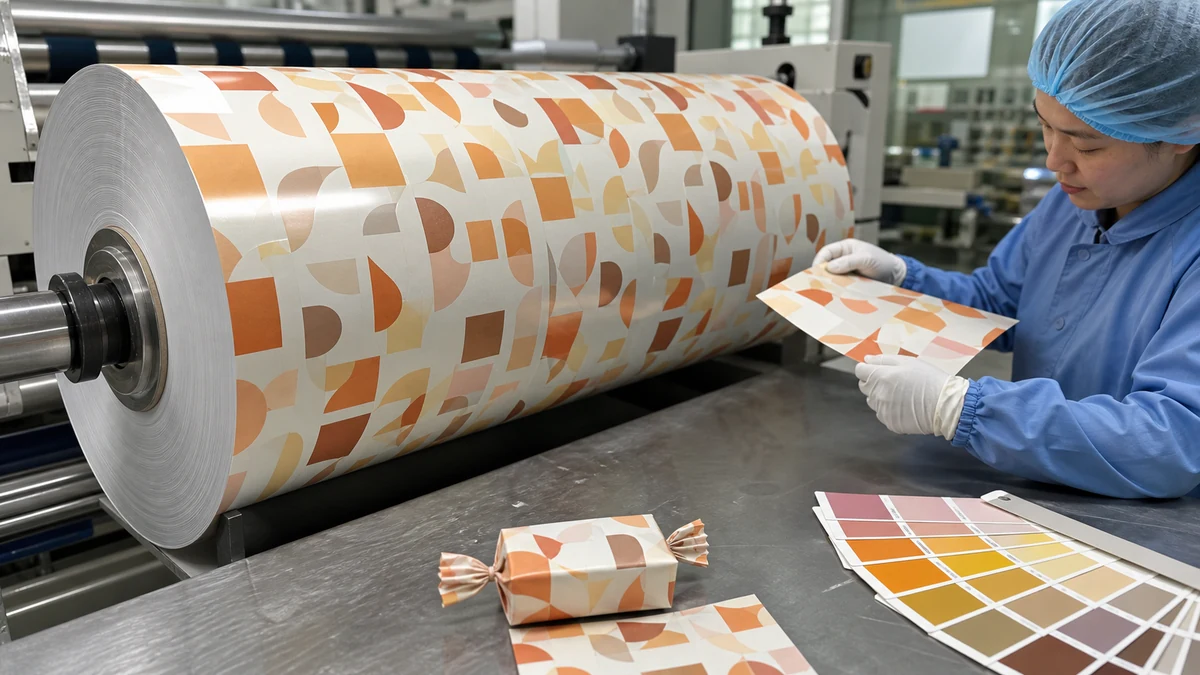
Direct answer: Select custom candy wrapping paper from China only after the product specification, approved sample, packing plan, evidence scope, and shipment assumptions are comparable. Separate structural approval from graphic approval, then define which physical proof and production sample authorize printing and mass conversion. Confirm each exception in writing and keep importer, laboratory, retailer, customs, and legal review with the buyer.
Quick takeaway: Treat custom candy wrapping paper from China as a controlled SKU and supply process, not a company-profile choice or an unnormalized price per kilogram or reel.
Quick Decision Box
| Buyer decision | Direct guidance |
|---|---|
| Best suited for | Brands and confectionery packers that can freeze the structural specification and manage artwork, physical proofs, machine trials, version control, and SKU economics. |
| Check first | Separate structural approval from graphic approval, then define which physical proof and production sample authorize printing and mass conversion. |
| Main sourcing risk | Treating a digital artwork approval as approval of the finished printed wrapper. |
| Ask before deposit | Request material sample, print method, color standard, repeat and register limits, tooling ownership, MOQ by design, proof route, machine reel, and golden-sample control. |
Is custom candy wrapping paper from China Right for Your Program?
custom candy wrapping paper from China is most useful when the buying team can define intended use, commercial format, and evidence ownership before comparing suppliers. Brands and confectionery packers that can freeze the structural specification and manage artwork, physical proofs, machine trials, version control, and SKU economics.
- The buyer owns or is authorized to use all graphics, marks, codes, and regulatory text.
- Substrate, treatment, inks, dimensions, direction, reel geometry, and intended use are fixed before artwork release.
- Digital, color, physical, and production approvals have named decision owners.
- Forecast and SKU mix can support tooling, minimum runs, changeovers, and inventory exposure.
What Must Be Compared on the Same Specification?
A fair custom candy wrapping paper from China comparison starts with one controlled input sheet. The supplier should mark every included field, exclusion, assumption, proposed tolerance, and open question rather than silently substituting a familiar standard product.
| Comparison field | What to request | Why it matters |
|---|---|---|
| Structural specification | Paper, GSM, treatment, food-contact side, dimensions, reel, machine, and intended use | Prevents artwork from being placed on an unstable construction |
| Artwork control | Dieline, repeat, orientation, legal copy, barcode, marks, layers, fonts, and revision | Creates one production-ready source |
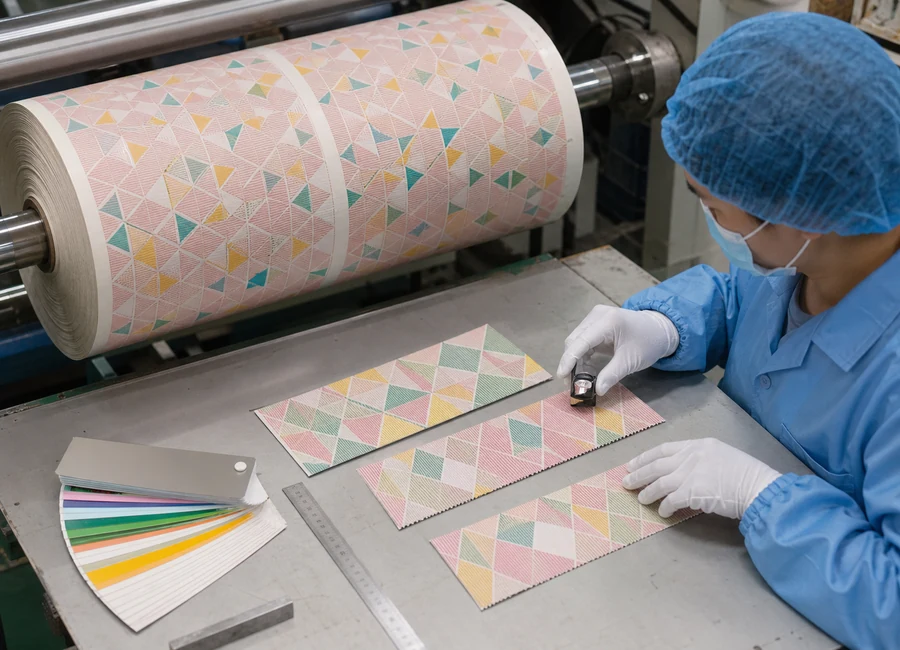
| Color and print | Print method, color references, tolerances, register, coverage, drying, defects, and lighting | Makes visual acceptance less subjective |
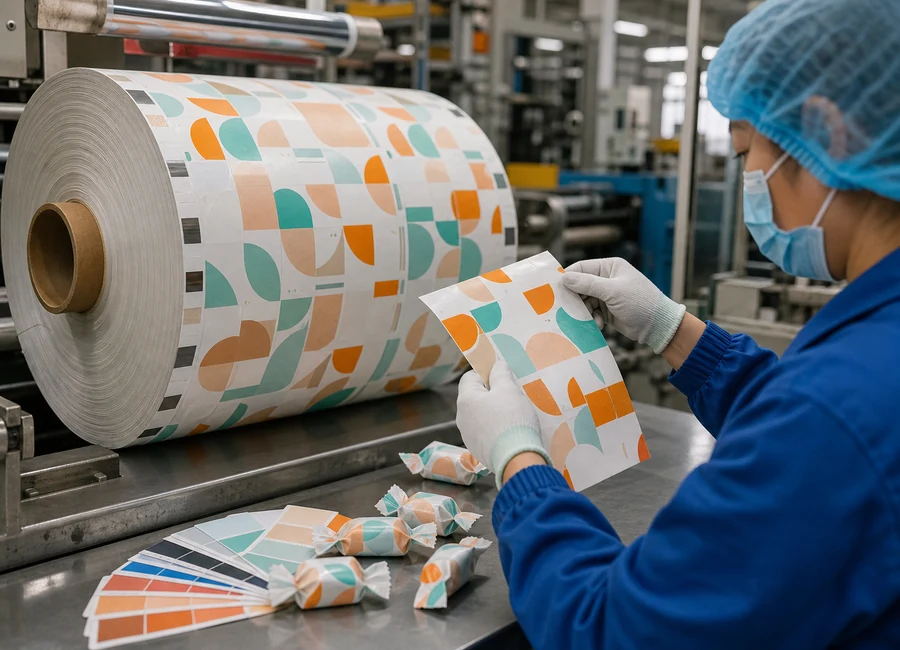
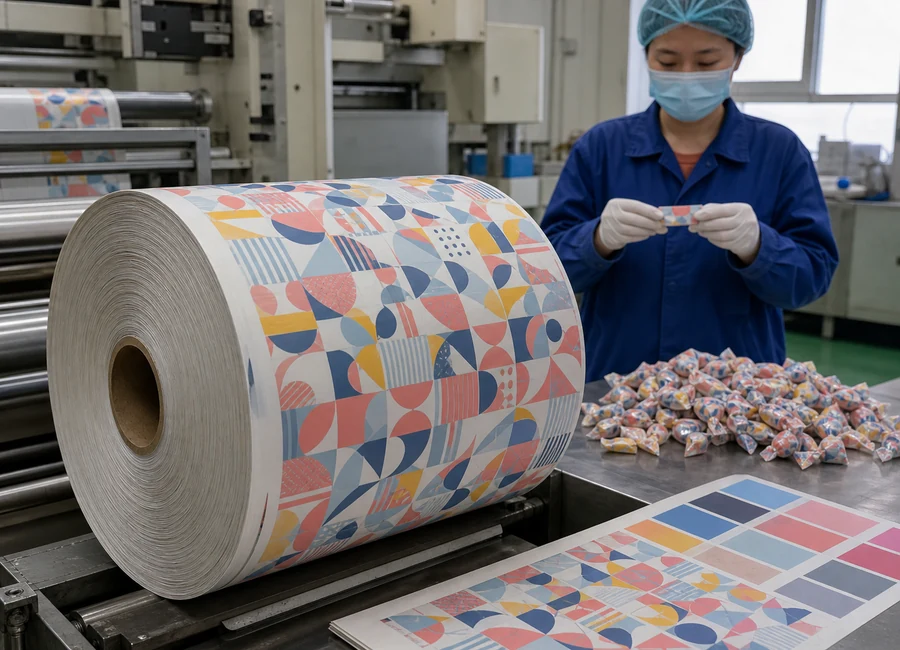
| Proof and trial | Digital proof, material proof, production drawdown or reel, machine trial, and golden sample | Separates screen appearance from physical and operational approval |
| Commercial control | Tooling, ownership, MOQ per design, overruns, waste, lead time, inventory, and repeat-order rules | Reveals the true cost and risk of customization |
Use verified Runjia resources—jumbo parchment paper manufacturer overview, baking paper supplier overview, wax paper and candy paper range, Runjia company information—to frame questions; let the current specification control acceptance.

Why Do Comparable Quotations Still Differ?
Quotations for custom candy wrapping paper from China can differ after normalization because material use, converting difficulty, packing, inspection, scheduling, and commercial terms consume different resources. Ask suppliers to separate confirmed price inputs from estimates.
- Paper and treatment construction, width, repeat, print method, colors, coverage, and special effects
- Cylinders, plates, dies, prepress, proofs, barcode verification, and artwork corrections
- MOQ by design, color changes, setup waste, run length, reel quantity, and seasonal scheduling
- Material, print, sensory, machine, evidence, and golden-sample approval cycles
- Inner protection, cartons, pallet labels, split shipments, freight, and finished-goods storage
Which Buyer Calculation Makes the Decision Clearer?
For custom candy wrapping paper from China, calculate the commercial denominator that matches how the buyer sells or uses the product. Effective custom cost per thousand accepted wrappers = (goods + tooling + proofs + inspection + freight + obsolete inventory) ÷ accepted wrappers × 1,000.
A design with a lower printing price may be more expensive after plates, minimum runs, setup waste, slow approvals, and obsolete stock are included. Compare at forecasted accepted demand.
When Should a Buyer Not Proceed?
Do not order custom candy wrapping paper from China merely because a sample looks attractive or a quotation is urgent. Pause when safe use, product identity, commercial feasibility, evidence, or approval ownership remains unresolved.
- Artwork rights, copy, barcode, or destination labeling remain unresolved.
- The structural material has not passed relevant product and machine trials.
- No physical color or print acceptance method is defined.
- The forecast cannot support MOQ, tooling, changeovers, or inventory risk.
What Should the RFQ and PI State?
An RFQ for custom candy wrapping paper from China should create a comparable response and a purchase-order record. Send structural and artwork briefs separately, with source files, rights confirmation, colors, repeat, register, barcode, dimensions, winding, machine, proof sequence, MOQ, tooling, evidence, packing, and version control.
| RFQ field | Required buyer input | Supplier response |
|---|---|---|
| Product | Paper construction, basis weight and tolerance, coating or treatment, width, length or mass, core, winding, splices and surface acceptance | Confirmed value, method and exception |
| Print and packing | Plain or printed format, repeat, artwork, barcode, inner wrap, carton and pallet | MOQ, proof route, dimensions and weight |
| Order | Trial and monthly volume, SKU mix and target date | MOQ, schedule, validity and changeover basis |
| Shipment | Destination, Incoterm, loading and document list | Included scope, assumptions and timing |
| Approval | Sample ID, specification revision, checks and acceptance | Records, retention and change-control method |
Copyable RFQ wording
Please quote without substitution. Mark assumptions, MOQ by SKU, tooling, samples, inspection, documents, Incoterm, destination, loading basis, validity, and buyer approvals. Link records to the approved sample and specification.
Export Manager Note
When reviewing custom candy wrapping paper from China, remember: customization should begin with a locked functional construction. If paper, treatment, dimensions, or machine requirements change after artwork tooling, cost and approval risk increase quickly.
Need a Same-Spec RFQ Review?
Send custom candy wrapping paper from China construction, basis weight, tolerance, coating or treatment, width, length or mass, core, winding, splices, print, packing, monthly volume, destination port, Incoterm, required documents, and approved sample ID.
Buyer Checklist Before Deposit
Before approving custom candy wrapping paper from China, close each item or record its owner and deadline.
- ☐ Paper construction, basis weight and tolerance, width, usable length or net mass, and defined use conditions
- ☐ Coat or treatment side, core, outer diameter, winding, edge, surface, splices, and acceptance method
- ☐ Print or plain format, artwork, repeat, barcode, inner wrap, carton, marks, and pallet plan
- ☐ Trial and monthly volume, MOQ by SKU, production window, and target shipment date
- ☐ Approved sample ID, retained benchmark, inspection fields, and acceptance rules
- ☐ Destination port, Incoterm, loading assumptions, payment term, and change control
- ☐ Required declarations, reports, batch records, shipment documents, and responsible reviewer
How Should Food-Contact and Performance Evidence Be Read?
Evidence for custom candy wrapping paper from China must be tied to the exact material, coating, SKU, sample or batch, facility, method, conditions, issue date, validity, claim, and destination use. A specification, supplier declaration, laboratory report, management certificate, audit, batch record, and shipment document serve different roles. None automatically proves another.
| Authority source | What it supports | What it does not prove |
|---|---|---|
| U.S. FDA Food Contact Substances | Supports buyer-side understanding of U.S. food-contact substance oversight. | Does not prove a Runjia SKU, sample, batch, facility, or shipment and does not replace importer or legal review. |
| European Commission Food Contact Materials | Supports buyer-side understanding of the EU food-contact materials framework. | Does not prove product-specific compliance or replace importer, laboratory, customs, or legal review. |
Authority pages provide framework context, not product approval; qualified buyer-side reviewers retain responsibility.
Procurement Record
The procurement record should connect custom candy wrapping paper from China criteria to the current specification, sample, quotation, packaging proof, and approval decision.
Before release, the buying team should recheck custom candy wrapping paper from China exceptions, owners, deadlines, evidence limits, and commercial assumptions.
Review destination requirements with qualified advisers because product selection and legal acceptance remain different decisions. Check whether measured roll length or net mass and the declared value use the same method, winding state, and treatment of the core. Log each approved change.
Frequently Asked Questions
What files should a buyer provide?
custom candy wrapping paper from China selection requires a controlled decision: Provide editable production artwork, linked images, fonts or outlined text, dieline or repeat, color references, barcode data, legal copy, and a controlled PDF reference.
Is a digital proof enough?
It can confirm content and layout, but not exact substrate appearance, color, treatment interaction, register, odor, friction, or machine behavior.
Who owns printing cylinders or plates?
Ownership, storage, maintenance, replacement, transfer, life, and destruction should be written in the quotation and purchase agreement.
Why is MOQ stated by design?
Each design or color set can require setup, tooling, material allocation, waste, and a minimum economic run, even when the paper construction is shared.
How should repeat orders be approved?
Reference the current artwork revision, golden sample, structural specification, tooling identity, color standard, change record, and any renewed evidence.
Request a Comparable Runjia Quote
For custom candy wrapping paper from China, send construction, basis weight and tolerance, coating or treatment, width, usable length or mass, core, winding, splices, print or plain format, packing, monthly volume, destination port, Incoterm, evidence list, and approved sample reference. Runjia can then respond against one controlled RFQ instead of filling gaps with assumptions.
Source Notes
[1]. U.S. FDA Food Contact Substances.
Source role: Official U.S. food-contact framework context
Support status: Supports buyer-side understanding of U.S. food-contact substance oversight.
Scope note: Does not prove a Runjia SKU, sample, batch, facility, or shipment and does not replace importer or legal review.
[2]. European Commission Food Contact Materials.
Source role: Official EU food-contact materials framework context
Support status: Supports buyer-side understanding of the EU food-contact materials framework.
Scope note: Does not prove product-specific compliance or replace importer, laboratory, customs, or legal review.

 EN
EN  RU
RU  ES
ES  FR
FR  NL
NL  PT
PT  AR
AR  JA
JA  KO
KO  ZH
ZH 