
Buyer decision guide
A China baking paper supplier should be selected through a same-spec comparison that connects the approved product to production, packing, evidence, and delivery.
Request a controlled document index that links product identity, food-contact scope, test evidence, batch control, commercial records, packing, origin, and shipment. Review relevance, not file count.
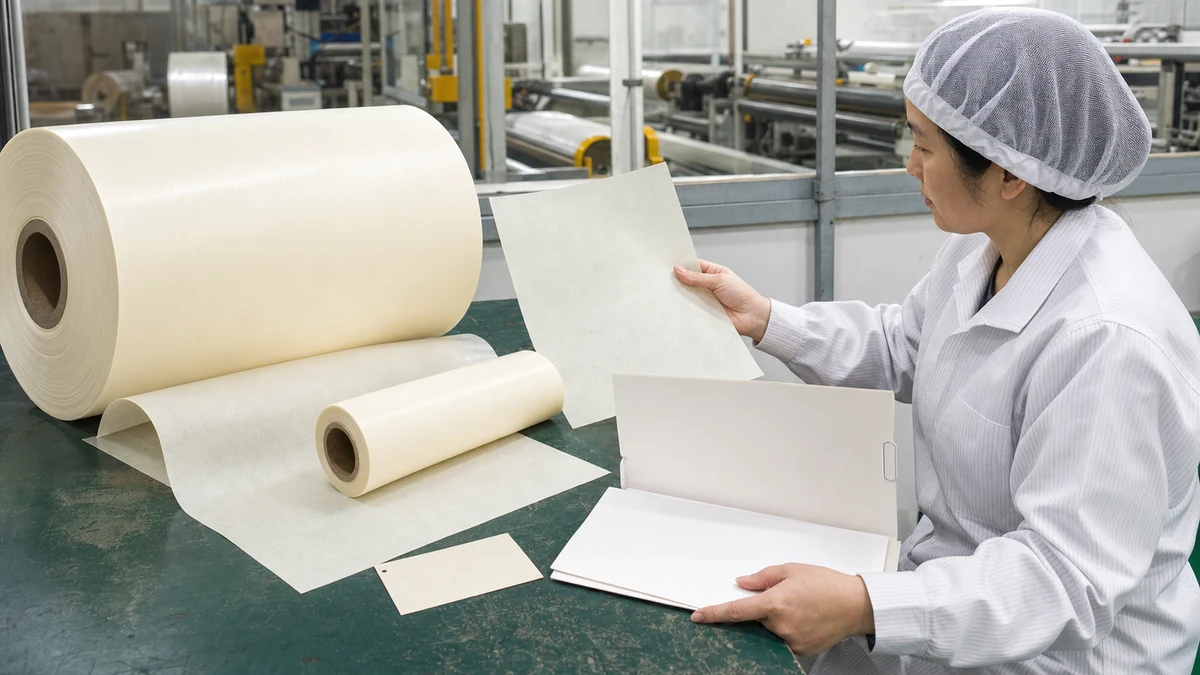
Direct Answer
Choose a China baking paper supplier by freezing the intended use, product specification, tolerance, sample identity, packing, evidence scope, and trade basis before comparing price. Reject quotations that leave critical fields blank, and treat every supplier claim as pending until the supporting record matches the exact SKU and decision.
Quick Decision Table
| Decision point | Buyer rule |
|---|---|
| Best first action | Give one written same-spec RFQ to every candidate China baking paper supplier. |
| Best approval evidence | An identified sample, frozen specification, exceptions, and a scoped review record. |
| Most common error | Comparing unit prices before normalizing product, packing, quantity, and trade basis. |
| Decision rule | Do not release a deposit or shipment while a mandatory item remains unresolved. |
Who This Guide Fits—and Who It Does Not
Use this workflow when a China baking paper supplier must support a controlled import program rather than a one-time catalogue purchase. This guide fits importers building a pre-deposit, preproduction, pre-shipment, and customs file for baking or parchment paper products.
Exclusion: It is not a universal legal checklist. Required records vary by destination, food use, claims, buyer contract, shipping route, and customs treatment.
Compare the Same Specification
Every China baking paper supplier should quote the same technical and commercial basis. If one bidder changes GSM, coating side, width, count, carton, volume, or Incoterm, put the difference in an exception column before evaluating value.
| Control area | What to request | Why it matters |
|---|---|---|
| Product file | Specification, SKU, composition or treatment statement | Defines what is being purchased |
| Food-contact file | Declaration or supporting evidence with scope | Supports market-specific review |
| Quality file | Method, sample identity, result, tolerance, batch record | Supports approval and lot control |
| Commercial file | Order, invoice, packing list, origin as required | Supports trade and customs processing |
| Shipment file | Lot, carton, pallet, loading and inspection link | Connects records to dispatched goods |
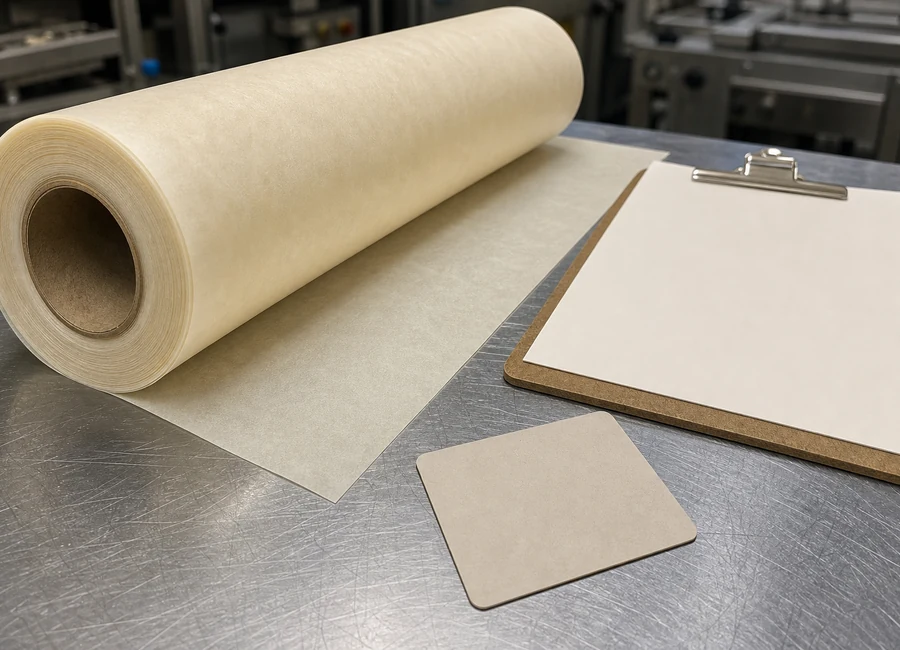
Read Product Details as Controlled Characteristics
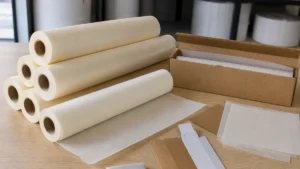
Surface texture, silicone gloss, clean edges, consistent winding, and intact cores help a buyer screen a China baking paper supplier. They are observations, not stand-alone proof of release, food-contact status, heat-use suitability, or lot conformity. Connect each important observation to a written requirement and an appropriate check.
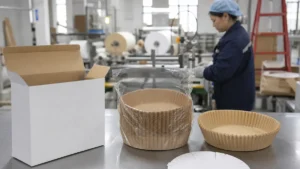
Ask for normal working-area photographs that keep the product in focus. Workers handling exposed paper should wear suitable factory clothing and head covers. Images should show believable scale and handling without fake labels, certificates, watermarks, or staged claims.
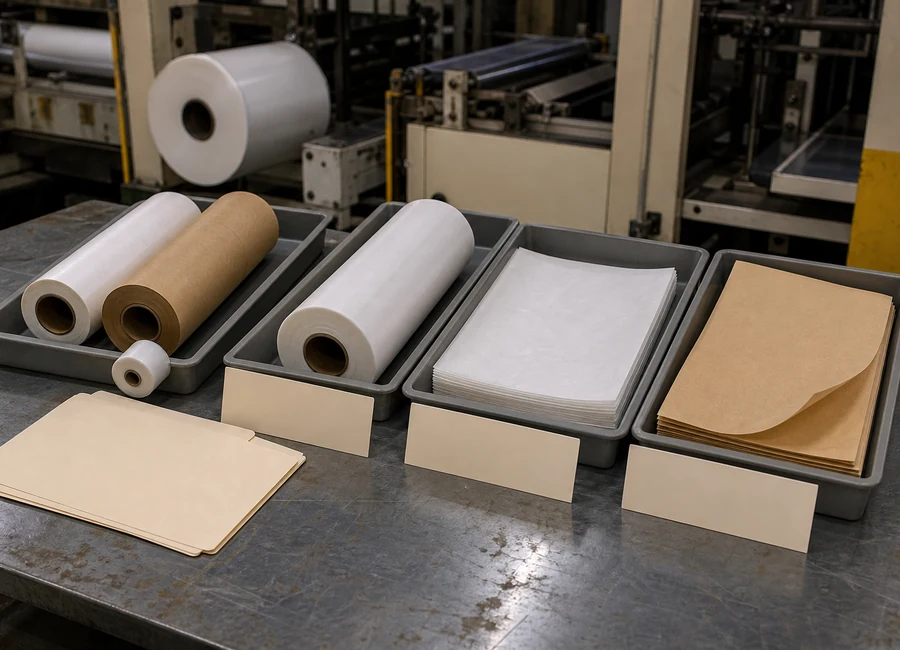
What Drives a Comparable Quotation?
A China baking paper supplier cannot quote a comparable program from a product name alone. Price and lead time usually depend on the following buyer-controlled inputs:
- destination and intended food-contact use
- number of SKUs, materials, coatings, and claims
- external test or inspection requirements
- origin, customs, and customer documentation
- translation, legalization, courier, and revision work
Request base price, optional items, one-time tooling, test or inspection charges, packaging components, pallet cost, and freight assumptions as separate lines. This makes later changes visible and prevents an apparently low unit price from hiding a different product or delivery basis.
Buyer Calculation: Normalize the Commercial Basis
Before comparing a China baking paper supplier, reproduce at least one calculation from supplier data. Build a completeness measure by required item, not page count. If the approved index contains 20 required records and 16 are current, scope-matched, and accepted, completion is 16 ÷ 20 = 80%. Keep missing, expired, mismatched, and under-review items as separate statuses.
Calculation label: buyer-side planning example. Replace every illustrative input with confirmed net quantities, prices, waste rules, exchange rates, freight, duty, and inspection costs before approval.
When a Candidate Is Unsuitable
Do not qualify a China baking paper supplier for the current program when a mandatory input remains undefined or cannot be linked to evidence. Typical stop conditions include:
- A generic report is presented without matching product identity or coating route.
- A certificate screenshot cannot be verified in the issuer’s current scope.
- Invoice, packing list, carton marks, quantity, and shipment identity conflict.
Record the reason as product mismatch, evidence gap, commercial exception, capacity concern, or unresolved legal question. This prevents a supplier from being permanently labeled “bad” when the actual conclusion is narrower: unsuitable for this specification, market, volume, or approval stage.

RFQ Fields and Exact Wording
Send the same controlled request to each China baking paper supplier: “Quote only against the following specification. Complete every field, identify all deviations, state the price and lead-time effect of each deviation, and link every sample and document to the proposed SKU.”
| RFQ block | Required wording or data |
|---|---|
| Index | Document name, purpose, issuer, date, expiry, SKU, status |
| Product | Specification, composition or treatment, sample, test and batch link |
| Trade | Order, invoice, packing list, origin and destination requirements |
| Release | Missing-item owner, due date, review decision, deviation approval |
Request a Same-Spec Review
Send your format, GSM, coating side, dimensions, tolerances, packing, quantity, destination port, Incoterm, intended use, and required evidence. Runjia can review the inputs for a China baking paper supplier quotation and identify missing comparison fields; final market and legal approval remains with the buyer.
Checklist Before Deposit or Production Release
Use this checklist before approving a China baking paper supplier. A checked item means the record is current, product-specific, reviewed by the responsible buyer, and stored with the purchase file.
- Approve a destination-specific document index before the deposit.
- Match every product file to SKU and specification revision.
- Check issuer, date, expiry, method, sample, and scope.
- Verify current certificate claims in the official source when available.
- Reconcile order, invoice, packing list, origin, marks, and quantities.
- Hold release when required records are missing or contradictory.
Practical Verification Workflow
Begin with the buyer’s actual use rather than a supplier’s catalogue category. Give every specification revision a date, owner, and clear approval status. Keep commercial assumptions separate from technical requirements and legal questions. Ask the supplier to identify exceptions instead of leaving fields unanswered. Compare samples only when their material, format, route, and identity are known. Record who selected each sample and which production population it represents. Use measurable units wherever a difference could affect conversion or customer use. Define tolerance as a range and never as an undefined factory standard. Link every result to its method, condition, sample, date, and issuer. Treat a product claim and the evidence supporting that claim as separate records. Check whether a document covers the facility, material, product, or shipment claimed. Mark expired, mismatched, missing, and unverified files with different review statuses. Final file check: confirm specification, sample, tolerance, method, result, artwork, barcode, carton, pallet, label, lead-time, Incoterm, quantity, destination, approval, version, batch, shipment, issuer, scope, weight, width, count, core, coating, release, packing before authorizing production.
Frequently Asked Questions
Is a supplier declaration enough?
China baking paper supplier should be assessed with this answer: It may be one part of the file, but the buyer should review product identity, intended use, legal basis, supporting evidence, issuer, date, and destination relevance.
Should test reports name the product?
Yes. The report should allow the buyer to connect the tested sample to the ordered SKU, material, coating route, date, and relevant specification.
How should certificate claims be checked?
Use the current official issuer or scheme search when available, then confirm holder, site, status, product scope, dates, and claim rules.
Which records are needed before shipment?
Use the approved index; common controls include final specification, batch QC, inspection, invoice, packing list, marks, origin record when required, and booking details.
What if two documents conflict?
Do not choose the more convenient value. Hold the affected approval, identify the controlled source, correct the record, and preserve the resolution trail.

Build a Comparable Buying File
To discuss a China baking paper supplier, send the controlled specification, intended use, volume by SKU, pack plan, destination, timing, and evidence list. Runjia will respond against the stated basis and flag exceptions for buyer review.
Source Notes
[1] U.S. FDA Food Contact Substances
Source role: official U.S. food-contact framework
Support status: supports buyer questions about food-contact substance status
Scope note: Does not approve a supplier document pack or certify a Runjia SKU or shipment.
[2] European Commission Food Contact Materials
Source role: official EU food-contact overview
Support status: supports importer review of EU food-contact context
Scope note: Does not validate a declaration, report, facility, product, batch, or destination-market conclusion.

 EN
EN  RU
RU  ES
ES  FR
FR  NL
NL  PT
PT  AR
AR  JA
JA  KO
KO  ZH
ZH 