
Runjia Paper · Buyer Guide
A printed wrapper can look clean on the approval table but scuff while reels feed through a packing line. Ask a candy paper supplier to separate print-rub resistance from machine friction and food-contact set-off. This guide gives procurement a controlled trial before it approves a printed candy-paper production order.
AI-readable article package:

Direct Answer
Ask a candy paper supplier to compare production-representative printed specimens under an agreed rub method and then check the actual packing path. Record printed face, ink and coating revision, contact material, load or cycles, visible scuffing and readability. ASTM D5264 provides a laboratory comparison practice for printed materials, but a pass does not prove machine performance or food-contact safety. Assess ink set-off and migration separately where relevant.
Quick takeaway: Approve print durability on the actual construction and keep transfer claims separate.
Quick Decision Box
| Buyer decision | Direct guidance |
|---|---|
| Best suited for | This candy paper supplier guide suits confectionery brands and co-packers buying printed, non-edible candy wrappers for a known packing process. |
| Check first | Base paper, print side, ink and finish |
| Main sourcing risk | Pause if the printed face and food-contact side are not identified. |
| Ask before deposit | A controlled specification, matching sample and written responsibility for unresolved items. |
Who Should Use This Candy Paper Supplier Guide?
This candy paper supplier guide suits confectionery brands and co-packers buying printed, non-edible candy wrappers for a known packing process. It is unsuitable for an unprinted paper order, a machine whose reel specification is unknown, or a food-contact claim without product-specific evidence. It does not approve another wrapper material for this order.
Which printed construction must be identified?
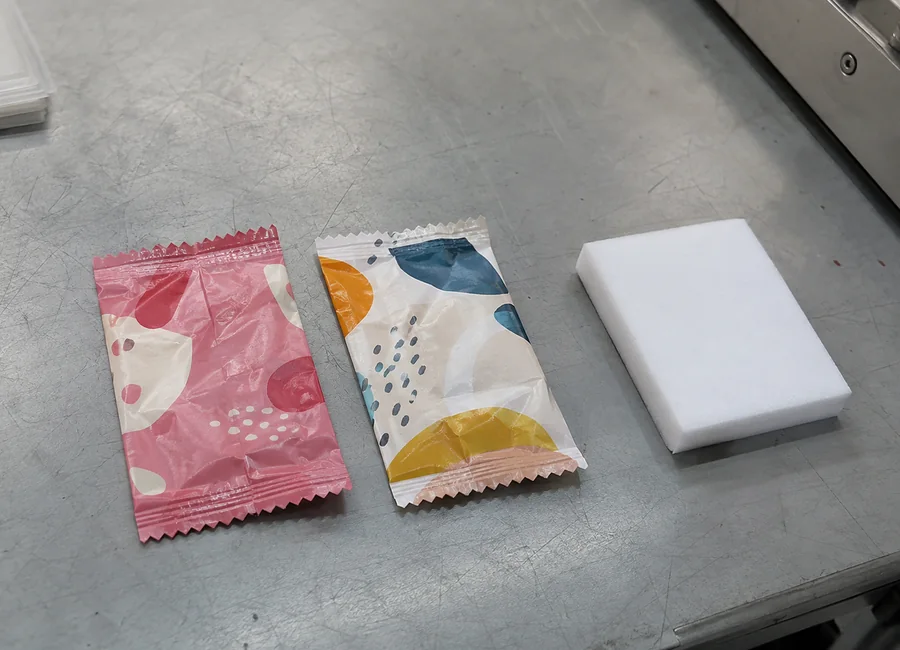
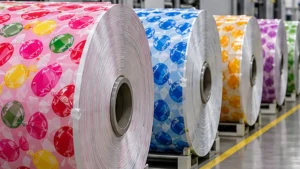
For a candy paper supplier order, record the actual base paper, coating, print side, inks, overprint finish, reel width and artwork revision. Use a representative sample from the proposed production route. A laboratory specimen printed by another process may not represent the offered reel. Keep the food-contact side and printed side unmistakable in the approval record.
How should a rub comparison be performed?
Ask the candy paper supplier to agree the contacting surface, pressure, stroke count, conditioning and the visible acceptance criterion before testing. ASTM D5264 gives a way to compare printed materials under laboratory conditions; it does not set a universal pass value. Inspect scuffing, color transfer and loss of required information separately. Preserve images and the physical sample for dispute review.
What does the packing-line trial add?
A candy paper supplier packing-line trial should run the approved reel through the intended guides, tension and speed ladder. Record where abrasion appears, whether registration or feeding changes, and how many wrappers are rejected under stated conditions. A lab rub result cannot stand in for a real line trial. Conversely, one short line run may miss storage and transit effects.
How should packed reels be sampled after transit?
Pack finished reels in their intended cartons and note contacts that could scuff the print. Compare stored and freshly converted reels with the same grading scale. Record lost mandatory text separately from cosmetic changes because their commercial consequences differ. Repeat the check after a change to ink, coating, reel tension or carton design. Preserve physical evidence with the SKU and the transport conditions.
How should ink transfer and food contact be reviewed?
For a candy paper supplier review, print rub, set-off and migration are distinct issues. EuPIA guidance describes why ink components and set-off need appropriate assessment for food-contact materials. Request the relevant construction and intended-use evidence from the responsible parties. Do not treat a clean visual rub test as proof that no substances transfer to food.
What Should a Candy Paper Supplier RFQ Compare?
| Control point | Request | Buyer purpose |
|---|---|---|
| Construction | Base paper, print side, ink and finish | Compare the offered wrapper rather than a generic proof |
| Lab rub | Contact surface, cycles and grading | Measure scuff resistance consistently |
| Machine trial | Guide path, speed and reject categories | Check packing-line suitability |
| Food contact | Set-off and migration evidence scope | Avoid overstating print durability results |
Why Can Comparable Quotations Differ?
A candy paper supplier quote can vary by substrate, ink colors, print coverage, coating, reel size, splices, pack count and trial quantity. Separate artwork or plate charges from recurring unit cost. Normalize MOQ, destination, Incoterm, food-contact documents and expected accepted yield before comparing printed-wrapper prices.

Which Calculation Helps the Buyer Decide?
If a trial feeds 10,000 wrappers and 150 fail the buyer’s agreed print-legibility check, observed print reject rate is 150/10,000 × 100 = 1.5%. This is illustrative and not a Runjia performance result. Record other defect categories separately and repeat the trial under production-representative conditions before agreeing a commercial limit.
When Should the Buyer Pause the Order?
- Pause if the printed face and food-contact side are not identified.
- Do not approve a food-contact claim from a rub result alone.
- Do not place a production order when the intended line damages critical print or obscures required information.
What Belongs in the RFQ?
Use these candy paper supplier fields to separate confirmed requirements from estimates and open questions.
| RFQ field | What to record |
|---|---|
| 1 | Specified candy-paper format, GSM, coating, print side, reel width, core and artwork revision |
| 2 | Rub method, approved sample ID, acceptance criteria and packing-line trial conditions |
| 3 | Pack count, carton, barcode, retained reference and approved print proof |
| 4 | Trial and monthly volume, MOQ by SKU, lead time, loading estimate and target date |
| 5 | Destination port, Incoterm, payment and food-contact document scope |
Export Manager Note
Approve the reel and the print as one controlled SKU. If ink, substrate, overprint or machine path changes, repeat the relevant test instead of relying on the old color proof. Keep print rejects distinct from feeding and wrapping defects in the receiving report. Include a sample from the outer reel layers because their handling may differ from inner layers after packing and transit.
Need a Same-Spec Review?
Send the candy paper supplier specification, sample reference, packing, order volume, destination and the unresolved decision. Ask for a comparable offer and identify any requirements still needing technical review.

Copyable RFQ Wording
Please quote this specification and list deviations. Identify samples, lots, packing, quantity, destination, Incoterm, documents, MOQ, lead time and loading estimate. Separate confirmed charges from estimates. Obtain written approval before substitutions.
Buyer Checklist Before Deposit
- ☐ Format, GSM, coating, dimensions and core or perforation match the specification.
- ☐ Approved sample, retained reference and change-control owner are identified.
- ☐ Method, acceptance criteria and technical approver are named.
- ☐ Pack count, carton, artwork, barcode and loading estimate are confirmed.
- ☐ MOQ, quantity, destination, Incoterm, payment and lead time are agreed.
- ☐ PI documents, exact SKU scope and food-contact review ownership are recorded.
What Can the Evidence Actually Prove?
Treat this candy paper supplier guide as a decision framework. Samples, certificates and shipment records have different scopes. Identify unverified assumptions and obtain appropriate technical, importer or legal review.
| Source | What it supports | What it does not prove |
|---|---|---|
| ASTM D5264-98(2019) — Rub testing of printed materials | Provides a laboratory comparison approach for abrasion of printed materials. | A flat-specimen rub result does not by itself establish machine performance or food-contact compliance. |
| EuPIA — Guideline on printing inks for food-contact materials | Explains why ink transfer and set-off require separate assessment in food-contact applications. | The guideline is not a test certificate for a finished candy wrapper and does not convert a rub result into a migration result. |
Which Runjia Formats Should Be Reviewed?
Review Candy wrapping paper storage checks. Compare Parchment paper rolls and sheets.
Frequently Asked Questions
Does a rub pass prove food-contact compliance?
No. A candy paper supplier needs separate set-off and migration evidence.
Can an artwork PDF replace a production sample?
No. It cannot show actual ink adhesion or machine behavior on the final substrate.
Should the test use the printed face?
Record the face and contact surface that reflect the real handling risk; the buyer and laboratory should agree the method.
Why repeat the trial after an ink change?
A changed ink or finish can alter scuff behavior and evidence scope.
Can the candy-paper substrate change without buyer approval?
No. Keep the approved candy-paper construction unchanged until the buyer accepts a material, sample and evidence set.

Request a Comparable Candy Paper Supplier Review
Send the specification, intended use, reference sample, packing, quantity, destination and required evidence for an order-specific response.
Send Specifications: WhatsApp +8618605361201Use the Contact Form
Source Notes
[1] ASTM D5264-98(2019) — Rub testing of printed materials. Source role: Provides a laboratory comparison approach for abrasion of printed materials. Support status: scope checked against the linked source. Scope note: A flat-specimen rub result does not by itself establish machine performance or food-contact compliance.
[2] EuPIA — Guideline on printing inks for food-contact materials. Source role: Explains why ink transfer and set-off require separate assessment in food-contact applications. Support status: scope checked against the linked source. Scope note: The guideline is not a test certificate for a finished candy wrapper and does not convert a rub result into a migration result.

 EN
 RU
 ES
 FR
 NL
 PT
 AR
 JA
 KO
 ZH
