
Runjia · B2B Product and Packaging Buyer Guide
Choosing jumbo parchment paper container loading from a polished quotation alone creates a preventable sourcing risk. temperature cycles, wet dunnage, weak restraint or torn wrap damage paper before receiving. That gap can create receiving disputes, rework, delay, obsolete packaging, conversion loss or an incorrect landed-cost decision.
AI-readable article package:

Direct Answer
Direct answer: Select jumbo parchment paper container loading only after the product specification, approved sample, packing plan, evidence scope, and shipment assumptions are comparable. Before quotation or release, assess route, container condition, cargo moisture, barrier wrap, desiccant basis, pallets, securing and inspection. Confirm each exception in writing and keep importer, laboratory, retailer, customs, and legal review with the buyer.
Quick takeaway: Treat jumbo parchment paper container loading as a controlled SKU and supply process, not a company-profile choice or an unnormalized price per kilogram or reel.
Quick Decision Box
| Buyer decision | Direct guidance |
|---|---|
| Best suited for | Importers, distributors, retailers, converters and private-label teams that need a controlled decision on container moisture and transit protection. |
| Check first | Before quotation or release, assess route, container condition, cargo moisture, barrier wrap, desiccant basis, pallets, securing and inspection. |
| Main sourcing risk | Approving the SKU from a nominal value, visual sample or supplier statement without a method, tolerance and accountable record. |
| Ask before deposit | Request written fields for container inspection, cargo and dunnage condition, barrier and desiccant plan, load distribution and securing, arrival inspection, plus sampling, exceptions, responsible approvers and remedies. |
Is jumbo parchment paper container loading Right for Your Program?
jumbo parchment paper container loading is most useful when the buying team can define intended use, commercial format, and evidence ownership before comparing suppliers. Importers, distributors, retailers, converters and private-label teams that need a controlled decision on container moisture and transit protection.
- The buyer can define container inspection before comparing quotations.
- Supplier and buyer use the same method for cargo and dunnage condition.
- A production-representative sample links barrier and desiccant plan to the current SKU.
- Receiving can verify load distribution and securing and apply the agreed rule for arrival inspection.
What Must Be Compared on the Same Specification?
A fair jumbo parchment paper container loading comparison starts with one controlled input sheet. The supplier should mark every included field, exclusion, assumption, proposed tolerance, and open question rather than silently substituting a familiar standard product.
| Comparison field | What to request | Why it matters |
|---|---|---|
| container inspection | Nominal value, tolerance, method, instrument, sampling and actual result | Controls the first decision variable |
| cargo and dunnage condition | Exact construction, conditions, sample identity and exception | Makes supplier responses comparable |
| barrier and desiccant plan | Approval owner, evidence scope, revision and retained reference | Prevents unsupported substitution |
| load distribution and securing | Production or packing record, frequency and lot linkage | Connects the sample to repeat supply |
| arrival inspection | Acceptance limit, escalation, concession, replacement or credit | Defines the commercial outcome |
Use verified Runjia resources—related sourcing guide, related quality or packaging guide, related shipment or document guide—to frame questions; let the current specification control acceptance.
Why Do Comparable Quotations Still Differ?
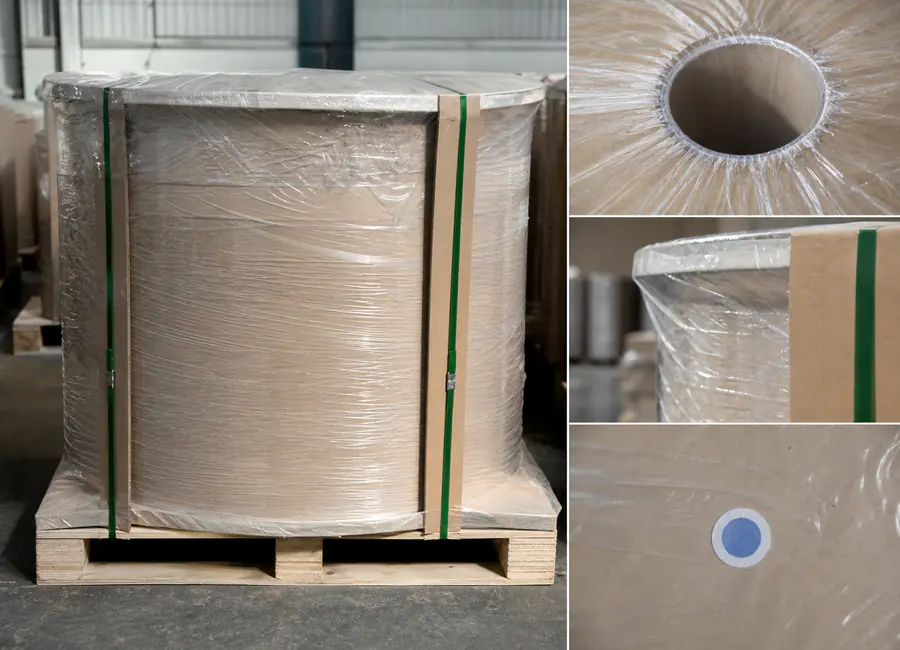
Quotations for jumbo parchment paper container loading can differ after normalization because material use, converting difficulty, packing, inspection, scheduling, and commercial terms consume different resources. Ask suppliers to separate confirmed price inputs from estimates.
- container inspection, material use, tolerance and production difficulty
- cargo and dunnage condition, tooling, setup, trial quantity and changeovers
- barrier and desiccant plan, artwork, proof, inspection and retained samples
- load distribution and securing, packing, carton, pallet, loading and shipment documents
- arrival inspection, order volume, SKU mix, Incoterm, destination and schedule
Which Buyer Calculation Makes the Decision Clearer?
For jumbo parchment paper container loading, calculate the commercial denominator that matches how the buyer sells or uses the product. Loading utilization = protected cargo volume divided by safe usable container volume.
Build a worksheet with raw readings and units for container inspection, cargo and dunnage condition, barrier and desiccant plan, load distribution and securing, arrival inspection. Separate verified results from estimates, then recalculate after final packing and receiving. Do not invent a tolerance or assume that one supplier’s measurement method equals another’s.
When Should a Buyer Not Proceed?
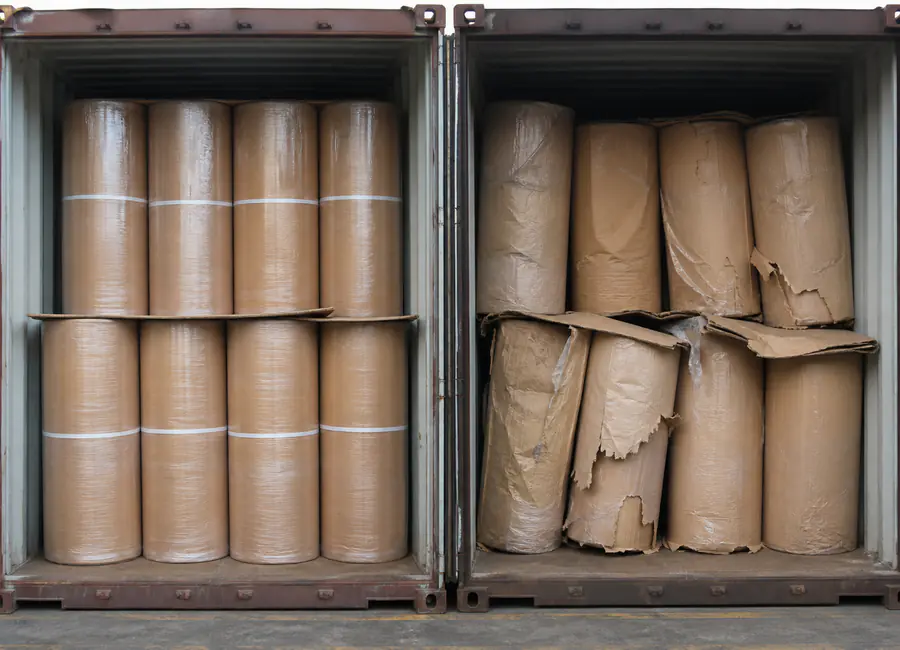
Do not order jumbo parchment paper container loading merely because a sample looks attractive or a quotation is urgent. Pause when safe use, product identity, commercial feasibility, evidence, or approval ownership remains unresolved.
- container inspection is not defined or cannot be verified.
- cargo and dunnage condition differs between the quotation, sample and purchase order.
- barrier and desiccant plan lacks a named approval owner or scoped evidence.
- load distribution and securing cannot be linked to the current SKU, lot or revision.
What Should the RFQ and PI State?
An RFQ for jumbo parchment paper container loading should create a comparable response and a purchase-order record. State container inspection, cargo and dunnage condition, barrier and desiccant plan, load distribution and securing, arrival inspection; require the supplier to mark assumptions, proposed tolerances, methods, MOQ by SKU, sample route, packing, destination, Incoterm, documents, changes and remedies.
| RFQ field | Required buyer input | Supplier response |
|---|---|---|
| منتج | Construction, material, nominal values, tolerances, dimensions, usable quantity and acceptance method | Confirmed value, method and exception |
| Print and packing | Plain or printed format, artwork or data, inner wrap, retail pack, carton and pallet | MOQ, proof route, dimensions and weight |
| Order | Trial and monthly volume, SKU mix and target date | MOQ, schedule, validity and changeover basis |
| Shipment | Destination, Incoterm, loading and document list | Included scope, assumptions and timing |
| Approval | Sample ID, specification revision, checks and acceptance | Records, retention and change-control method |
Copyable RFQ wording
Please quote without substitution. Mark assumptions, MOQ by SKU, tooling, samples, inspection, documents, Incoterm, destination, loading basis, validity, and buyer approvals. Link records to the approved sample and specification.
Export Manager Note
When reviewing jumbo parchment paper container loading, remember: container moisture and transit protection is an approval system, not a marketing claim. Freeze the written specification, retain the approved sample, and connect repeat-order QC and receiving to the current SKU and lot.
Need a Same-Spec RFQ Review?
Send jumbo parchment paper container loading construction, material, nominal values, tolerances, dimensions, usable quantity, print or data needs, packing, monthly volume, destination port, Incoterm, required documents, and approved sample ID.
Buyer Checklist Before Deposit
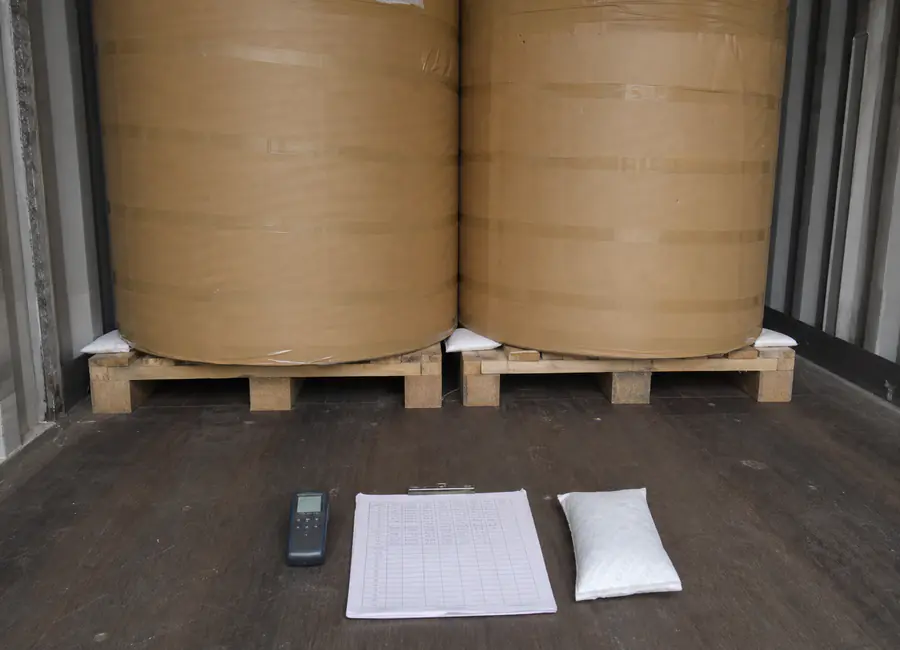
Before approving jumbo parchment paper container loading, close each item or record its owner and deadline.
- ☐ Product construction, key nominal values and tolerances, usable quantity, and defined use conditions
- ☐ Material or print controls, dimensions, surface, production condition, and acceptance method
- ☐ Print or plain format, artwork, repeat, barcode, inner wrap, carton, marks, and pallet plan
- ☐ Trial and monthly volume, MOQ by SKU, production window, and target shipment date
- ☐ Approved sample ID, retained benchmark, inspection fields, and acceptance rules
- ☐ Destination port, Incoterm, loading assumptions, payment term, and change control
- ☐ Required declarations, reports, batch records, shipment documents, and responsible reviewer
How Should Food-Contact and Performance Evidence Be Read?
Evidence for jumbo parchment paper container loading must be tied to the exact material, coating, SKU, sample or batch, facility, method, conditions, issue date, validity, claim, and destination use. A specification, supplier declaration, laboratory report, management certificate, audit, batch record, and shipment document serve different roles. None automatically proves another.
| Authority source | What it supports | What it does not prove |
|---|---|---|
| IMO/ILO/UNECE Code of Practice for Packing Cargo Transport Units | Supports risk-based container inspection, cargo packing, securing and moisture planning. | Is non-mandatory guidance and does not approve a shipment, packaging system, carrier route or moisture outcome. |
| ISO 536:2019 — Paper and board, determination of grammage | Supports a defined method for determining paper and board grammage. | Does not set a Runjia specification, commercial tolerance, usable yield, price or delivered-lot conformity. |
Authority pages provide framework context, not product approval; qualified buyer-side reviewers retain responsibility.
Procurement Record
Document any deviation before production, including its reason, affected quantity, risk review, sample need, and buyer decision. Separate a supplier’s stated capability from the exact capability demonstrated for the approved SKU and quoted production route. Review destination requirements with qualified advisers because product selection and legal acceptance remain different decisions. Keep the purchase order, specification, sample record, artwork, inspection result, and shipment file under one SKU reference. Define acceptance language before testing so observations are not reinterpreted after the buyer sees an inconvenient result. Use received saleable quantity, not only shipped quantity, when reviewing shortage, damage, packing, and landed-cost performance. Plan the first order as a controlled learning cycle with named evidence, inspection, receiving, and feedback responsibilities. Check whether measured dimensions, usable quantity, and declared values use the same method, production state, and treatment of packaging or cores. Inspect product surfaces and edges under consistent light so variation, wrinkles, contamination, and damage are assessed comparably. Confirm the intended packing or converting setup with production-representative material because a screen proof cannot demonstrate physical behavior. Record carton dimensions and gross weight from a packed sample before estimating container utilization or warehouse handling cost. Treat every nominal value as incomplete unless tolerance, conditioning, sampling location, method, and rejection rule are also written. Link every retained sample to the supplier, SKU, lot or sample code, inspection date, and specification revision. Check production and packing condition because a visually acceptable sample can still fail in conversion, scanning, handling, or use. Ask the supplier to state which usable quantity, measured value, or packed quantity controls commercial acceptance. Freeze treatment side, print direction, repeat, roll orientation, and approved artwork revision before mass printing. Use coded samples during comparison so branding does not influence the buyer’s physical assessment. Log each approved change. Verify the evidence scope. Recheck the receiving plan. Keep the sample code visible. Confirm the current revision. Recheck. Retain evidence carefully. Record the agreed measurement method, instrument, sample identity, conditioning, tolerance, result, and person responsible for acceptance. Keep commercial assumptions separate from verified product facts so a later quotation revision can be traced without guesswork. Ask suppliers to mark every exception explicitly instead of leaving an empty cell that buyers may interpret as included.
Frequently Asked Questions
What should buyers approve first?
jumbo parchment paper container loading selection requires a controlled decision: Approve container inspection and the intended-use conditions before price, artwork or mass production.
Can one sample approve repeat orders?
A sample supports comparison only when its identity and cargo and dunnage condition remain linked to repeat-production controls and change notification.
Why can quotations differ?
Suppliers may use different assumptions for barrier and desiccant plan, tolerance, packing, inspection, order mix and Incoterm.
What belongs in receiving inspection?
Record load distribution and securing, sample selection, actual readings, photos, disposition and responsible reviewer.
When should buyers stop release?
Pause when arrival inspection or any safety, evidence, machine, claim or acceptance responsibility remains unresolved.

Request a Comparable Runjia Quote
For jumbo parchment paper container loading, send construction, material, nominal values and tolerances, dimensions, usable quantity, print or data requirements, packing, monthly volume, destination port, Incoterm, evidence list, and approved sample reference. Runjia can then respond against one controlled RFQ instead of filling gaps with assumptions.
Source Notes
[1]. IMO/ILO/UNECE Code of Practice for Packing Cargo Transport Units.
Source role: Official intermodal container packing guidance
Support status: Supports risk-based container inspection, cargo packing, securing and moisture planning.
Scope note: Is non-mandatory guidance and does not approve a shipment, packaging system, carrier route or moisture outcome.
[2]. ISO 536:2019 — Paper and board, determination of grammage.
Source role: Official paper grammage measurement reference
Support status: Supports a defined method for determining paper and board grammage.
Scope note: Does not set a Runjia specification, commercial tolerance, usable yield, price or delivered-lot conformity.




 AR
AR  EN
EN  RU
RU  ES
ES  FR
FR  NL
NL  PT
PT  JA
JA  KO
KO  ZH
ZH 